
July 25, 2025:
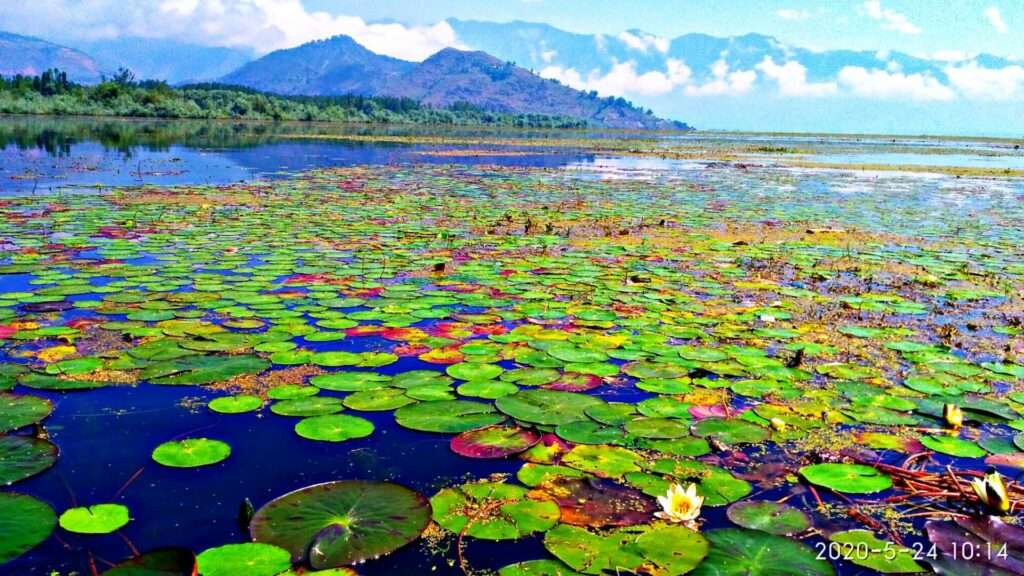
Wular Lake, Asia’s second-largest freshwater lake located in Jammu and Kashmir’s Bandipora district, is witnessing a striking resurgence of lotus blooms after a gap of nearly three decades. The return of these iconic flowers, once abundant across the vast expanse of the lake, is being hailed as a powerful sign of ecological recovery.
Once a vibrant habitat for aquatic flora, including lotus (Nelumbo nucifera), Wular Lake saw a sharp decline in biodiversity due to unchecked pollution, rampant encroachments, and siltation. The lotus flowers, symbolic in Kashmiri culture and cuisine, had all but vanished by the late 1990s.
According to environmental officials, recent conservation measures have led to a steady improvement in water quality and ecological balance. The Wular Conservation and Management Authority (WCMA), in collaboration with local communities and government departments, has undertaken large-scale de-weeding operations, curbed illegal encroachments, and launched awareness drives to protect the lake’s fragile ecosystem.
Speaking to the media, Dr. Muzaffar Ahmad, an environmental expert working with WCMA, said, “The return of the lotus is a significant ecological milestone. It indicates that the lake’s ecosystem is stabilizing, and water quality has improved to support native plant species again.”
The blooming lotus has sparked enthusiasm among locals and tourists alike. Social media platforms are flooded with images of the pink blossoms carpeting sections of the lake, attracting nature enthusiasts and photographers. The tourism department has also welcomed the development, noting a recent uptick in domestic tourist arrivals to Bandipora.
Local boatman Aijaz Lone shared, “After so many years, we’re seeing lotus flowers again. Tourists are coming for boat rides just to see the bloom. It feels like the lake is alive again.”
Beyond its visual appeal, the lotus holds cultural and economic value in the region. The edible stem, known locally as nadru, is a popular delicacy in Kashmiri cuisine, and its reappearance may eventually help revive local livelihoods tied to lake-based farming and harvesting.
Despite the positive developments, experts caution that continued efforts are needed to ensure long-term sustainability. Wular Lake has already lost around 40% of its original area due to decades of neglect and encroachment. Environmentalists stress the need for stricter regulation, consistent clean-up drives, and stronger community involvement.
“This is a hopeful moment, but we cannot afford to become complacent,” Dr. Ahmad added. “Wular needs continued care to fully restore its ecological glory.”
The return of lotus blooms to Wular Lake is being seen as a symbolic victory for conservation and a promising step toward ecological resilience in Kashmir. With renewed focus on environmental stewardship, the lake may once again reclaim its place as one of the crown jewels of South Asia’s natural heritage.

