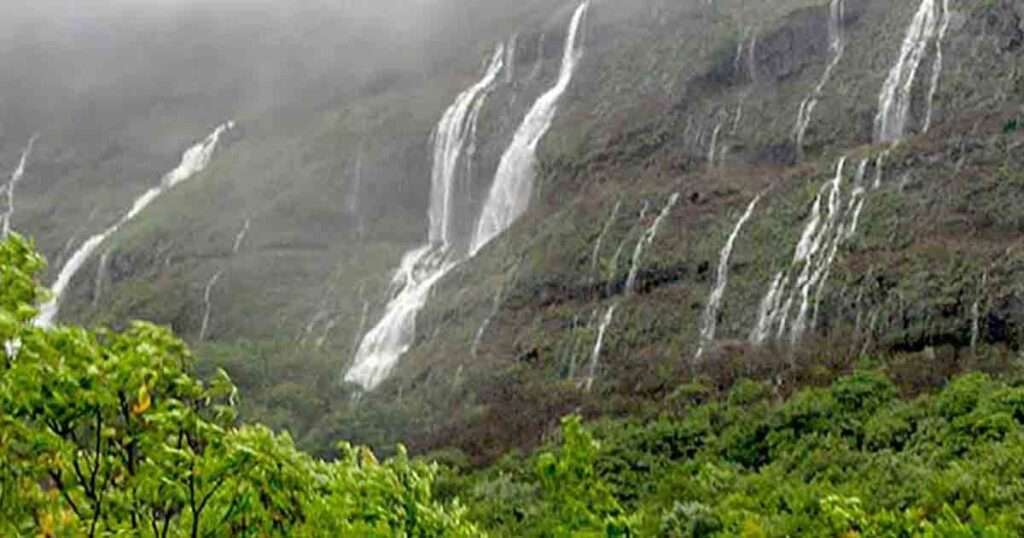
July 26,2025 — Tamhini Ghat in Maharashtra’s Western Ghats has recorded over 5,000 mm of rainfall so far this monsoon, making it one of the wettest locations in the state this season. The India Meteorological Department (IMD) has subsequently issued a heavy rainfall warning for the ghat sections of Pune, Raigad, and nearby districts.
According to recent IMD data, Tamhini has received more than 5,100 mm of rain, a significant rise compared to the seasonal average. This surge in precipitation is the result of active southwest monsoon conditions, driven by strong westerly winds and recurring low-pressure systems over the Arabian Sea.
Due to the continuing downpours, the IMD has issued an orange alert for several hill areas, warning of very heavy rainfall, potential landslides, and traffic disruptions. Visibility on the winding ghat roads has already reduced drastically, and many areas are experiencing waterlogging and localized flooding.
In response, the Pune district administration has heightened disaster preparedness. Emergency response teams have been deployed in vulnerable areas, and authorities have advised the public to avoid travel to high-risk zones like Tamhini Ghat, Maval, and Lonavala until weather conditions improve.
Water levels in nearby rivers and dams, including the Mulshi and Temghar reservoirs, have risen steadily, prompting officials to monitor the situation closely. Some internal roads connecting the ghat areas have been temporarily closed due to landslide risks and poor visibility.
The ghat region, known for attracting tourists during the monsoon, is currently witnessing a decline in visitor movement as precautionary measures are enforced. The local police and forest department have restricted access to certain waterfall spots and trekking routes to prevent accidents.
Environmentalists are raising flags over the long-term ecological impact of such intense rainfall events. Dr. Meera Joshi, a climate researcher based in Pune, stated, “The frequency of extreme rain events is increasing. While rainfall is vital for the ecosystem, unseasonal and excessive precipitation can destabilize the soil structure and harm biodiversity.”
The IMD has predicted that heavy rainfall will continue over the coming days, especially in the Konkan and central Maharashtra regions. Residents in low-lying and ghat areas have been urged to stay alert, monitor official advisories, and avoid unnecessary travel.
Tamhini’s exceptional rainfall this year highlights not just the intensity of the monsoon but also the growing unpredictability of weather patterns, possibly influenced by climate change. As rain continues to lash the Western Ghats, the need for robust disaster management and environmental conservation becomes more urgent than ever.