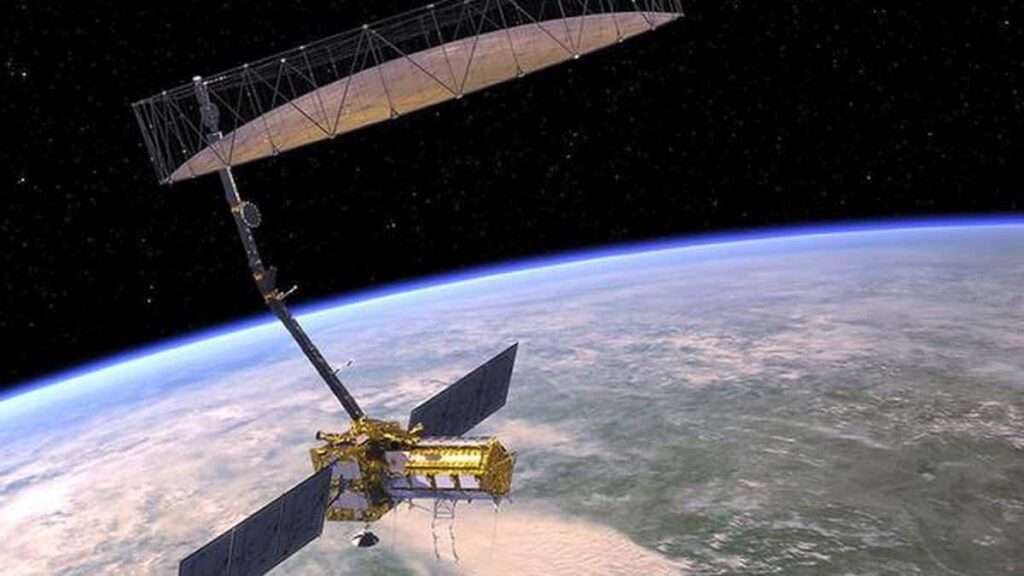
Joint mission aims to enhance tracking of climate changes and natural disasters
July 28,2025:
NASA and the Indian Space Research Organisation (ISRO) are finalising preparations to launch the NISAR satellite — a high-tech Earth observation mission valued at ₹13,000 crore. Expected to lift off in early 2025, the satellite represents one of the most significant collaborations between the United States and India in the space sector.
NISAR (NASA-ISRO Synthetic Aperture Radar) will use two radar systems — one operating in the L-band (from NASA) and another in the S-band (from ISRO) — to collect detailed images of the Earth. This dual-frequency setup will allow the satellite to observe changes on the planet’s surface with high precision, even during cloudy weather or at night.
The satellite is being assembled and tested at ISRO’s facility in Bengaluru. Once complete, it will be launched aboard India’s GSLV Mk II rocket from the Satish Dhawan Space Centre. ISRO is overseeing the spacecraft’s development and will also handle the launch and mission operations, while NASA is contributing key radar components and data processing systems.
ISRO Chairman S. Somanath described NISAR as a major step in advancing India’s capability to monitor land use, forests, water resources, and environmental changes. The mission is expected to support sectors like agriculture, urban development, and disaster response.
NASA Administrator Bill Nelson said the satellite will offer valuable insights into how the Earth’s surface is changing, helping scientists around the world study issues such as melting ice, rising sea levels, and shifts in ecosystems. Both agencies have committed to making the satellite’s data freely available to the global research community.
NISAR will scan the Earth every 12 days, capturing data on movements of glaciers, forests, coastlines, and land surfaces. This regular coverage will support better understanding of long-term environmental changes, as well as help identify early signs of natural disasters like earthquakes, landslides, and floods.
The mission’s budget, shared by both space agencies, makes it one of the most expensive Earth science projects ever taken up by either side. However, officials believe the investment will be justified by the wide range of benefits it offers — from improved disaster readiness to long-term climate analysis.
The NISAR mission is also seen as a symbol of growing strategic cooperation between India and the United States in advanced technologies, including space, satellites, and climate research.