July 28,2025:
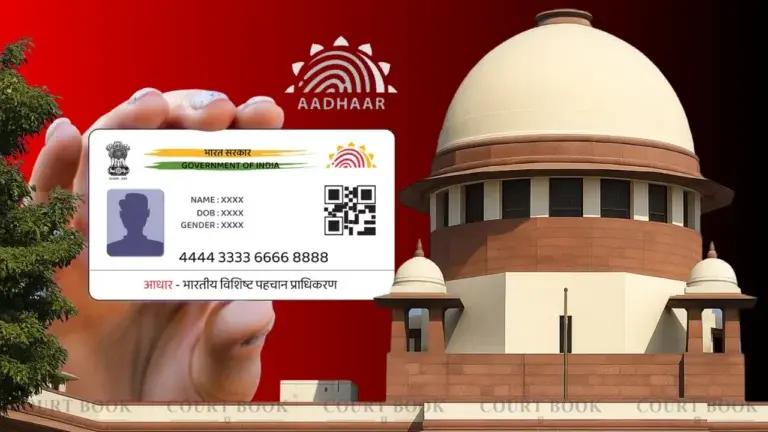
The Supreme Court on Friday issued a notice to the Election Commission of India (ECI), seeking its response on a plea demanding the inclusion of Aadhaar and Voter ID details in the electoral roll revision exercise in Bihar. The court has given the poll body four weeks to respond.
A bench headed by Chief Justice D.Y. Chandrachud was hearing a petition filed by a Bihar-based social worker. The petitioner has sought directions to the Election Commission to mandate Aadhaar-Voter ID linkage in the ongoing electoral roll revision process in the state, citing concerns of large-scale duplication and fraudulent voter entries.
The court took cognizance of the plea and has directed the poll panel to clarify its stance on whether such integration of Aadhaar and Voter ID details can be implemented during the revision of electoral rolls.
This comes in the wake of the Election Laws (Amendment) Act, 2021, which enabled the voluntary linking of Aadhaar with voter ID cards, aiming to eliminate duplicate entries and improve the integrity of the electoral process. However, the initiative has drawn criticism from several quarters over privacy concerns and fears of possible disenfranchisement, particularly among economically weaker and marginalized communities.
According to the petitioner, linking Aadhaar with Voter ID would help in authenticating the identity of voters, removing ineligible or duplicate names, and ultimately ensuring fair and transparent elections in Bihar. The petitioner argued that despite previous legislative efforts, a significant number of bogus voters remain on the rolls, undermining the electoral process.
Bihar, which has over 7 crore registered voters, has often faced scrutiny over the accuracy of its electoral rolls. Several political parties in the state have previously alleged irregularities, including the presence of deceased and migrated voters.
Legal experts note that the Supreme Court’s intervention could have broader implications for electoral reforms across the country. “While the law permits voluntary linkage, the court’s interpretation and the EC’s response in this case could shape future policy on mandatory voter verification,” said a senior constitutional lawyer.
The issue of Aadhaar-Voter ID linkage has also been debated in the context of privacy rights following the Supreme Court’s landmark Puttaswamy judgment, which upheld the right to privacy as a fundamental right. Any mandatory linkage would need to withstand scrutiny under this legal precedent.
The matter will now be taken up after four weeks, once the Election Commission files its affidavit. The outcome of this case is likely to influence not just the electoral landscape in Bihar but also nationwide efforts to modernize voter registration systems.