
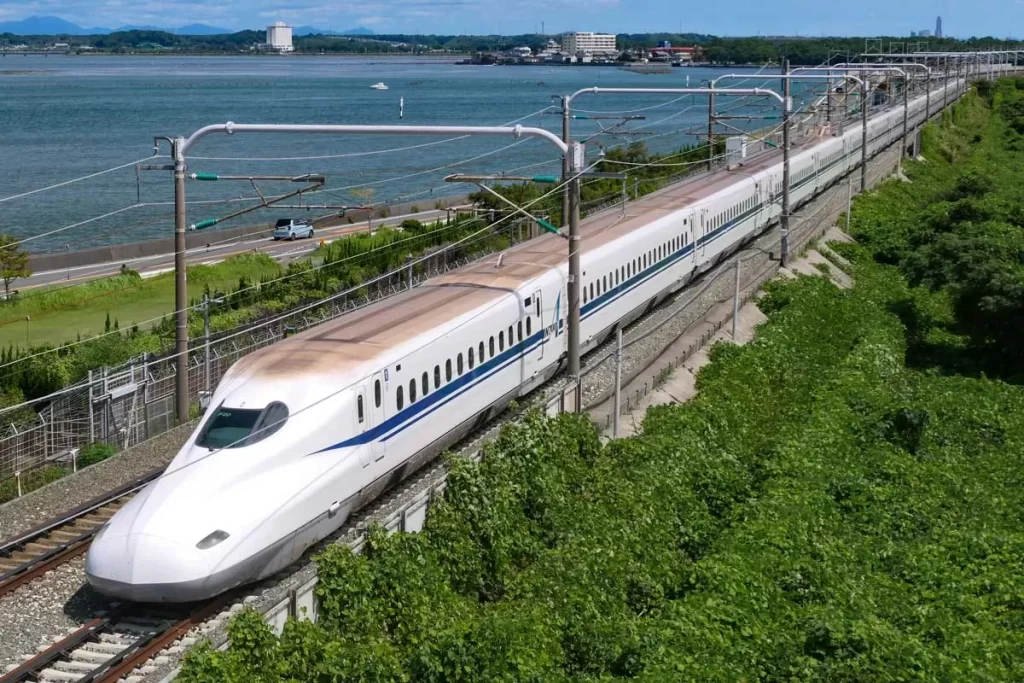
August 1,2025: India is set to significantly expand its high-speed rail network, with the government preparing to launch two new bullet train corridors—Delhi to Varanasi and Mumbai to Nagpur. These upcoming lines are part of a larger national initiative to modernize the country’s transportation infrastructure and improve long-distance rail connectivity.
The National High-Speed Rail Corporation Limited (NHSRCL) has begun work on Detailed Project Reports (DPRs) for both corridors. These reports will assess the feasibility, route alignment, cost estimates, and environmental impact, forming the foundation for the next phase of India’s bullet train rollout.
The Delhi–Varanasi corridor aims to connect the national capital with one of India’s most culturally significant cities, reducing travel time and promoting tourism. Meanwhile, the Mumbai–Nagpur line is expected to enhance mobility between Maharashtra’s commercial and administrative hubs.
These projects follow the Mumbai–Ahmedabad high-speed rail line, which is currently under construction and remains India’s first bullet train corridor. Once completed, it will serve as the model for future high-speed rail developments, using advanced Japanese Shinkansen technology and reaching speeds of up to 320 km/h.
According to officials, the new routes are being developed under the broader framework of the National Rail Plan, which envisions a high-capacity, future-ready rail system by 2030. One of the key objectives is to reduce pressure on existing railway infrastructure and offer a faster, safer, and more energy-efficient mode of transport for intercity travel.
In addition to these new lines, NHSRCL is also exploring other high-speed corridors, such as:
- Delhi–Ahmedabad
- Chennai–Mysuru
- Hyderabad–Bengaluru
Preliminary assessments and DPRs are at various stages for these corridors.
The anticipated benefits of high-speed rail include shorter travel durations, greater comfort for passengers, and a reduction in air and road traffic. These projects are also expected to stimulate regional economic growth and create thousands of direct and indirect employment opportunities during construction and operations.
However, experts have pointed out several challenges that could impact the rollout of the new corridors, including land acquisition delays, high capital costs, and the need for technological adaptation. Addressing these issues will be crucial to ensuring timely and cost-effective project completion.
Despite the hurdles, the government remains optimistic about the future of high-speed rail in India. With increasing demand for faster intercity travel and rising urbanization, bullet trains are seen as a transformative step towards a modern, sustainable transportation network.
The Ministry of Railways, in collaboration with NHSRCL, is aiming to fast-track approvals and clearances so that construction work on the new corridors can begin within the next few years.

