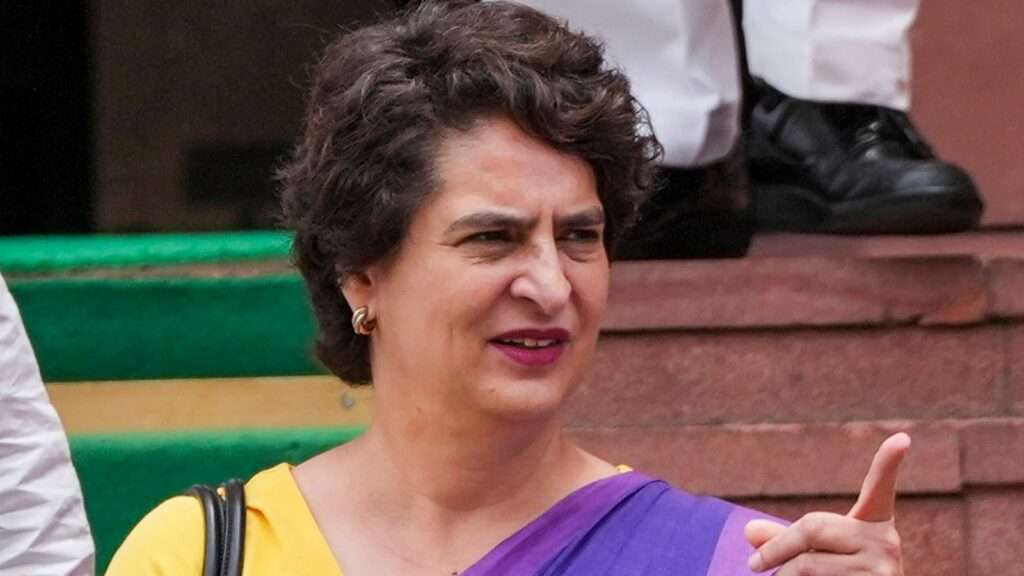
August 12, 2025 — Priyanka Gandhi, a prominent leader of the Indian National Congress, has sharply criticized the Indian government for its silence and inaction over the ongoing conflict and humanitarian crisis in Gaza. Addressing the escalating violence and mounting casualties, Gandhi described the government’s stance as “shameful” amid growing global concerns.
In a strongly worded statement, Gandhi accused the Israeli state of committing genocide against the Palestinian population. She claimed that over 60,000 people have been killed in the conflict, including 18,430 children. “Hundreds have died of starvation, including innocent children, and millions are currently at risk of starvation,” she said, highlighting the dire humanitarian situation in Gaza. Gandhi further condemned the global community’s silence, terming it “a crime in itself” and holding the Indian government accountable for failing to take a clear stand.
Gandhi’s remarks came in the wake of reports about a deadly Israeli airstrike that targeted a tent housing journalists in Gaza City, resulting in the deaths of five Al Jazeera reporters. She condemned the strike as a “heinous crime committed on Palestinian soil” and called for immediate international intervention to protect civilians.
The criticism triggered an immediate response from Israel’s Ambassador to India, Reuven Azar, who dismissed Gandhi’s allegations as “deceitful.” Azar defended Israel’s military actions, stating that the Israeli Defense Forces have killed 25,000 Hamas terrorists and blamed civilian casualties on Hamas’s tactics of embedding themselves within civilian populations and obstructing humanitarian aid. “The civilian casualties are a tragic consequence of Hamas’s strategy,” Azar asserted, urging Gandhi and others to “not buy Hamas numbers.”
Azar also pointed to the demographic changes in Gaza, noting that the population has increased by 450% over the last 50 years. He suggested that this growth undermines claims of genocide, emphasizing the complex realities of the ongoing conflict.
The Gaza conflict has intensified international debate, with many calling for urgent humanitarian assistance and a peaceful resolution. As casualties continue to rise, the Indian government’s muted response has sparked political debate domestically, with opposition leaders like Priyanka Gandhi pressing for a more vocal and humanitarian-focused approach.
The humanitarian crisis in Gaza remains critical, with reports indicating widespread shortages of food, water, and medical supplies. International agencies have repeatedly appealed for ceasefire agreements to allow aid access, but hostilities continue unabated.
In summary, Priyanka Gandhi’s public condemnation of India’s silence on the Gaza conflict underscores the political pressure on New Delhi to clarify its position amid a rapidly evolving international crisis. The contrasting narratives from Indian political leaders and Israeli diplomats highlight the challenges in addressing a deeply entrenched conflict with significant regional and global implications.