
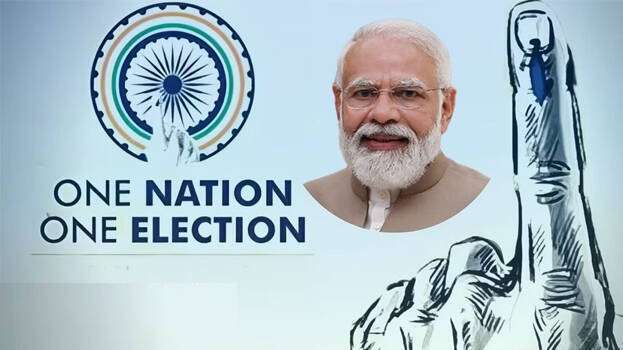
The debate over the “One Nation, One Election” (ONOE) proposal has resurfaced, following statements by Union Commerce Minister Piyush Goyal, who reiterated the government’s commitment to holding simultaneous elections for the Lok Sabha and state assemblies. The proposal, aimed at streamlining India’s electoral process, has ignited significant debate among politicians, constitutional experts, and civil society.
Government’s Perspective
Proponents of ONOE, including Minister Goyal, argue that conducting simultaneous elections could lead to substantial cost savings and administrative efficiency. According to government estimates, holding separate elections for the Lok Sabha and 29 state assemblies incurs enormous expenditure and requires the deployment of large-scale security and administrative resources. Goyal emphasized that synchronized polls would minimize the disruption caused by frequent elections, allowing governments to focus on governance and developmental activities rather than constant electioneering.
The government also presents ONOE as a step towards policy coherence, suggesting that simultaneous elections could help in ensuring continuity in governance and facilitate a more uniform implementation of national policies across states. Supporters argue that the move could reduce voter fatigue and increase public participation in the democratic process.
Opposition and Federalism Concerns
Despite these arguments, the proposal faces stiff resistance from opposition parties and regional leaders. Critics contend that ONOE threatens the federal structure of India by prioritizing national over state-specific concerns. Regional parties argue that state issues may be overshadowed by national election campaigns, undermining local governance and the autonomy of state assemblies.
Several leaders, including Asaduddin Owaisi of the AIMIM, have warned that ONOE could centralize power excessively and compromise the democratic mandate of regional governments. They also point out logistical and constitutional challenges, noting that aligning elections across 29 states, each with its own political calendar and issues, would be highly complex.
Legal and Logistical Challenges
Constitutional experts have highlighted that implementing ONOE would require significant amendments to the Constitution and electoral laws. The Indian Constitution currently allows for flexible election schedules to maintain stability in governance if assemblies are dissolved prematurely. Synchronizing elections would necessitate legal safeguards to address scenarios such as early dissolution of state assemblies, emergency provisions, and term adjustments.
Conclusion
The “One Nation, One Election” proposal remains a polarizing issue in Indian politics. While the government emphasizes efficiency, cost savings, and policy coherence, the opposition raises valid concerns regarding federalism, democratic representation, and constitutional hurdles. As debates continue, the proposal is likely to remain a focal point in discussions on India’s electoral and governance reforms, highlighting the delicate balance between efficiency and democratic principles.

