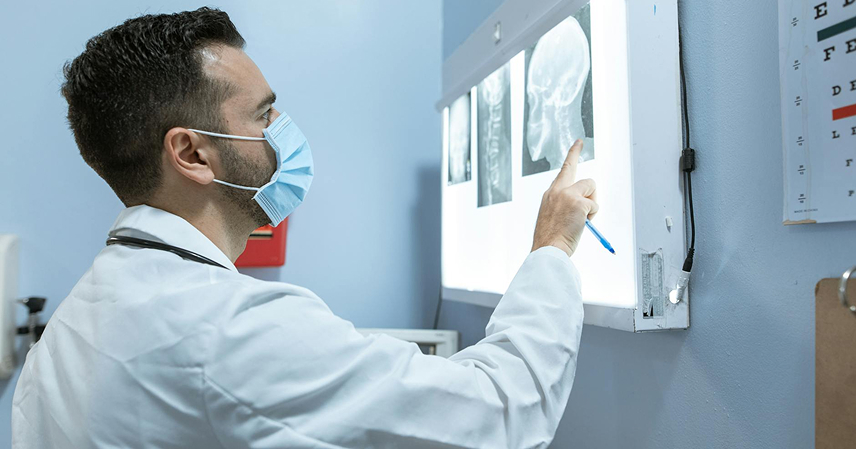
For the millions of people who have sat in a doctor’s office and heard the word “cancer,” research breakthroughs are not abstract headlines. They are lifelines.
There is no single moment when cancer research tips from incremental to transformative. The shift happens quietly — in a clinical trial result that rewrites a survival curve, in a blood test that catches a tumour before a scan would, in a drug that coaxes the immune system into doing what chemotherapy never could. In 2026, those quiet shifts are happening faster and across more cancer types than at any previous point in medical history. The cancer research breakthrough story of this year is not about one discovery. It is about a wave of them arriving at the same time — and the cumulative effect is genuinely, measurably changing what it means to receive a cancer diagnosis.
A Blood Test That Sees What Scans Cannot
One of the most significant medical innovations reshaping oncology right now is the liquid biopsy — a simple blood test that detects fragments of tumour DNA circulating in the bloodstream, known as circulating tumour DNA, or ctDNA.
Liquid biopsies for cancer can be used for screening, metastatic cancer management, matching patients to clinical trials, and the detection of minimal residual disease — which tells clinicians if there are any traces of cancer left after treatment. That last application is perhaps the most powerful. For decades, oncologists had to wait for a scan to confirm whether cancer had returned. By that point, the disease had often already re-established itself.
Leading cancer researcher Keith Flaherty of the Mass General Cancer Center described a novel paradigm: deploying multiple lines of therapy in patients who haven’t had radiographic or clinical recurrence, but whose blood-based assays showed that their cancer would recur — without waiting for a scan to confirm what the molecular markers already foretell. That is not incremental progress. That is a fundamental shift in how oncologists understand and act on cancer recurrence.
CAR T-Cell Therapy: From Blood Cancers to the Brain
CAR T-cell therapy was first introduced in 2017 and is now being used to treat many forms of blood cancer. It is also being explored as a possible therapy for childhood brain cancer and is moving to be used earlier in treatment for some blood cancers, such as multiple myeloma, where it could move the needle for this currently incurable cancer.
The next generation of cell therapies is pushing even further. Beyond traditional CAR T approaches, there is emerging data on T-cell receptor therapies showing very promising outcomes, alongside new antibody-drug conjugates that could be deeply impactful. The most compelling scientific question now is how to sequence these various treatments — determining which to start with, which to combine, and how to optimize therapy for individual patients.
For patients with difficult-to-treat cancers, this progression matters enormously. Howard Chew was diagnosed with stage 4 lymphoma at 54. He received CAR T-cell therapy, then enrolled in a clinical trial evaluating an investigational therapy. He is now cancer-free. His story is one of thousands that would not have been possible even five years ago.
The Hardest Cancers Are Finally Getting Attention
Pancreatic cancer has long represented one of oncology’s most painful failures — a disease caught late, treated poorly, and survived rarely. In 2026, an estimated 67,530 Americans will be diagnosed with pancreatic cancer, and it remains the only major cancer with a five-year survival rate below 20%. But the research landscape is changing in ways that would have seemed implausible a decade ago.
The field eagerly awaits results from RASolute 302, the first Phase 3 trial of a RAS inhibitor in pancreatic cancer. This study compares the new drug daraxonrasib to standard chemotherapy in patients with metastatic disease — and several potentially practice-changing Phase 3 trials in previously untreated metastatic pancreatic cancer are expected to begin in 2026.
A novel RAS inhibitor is being tested in a Phase 3 clinical trial showing promising early results, providing much-needed hope for this difficult-to-treat disease and holding potential for breakthroughs in other cancers with RAS mutations. For a disease that has resisted treatment progress for so long, this represents a genuine inflection point.
Radiopharmaceuticals: Delivering Radiation Like a Heat-Seeking Missile
Radiopharmaceuticals are an emerging class of targeted cancer treatments that combine a molecule capable of homing in on cancer cells with a radioactive agent — delivering lethal radiation precisely to tumours while sparing surrounding healthy tissue. New Kerala
This approach is nothing short of elegant. Rather than exposing the entire body to radiation, as conventional radiotherapy does, radiopharmaceuticals navigate the bloodstream like molecular GPS systems, finding their target and destroying it from within. New radioisotopes are now available, particularly highly potent alpha-emitters such as actinium-225, which release large amounts of energy over very short distances — with 13 already tested in humans, giving a sense of how busy the development pipeline has become.
In prostate cancer, an area with historically few treatment options at advanced stages, T-cell engager therapies have shown early promise in clinical trials, with researchers hopeful these therapies could move into earlier stages of prostate cancer, potentially increasing cure rates and transforming the way this disease is treated.
AI: The Invisible Force Multiplier
The scale of the AI impact in clinical trial access alone is staggering. AI-powered patient-matching tools are poised to improve clinical trial enrollment rates by up to 26%, with City of Hope’s HopeLLM platform already streamlining eligibility assessment and assisting in patient onboarding to hundreds of clinical trials — extracting real-world data for research and empowering teams to deliver personalized care and fast-track breakthroughs.
For patients, this means that the right trial — the one that matches their specific tumour genetics, treatment history, and clinical profile — is no longer buried in a database their oncologist doesn’t have time to search. It is surfaced automatically, in seconds.
Lifestyle Science: The Underrated Breakthrough
Not every cancer research breakthrough arrives in the form of a drug. Clinical trials led by Dana-Farber researchers are finding that diet and exercise can improve outcomes for people during cancer treatment and may reduce the risk of cancer returning after treatment — with findings suggesting that an anti-inflammatory diet and regular activities such as daily walks can make a meaningful difference specifically for colorectal cancer patients.
These findings matter because they offer patients something no prescription can: agency. The knowledge that what you eat and how you move can influence your outcome is both scientifically significant and profoundly humanizing.
What This Moment Means
The pace of progress in oncology is genuinely hard to keep up with. There are now so many targeted therapies available, and oncology has entered an era where information about the tumour at the molecular level is being used to design smart, personalized therapies for individual patients.
For patients, families, and the researchers who dedicate careers to this work, the advances of 2026 represent something more than scientific achievement. They represent the slowly narrowing gap between a cancer diagnosis and a manageable condition — between a death sentence and a chronic disease with treatment options, quality of life, and genuine hope.
The cancer research breakthrough story of 2026 is not a single headline. It is the sum of thousands of researchers, clinicians, patients, and trial participants who refused to accept that the science had gone as far as it could.
It hadn’t. And every day, it goes a little further.