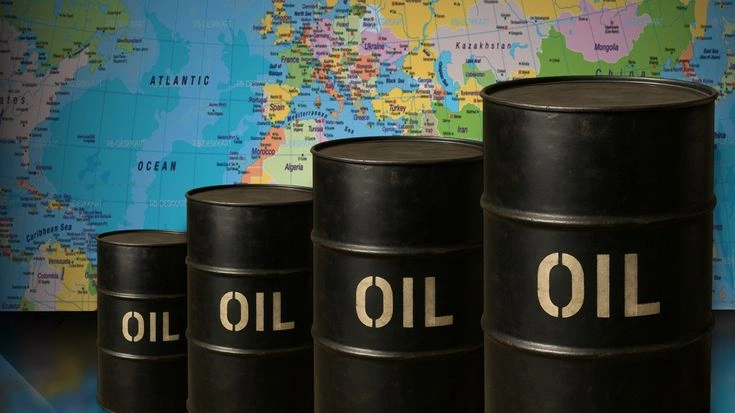
The bold attacks on oil tankers off the coast of Iraq have caused global oil prices to rise sharply, with Brent crude rising above $98 per barrel. This has raised fears of severe supply disruptions as tensions between the US and Iran rise. This event, which happened on the thirteenth day of open conflict, shows how fragile energy channels in the Middle East are. The instant closing of Iraqi oil ports made the market even more unstable.
Details of the incident
Two oil tankers were attacked early Thursday in Iraqi waters close to the important al-Faw port. One person died and the ships caught fire. Iraqi officials called the strikes a “cowardly act of sabotage” and sent six ships to rescue 38 crew members, including 15 Indians, off the US-owned Safesea Vishnu tanker that was attacked by an Iranian underwater drone. Iran took responsibility through state media, while high-ranking Iraqi officials blamed Tehran and connected the incident to the larger conflict in the US-Israel-Iran confrontation.
In reaction, Iraq’s oil ministry stopped all operations at key export terminals, stopping the flow of crude oil from a country that exported more than 107 million barrels in January alone. This closure makes things even worse because Omani officials closed a key oil facility at the same time that UK marine monitors detected a separate cargo ship incident near Dubai. The attacks happened around 50 kilometers off the coast and were aimed at ships that were important for moving oil from Iraq. Iran had warned against passing through the Strait of Hormuz.
Immediate Response from the Market
When the Asian session opened, global oil prices shot up. Brent crude futures jumped more than 9% to $100.52 per barrel before closing at $98.23. West Texas Intermediate (WTI) rose 8.28% to $94.47. This was one of the biggest one-day rises in years, spurred by fears of supply problems as the Strait of Hormuz, which handles 20% of the world’s oil, faced danger of being fully blocked. Traders added a geopolitical risk premium of up to $18 per barrel to the price, similar to past increases caused by chokepoint disruptions.
The financial markets fell, with the S&P 500 and Nasdaq both down by 1% because of uncertainty. However, some stocks related to energy, such those at Costco, went up because people expected gas prices to go up. More than 150 tankers were stranded in the Persian Gulf, and big companies like Maersk changed the routes of supplies over Africa, which meant that shipping would take longer. Citigroup analysts boosted their short-term Brent projections to $85, but they warned that if infrastructure damage keeps happening, the price might reach $120.
Important price changes after the attack:
Brent crude rose 9.28% to $100.52 (the highest point), then fell to $98.23.
WTI crude: up 8.28% to $94.47
The biggest weekly rise for US crude since 1983
A Wider Geopolitical Context
The tanker attacks are happening in the middle of a war between the US and Iran that has been going on for two weeks. Since late 2025, the US and Israel have started assaulting Iranian facilities. Iraq, OPEC’s second-largest producer, cut its output by 1.5 million barrels per day (bpd) because it couldn’t store enough oil and couldn’t export it. Before the war, it was producing 4.3 million bpd. Kuwait, the UAE, and others did the same thing, which could lead to a “nightmare scenario” of unprecedented output reduction if Hormuz stays blocked.
Iran’s threats to close the Strait have led to partial blockades, which have caused traffic to change and raised the risk premium as 20 million bpd of oil and LNG hang in the balance. JP Morgan analysts say that shipments from Iraq and Kuwait might stop in a matter of days, cutting 3 million barrels per day by the eighth day of the conflict. President Trump’s tough stance—no deals with Iran—has kept tensions high, even if the market has dropped a few times because people thought things were getting better.
Disruptions in the global supply chain
Attacks in the Middle East have stopped about a fifth of the world’s petroleum and gas exports. Iraq’s port closures alone have cut off millions of bpd. Gulf producers like Saudi Arabia are running out of storage space, which might force significant fields to shut down since they can’t move oil. Refineries are closing, and it’s getting tougher and harder to process oil because of limits on exports.
To deal with shocks, the International Energy Agency (IEA) released a record 400 million barrels from its strategic reserves.This was twice as much as what they did in response to the Ukraine crisis in 2022.All 32 members were involved, and the dates were flexible. But analysts say this only helps in the short term and not in the long term. Goldman Sachs compared premiums to a six-week shutdown of Hormuz. Shipping reroutes cost more, which might raise prices if attacks become more often.
Ripples in the economy around the world
As oil prices go up, inflation, gas prices, and GDP can all go up, which would impact economies that depend on imports the most. A $10 spike in crude oil prices in India might drop GDP by 0.5% since it would make imports more expensive, put pressure on the rupee, and diminish corporate profits. Prices for petrol and other goods are rising up for consumers, and worldwide benchmarks imply that this trend will continue.
After some initial drops, US markets steadied, but long-term rises might put pressure on the economy. Europe and Asia are getting ready for oil shortages. Energy importers like Japan and South Korea use up their reserves, while producers make a lot of money but worry about damage to their infrastructure. Rystad Energy says that traffic in Hormuz has “effectively stopped,” and benchmarks will stay high until safe passage returns.
Effects that are particular to India:
0.5% of GDP for every $10 rise in oil
Inflation channel: Higher expenses for manufacturing and transportation
Rupee strain: the current account deficit got bigger
Expert Opinions and Predictions
If problems keep happening, analysts think that Brent will average higher into late 2026. BloombergNEF is looking at $91 just for Iranian deficits. JP Morgan focuses on how things work instead of geopolitics, saying that there will be deficits if Gulf production drops. Jorge Leon from Rystad says that prices will be high until Hormuz returns to normal.
Mitigation depends on IEA releases and diplomacy, but Iran’s actions and the US’s determination signal that things will be unstable in the future. OPEC+ quota increases don’t do much to help against blockades.
After attacks on tankers in Iraq raised concerns about supply, global oil prices shot up.