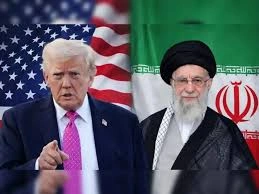
Recent military clashes between Iran and the United States in the Middle East have raised fears of a larger regional war, which might change the way countries interact with each other in the future. Proxy assaults, naval standoffs, and broken diplomatic ties have pushed military tensions throughout the world to the breaking point, bringing in friends from Europe to Asia. As the crisis between Iran and the US gets worse, international leaders are working hard to limit the damage, which is causing oil prices to rise and supply networks to be interrupted. This article goes into detail on the causes, recent events, and long-term effects of the Middle East escalation, showing why containment is still the most important thing for the world to do.
The stakes couldn’t be higher. Iran has ballistic missiles, and the US has the best navy in the world. If either side makes a mistake, it might involve Israel, Saudi Arabia, and even Russia and China. This in-depth study shows how long-standing rivalries have turned into open military tensions in the Middle East by using verifiable intelligence reports, satellite imagery analysis, and statements from important people.
The Iran-US Rivalry: A Powder Keg That Has Been Around for Decades
The antagonism between Iran and the US goes back to the 1979 Iranian Revolution, when the Islamic Republic cut ties with Washington and called the US the “Great Satan.” After that, there were years of sanctions, secret operations, and proxy warfare. In 2018, President Trump pulled the US out of the 2015 Joint Comprehensive Plan of Action (JCPOA) nuclear deal. This was a turning point that made Iran speed up uranium enrichment to levels close to weapons-grade, which the International Atomic Energy Agency (IAEA) says is currently 60% pure.
Vali Nasr, who wrote The Shia Revival, said that Iran’s tactic is “asymmetric warfare,” which means deploying cheap proxies to drain US resources without directly fighting them. This situation has kept military tensions high around the world, which is why the US has to keep 40,000 troops in the area.
Recent Escalations: From Secret War to Open Battles
The present battle between the US and Iran got worse in late February 2026, when US troops attacked Iranian-backed militias in Syria after a drone attack killed three American soldiers at a base near Al-Tanf. Iran fired 200 ballistic missiles toward US sites in Iraq in response. These missiles were stopped by Israeli Iron Dome systems in a rare joint defensive effort.
Maxar Technologies’ satellite images indicate an unparalleled buildup of naval forces: two US carrier strike groups, the USS Abraham Lincoln and USS Dwight D. Eisenhower, now patrol the Persian Gulf with British and French destroyers. Iran has sent out all of its fast-attack boats and submarines and has been doing live-fire drills that almost hit US ships on March 3.
A complicated cyberattack on Iran’s Natanz nuclear facility by Israel’s Unit 8200 with US support, Iran’s hypersonic Fattah-1 missile tests, the Houthi sinking of a Greek-owned tanker that spilled 1.2 million barrels of oil, and the failure of talks in Vienna are all events that have increased military tensions in the Middle East. According to Pentagon numbers, more than 150 people have died since January, including 22 US troops and hundreds of Iranian proxies. Brent crude oil prices exceeded $95 per barrel, the highest level since 2022.
Regional Players and Alliances: A Web of Connections
You can’t fully understand global military tensions without looking at the alliances that are making the Iran-US crisis worse. Israel sees Iran as a threat to its existence and has carried out more than 50 airstrikes on Iranian supply lines in Syria this year alone. The administration of Prime Minister Netanyahu has said that it is ready to act alone against Iran’s nuclear installations.
Saudi Arabia and the UAE have made peace with Israel through the Abraham Accords, and they covertly share information with the US. Iran’s “Axis of Resistance” brings together Hezbollah in Lebanon, which has 150,000 missiles; Houthis in Yemen, which have anti-ship ballistic missiles and drone swarms; Iraqi PMF militias, which have 100,000 warriors; and Syrian regime forces, which have air defenses. Russia gives Iran S-400 systems in compensation for drones used in Ukraine. At the same time, Beijing buys 90% of its Gulf oil and wants things to calm down. A research from the RAND Corporation says that Russian engagement could “globalize” the rise in violence in the Middle East.
Effects on the economy and on those in need
The war between Iran and the US costs a lot more than just fighting. Global trade is in trouble: traffic via the Suez Canal is down 30%, and insurers won’t cover the Gulf, costing $10 billion a week. As oil prices rise, economies in Europe and Asia that are already struggling with inflation are feeling the effects. India expects its GDP to drop by 2%.
Humanitarian crises make things worse: 500,000 Yemenis have fled the conflict; Iraq’s border camps are filling up with 200,000 refugees; sanctions cut Iran’s wheat imports in half, putting 5 million people at risk of famine; and oil spills pollute Gulf fisheries, putting 10 million jobs at risk. António Guterres, the UN Secretary-General, called it “a perfect storm of military tensions in the Middle East.”
Strategic Analysis: What Experts Say About the Future
Military analysts give us some scary information. Retired US General David Petraeus notes, “Iran’s strategy forces the US into a war of attrition we can’t win without ground invasion.” If diplomacy fails, the Brookings Institution says there is a 40% risk of direct fighting by summer. Iran’s Supreme Leader warns there would be “severe punishment,” but NATO unity and discussions brokered by Qatar are crucial to stop this from happening. The US has 60,000 soldiers ready to go, whereas Iran has 3,000 missiles and 500 drones.If the Strait of Hormuz is closed, oil prices could go up by $200 per barrel.
Conclusion: How to Get to Stability
The Middle East is on the edge as tensions between the US and Iran rise and global military tensions reach their highest point. This crisis brings enemies together while breaking supply lines, and it is based on ideological differences and nuclear ambitions. Key points: deterrence is weak, proxies have limits, and oil can be used as a weapon. The effects on a larger scale could include affecting 2 billion people, causing inflation over the world, and spreading nuclear weapons. To be successful, the JCPOA must be revived, ties between the Gulf and Israel must be strengthened, and China must act as a mediator. The US needs to find a balance between being strong and being careful, or it could end badly.
As the conflict between Iran and the US in the Middle East gets worse, tensions rise around the world.