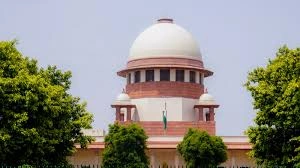
The Supreme Court of India (SC) has agreed to consider a curative petition filed by the Union Government — a significant step that could challenge the sweeping 2024 ruling declaring that state governments have the power to levy taxes on mineral rights and mineral‑bearing lands. The petition is expected to be listed for hearing in January 2026.
Background: The 2024 Judgment That Upended Mineral Taxation
On 25 July 2024, a nine‑judge Constitution Bench of the Supreme Court, by an 8:1 majority, held that state legislatures have the constitutional authority to impose levies — including taxes or cesses — on mineral rights and lands bearing minerals. The Court clarified that the “royalty” paid by mining operators under central legislation is not a “tax,” thereby enabling states to levy additional taxes or surcharges under their domain over land and property.
The verdict overturned the earlier precedent from 1989, which had assigned exclusive authority to the Centre under the central mining law. The majority judgment said that since there is no provision under central legislation limiting state taxing power, states retain full authority under the Constitution to tax mineral rights or mineral-bearing lands.
Further, the Court subsequently clarified that the taxation authority applies retrospectively: states may demand taxes on mineral rights dating back to April 1, 2005. The demand payment for past dues is to be staggered over the next 12 years from April 2026, with no interest or penalty for the period before the 2024 judgment.
Why the Centre Filed the Curative Petition
The Union Government — along with industry stakeholders — argued that the 2024 decision grossly expanded state powers and ignored the macroeconomic consequences. It warned that permitting states to levy differing taxes on mineral rights across jurisdictions may fragment India’s unified mineral policy framework, hurt mining activity, disrupt supply chains for core sectors such as steel, cement, power, and aluminium, and lead to cascading price increases.
Concerned over possible retrospective levy demands amounting to massive liabilities for mining companies, the Centre seeks reconsideration of the earlier judgment, calling it an error of constitutional interpretation.
Potential Consequences: States, Industry, and Federal Balance
If the curative petition succeeds — or even if the hearing proceeds — the case could reshape fiscal federalism in India:
- For mineral‑rich states such as Odisha, Jharkhand, Chhattisgarh, Rajasthan, and Karnataka, retaining taxing power may represent a stable source of revenue, which could fund development and welfare schemes.
- For mining companies and downstream industries, there is uncertainty about future tax regimes, possible retrospective demands, and increased operational costs — which could translate into higher prices of minerals and products dependent on them.
- On the constitutional front, the Supreme Court will restate the contours of power sharing between Centre and states over natural resources, taxes, and land regulation, potentially redefining the balance between central oversight and state autonomy.
What to Watch For
- Whether the Court will admit the curative petition on merits and order a fresh hearing.
- Whether the original 2024 decision will be upheld, modified, or overturned — especially its retrospective tax demands.
- The reaction of state governments, mining companies, and industries reliant on minerals, including potential policy or legislative responses to ensure uniformity or stability.