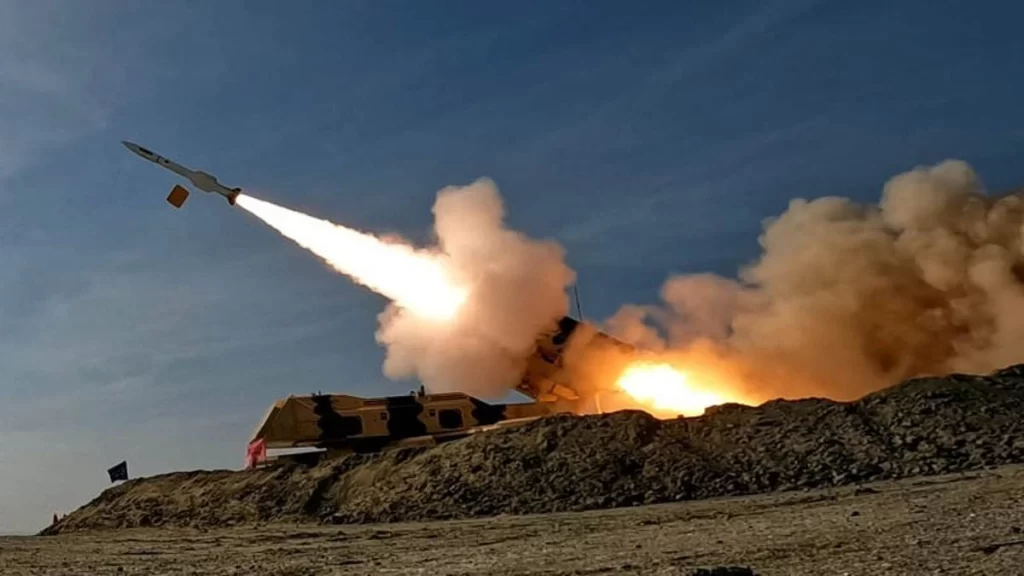
There has been some of the most violent firing along the border between Israel and Lebanon since the start of the larger Middle East conflict. Israel says it hit over 70 Hezbollah targets in southern Lebanon, and Hezbollah says it fired about 200 rockets at Israel. This most recent flare-up, which happened while the US and Israel were still attacking Iran, is a hazardous escalation that might make things a lot worse in Lebanon and the rest of the area.
What Caused the New War Between Israel and Hezbollah
Hezbollah’s decision to officially join the war on March 2, 2026, is what is causing the violence right now. This happened after the US and Israel murdered Iran’s Supreme Leader Ali Khamenei on February 28 as part of Operation Epic Fury. Hezbollah, Iran’s most powerful proxy in Lebanon, declared that its initial missile and drone assaults against Israeli bases such Camp Yitzhak, Ramat David airfield, and Meron monitoring base were vengeance for Khamenei’s death and for Israeli operations that had left the group weaker over the preceding two years.
Israel quickly struck back by hitting Hezbollah positions in Beirut, including as the Al-Manar TV headquarters and a facility where drones were kept. It also took control of most of southern Lebanon and told other communities to depart. The Israel Defense Forces (IDF) had carried out large-scale operations that hit more than 70 targets before the beginning of March. These included weapons depots, launch facilities, rocket launchers, command centers, and financial branches that were used to smuggle money from Iran. The goal of these precise strikes was to damage Hezbollah’s weapons. Israeli intelligence said that 70% of the group’s weapons were destroyed before things became worse. The group still had a lot of precision-guided missiles that could target central Israel, though.
The Attack by Hezbollah Rockets: Its Size and Effects
Around March 11 and 12, Hezbollah unleashed one of its biggest attacks ever, releasing some 200 rockets, missiles, and drones into northern Israel, the Golan Heights, Haifa, and other places. Around 8 p.m., air raid sirens were sounded in a number of towns. Most of the missiles were stopped by Israeli defenses, although two people were hurt in the north. Hezbollah said that the operation was planned to hit 10 Israeli military sites and that it would happen at the same time as Iranian missile strikes on Tel Aviv to put more pressure on Israel.
Here are some of the most important things that happened:
Anti-tank fire and rockets fired from the border have killed and injured a lot of Israeli soldiers, including the son of a well-known minister.
Civilian life is messed up, and city alarms make things much more confusing because security officials aren’t talking to each other.
The attack didn’t hurt buildings very much, but it demonstrated that Hezbollah is still strong even if it has lost a lot of people.
This strike was like the ones on March 3 and 6, when missiles hit Haifa and Golan Heights and hurt eight soldiers, five of them critically.
Israel’s specific attacks in response
The IDF was ready for Hezbollah’s first attacks because they had a strategy. By March 2, Israel had attacked more than 70 Hezbollah sites in southern Lebanon as part of a series of strikes. The majority of the targets were places where weapons were kept, command headquarters, and intelligence centers. After thereafter, operations moved to the high-rises in Beirut, where Hezbollah’s main office is. People were told ahead of time to minimize deaths to a minimum.
By March 6–11, Israel had attacked more than 500 targets. These included Al-Nour radio, communication networks, and financial networks that were linked to Iranian sponsorship. Ground troops took control buffer zones in southern Lebanon in case of an invasion after Hezbollah officially declared war. The plan exploits Israel’s greater information to catch Hezbollah off guard and make its rockets, tunnels, and leaders weaker.
Reports from Lebanon say that at least 52 people perished in the first attacks. By March 8, the number had climbed to 394, including 83 children and 42 women. There were also 1,130 injuries, and a lot of them were in residences. Israel says that operations will continue until Hezbollah gives up its arsenal, and they point to UN Resolution 1701 as proof.
More fatalities and costs to help people
The confrontation getting worse has cost both Hezbollah and Israel a lot. The Lebanese Ministry of Health estimates that Israeli attacks have killed 486 people since the start of March. The southern suburbs of Beirut have also seen a lot of damage. Two Israeli soldiers have died and many others have been hurt by Hezbollah rockets. This has made thousands of people in northern Israel leave their homes.
More than 1,130 people were hurt on the Lebanese side, including 254 kids. The strikes damaged buildings that weren’t military, which made the humanitarian situation worse.
From the Israeli side: One attack hurt eight soldiers badly, and people are being relocated out of border villages because of fears of rockets.
The 2026 Iran War claimed over 2,000 lives across Iran, Lebanon, and Israel.
Hezbollah’s diminished strength, a consequence of two years of casualties and assaults, played a role in its actions, though Iranian pressure was a significant factor.
International reactions and diplomatic initiatives are underway. Global leaders are increasingly concerned about the escalating conflict on the northern front. More than 25 countries issued formal condemnations of Hezbollah’s actions, simultaneously demanding a ceasefire in accordance with Resolution 1701. They underscored the importance of protecting civilians and upholding Lebanon’s sovereignty.
Lebanon’s Prime Minister Nawaf Salam labeled Hezbollah’s assaults as “irresponsible.”
President Aoun, conversely, spoke of negotiations aimed at lasting security.
The US and Israel are working together on Operation Epic Fury to stop the fighting from getting worse, but Hezbollah says it will keep attacking. António Guterres, the UN Secretary-General, asked people to be careful and warned about the risks of unrest in the area.
Escalation Ignites: Israel Hits 70 Hezbollah Targets The Group Fires 200 Rockets in a Huge Barrage