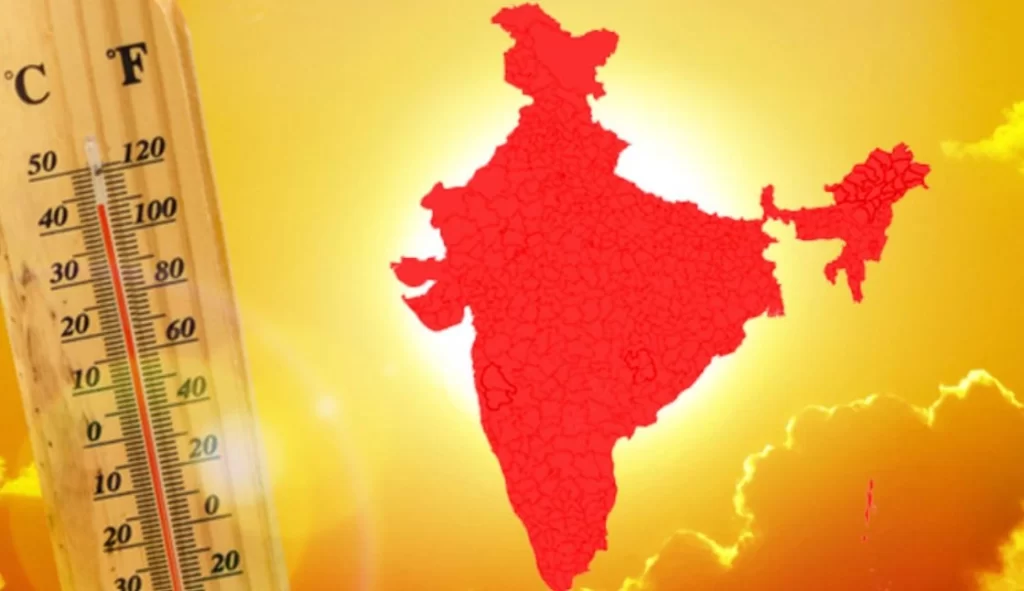
The weather in western India is expected to be exceedingly scorching. This Week: Meteorologists say that western India will be slammed by a severe heatwave this week, with temperatures in important states rising well beyond 45°C. The government and the people are acting quickly because this poor weather could harm people’s health, agricultural, and daily life.
Today’s weather report and how it may affect the area
The India Meteorological Department (IMD) has put parts of Rajasthan, Gujarat, and Madhya Pradesh on red alert. The highs over the following five days could be between 48 and 50 degrees Celsius. Jaipur, Ahmedabad, and Bhopal are among of the cities that get impacted the most. Because coastal Gujarat is so humid, the heat indices make it feel a lot hotter. Nighttime relief is still quite limited, with lows around 32–35°C, which makes heat stress worse.
In Maharashtra, which includes the suburbs of Pune and Mumbai, orange alerts mean that the temperature can reach 43°C. Concrete jungles trap heat, which makes things worse. Farmers in Vidarbha are worried that if the heat wave lasts more than a week, they will lose 15–20% of their crops since their rabi crops, such wheat and pulses, are wilting early. The unexpected monsoons from last year are already having an effect on rural areas in western Madhya Pradesh. Now they have to cope with animals that are sick and bodies of water that are dry.
This heat wave is part of a bigger trend that is forming because of a strong El Niño and western disturbances that are taking longer to happen. It is one of the most important and earliest things to happen in March in a long time. Historical data suggests that March 2026 will be the worst month, much worse than 2019 when more than 200 people died in India because of the heat.
Hospitals in the states that are affected are stocking IV fluids and setting up clinics to aid those who are too hot. Experts suggest that we need better early warning systems that can send text alerts to phones.
How the government responded and became ready
Officials have begun to put a plan with numerous pieces into action. The National Disaster Management Authority (NDMA) has begun the second phase of its work. This includes setting up cooling centers in more than 500 urban wards in western India. Schools in Rajasthan and Gujarat will only be open for half days starting on Monday. The labor ministry will also warn people who work in unorganized industries not to work between noon and 4 PM.
The state governments are paying for fans and coolers, and Rajasthan has set aside ₹200 crore for help. Marathwada, Maharashtra has more than 10,000 water tankers because it is likely to have droughts. They intend to visit 2,000 villages. The federal government is moving quickly to provide 50 million water sachets to the country by airlift from ports in nearby countries.
One such initiative is testing AI-powered heat mapping applications in Ahmedabad. These apps can forecast where the hottest spots are with an 85% chance of being right. People from ASHA are going door-to-door in neighborhood task forces to hand out ORS packages. By the middle of the week, they want to reach 80% of the homes that are at risk.
How it affects farming and the economy
It’s hard to say what will happen to farming in the future. It feeds 60% of the people that live in western India. The wheat buying facilities in Madhya Pradesh demonstrate that the grade of the wheat drops 10–15% of the time because the grains shrink too quickly. Prices for food can go up by 5% to 8% across the country. Farmers in Maharashtra who produce sugarcane estimate that their output would drop by 12%, which will make it harder for them to make ethanol.
Economic forecasts say that the states that are affected will lose 0.5% of their GDP for the quarter because when the temperature rises beyond 40°C, workers can lose up to 25% of their output. Tourism in Rajasthan’s desert areas could decline by 40%, and heritage sites like Udaipur might close at noon. Street sellers and textile makers are losing customers, and their goods are going bad.
Long-term patterns and climate change
The IMD estimates that the average temperature in March has gone up by 1.5°C since 2000. This shows that the weather is becoming worse. In the past, the dry parts of western India were not affected by snowfall in the Himalayas. But today they have long dry seasons. There was 70% less rain this March than usual. The heat wave in Australia in 2024 and the waves in Europe in 2025 are examples of what is becoming the new normal all around the world.
Researchers from IITM Pune said that if emissions keep going up, there is a 40% chance of mega-heatwaves happening every year by 2030. India’s Nationally Determined Contributions want to reach net-zero by 2070, but development is still slow.
Only 30% of cities have heat action plans that function all the time. International aid, including UN climate financing, helps construct solid infrastructure, such as urban woodlands and green roofs.
More and more people are linking these deaths to issues with the law. People want guidelines that say heat must be provided and that more renewable microgrids should be built to keep the lights on.
Advice from experts and safety for the public
Dr. Madhavan Rajeevan, who used to be the chairman of IMD, states, “Heatwaves are no longer seasonal anomalies; they are killers that can be predicted if not dealt with.”Dr. Shamika Ravi, an epidemiologist at ICRIER, adds that warnings that take gender into account are particularly important because women are 20% more likely to be wounded.
If you reside there, stay indoors from 11 AM to 4 PM and use wet curtains to cool off. Drink 3 to 4 liters of water every day, and don’t drink alcohol or coffee. Wear light, loose cotton garments and utilize umbrellas or hats when you’re outside. Keep an eye on kids and older people. If you’re feeling sick or have cramping, see a doctor right away.
WhatsApp support lines give localized ideas, but apps like IMD’s Mausam and Heat India give updates in real time.
Heatwave Alert: Western India Braces for Extreme Temperatures This Week