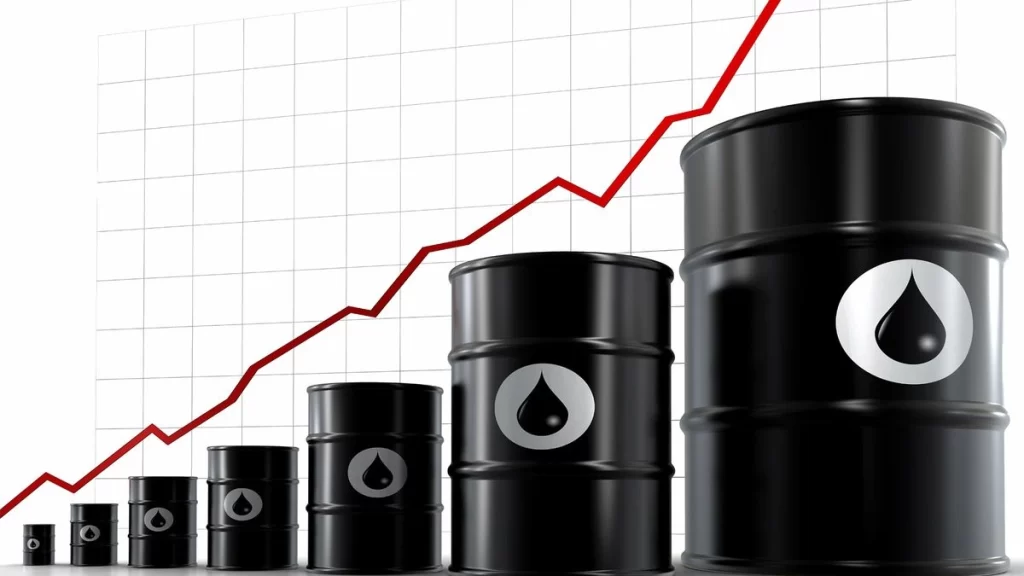
The International Energy Agency (IEA) has announced a historic release of strategic oil reserves. This is the most coordinated effort in the agency’s 50-year history to deal with rising global oil prices and supply problems. This extraordinary step attempts to put billions of barrels into the market, which will help economies around the world right away as tensions rise and output falls short.
Important Information About the Release
This plan allows for the release of up to 180 million barrels over the next six months, with the first shipments likely to arrive in a few weeks. The US promised 60 million barrels, the most of any country. It has the world’s greatest reserve, with more than 700 million barrels stored in caves in Texas and Louisiana. Japan gives 30 million barrels, South Korea gives 20 million, while European countries like Germany and France give a total of 40 million. China, which is not a member of the IEA, said it would make similar releases at home to help keep the world stable.
A staggered rollout commencing on March 15, 2026, and peaking in April and May to match the highest summer demand are two important parts. The U.S. promise is around 33% of the total, Japan’s is 17%, Europe’s is 22%, and the rest is 28%. Target markets are mostly in Asia and Europe, where prices have gone up 40% this year because they rely on imported crude.
Birol said that this “record oil reserve release” will cut the price of Brent crude oil by about $10 to $15 per barrel in the immediate term. This would help ease inflation for both consumers and businesses.
Reasons for the Market Turmoil
This intervention was necessary because of a number of factors that were coming together. Since January 2026, geopolitical problems in the Middle East, especially those involving Iran and proxy wars, have cut exports from OPEC+ countries by 5 million barrels per day. The Trump administration’s sanctions on Venezuelan and Russian suppliers have made supply chains further tighter. In the U.S., shale producers have to deal with rules and investors who want them to be more disciplined with their money, which means that production increase is only 1% this year.
Extreme weather made things worse. In February, Arctic storms stopped 15% of Gulf of Mexico output, while European refineries had to deal with freezing temperatures. After the winter, demand shot up, with worldwide consumption expected to reach 103 million barrels per day—2 million more than in 2025—thanks to China’s economic revival and India’s industrial expansion. Analysts say that prices may have gone over $120 per barrel without intervention, which would have been as high as they were in 2008 and could have led to stagflation.
The IEA’s statistics shows how weak things are: OPEC+ has only 3 million barrels per day of spare production capacity, the lowest level in decades, so there isn’t much room for more problems. This release of reserves stabilizes markets by flooding them with supplies. This gives time for diplomatic solutions and transitions to renewable energy.
Effects on the World Economy
The first benefit for consumers comes at the gas station. Gas prices in the U.S. are close to $4.50 per gallon, but they could drop 20 to 30 cents in the next few weeks, which would help families deal with 3.5% inflation. Europe, where diesel fuels trucks and heating, is also expecting similar savings, which are very important because the Eurozone is on the verge of a recession and GDP predictions have been cut to 0.8%.
Most of the time, industries will benefit. Airlines, which are already dealing with jet fuel prices that have gone up 50% year over year, expect to save a total of $20 billion. Chemical and petrochemical companies that depend on naphtha and other derivatives can maintain their margins when feedstock prices are unstable. In developing economies like India, where oil imports account for 80% of energy consumption, lower prices help the budget, which frees up money for infrastructure.
But the rewards aren’t the same for everyone. Countries that export oil, like Saudi Arabia and Russia, are losing money, which might make their budget deficits worse. Saudi Aramco has already said it will cut production, and Moscow is now selling to Asia at a discount. In the long run, this might speed up the breakup of OPEC+, as countries like the UAE strive for bigger quotas.
Things to think about for the environment and the energy transition
Critics say that this “record oil reserve release” slows down the move to renewables and keeps fossil fuels strong at a key time. Environmental groups are upset about the irony: just a few months ago, IEA members promised to reach net-zero by 2050, but now they’re flooding markets with crude oil. Birol said, “Energy security must not come at the expense of climate goals,” pointing out that reserves are limited and releases are only temporary.
The data backs up a nuanced view. The action only affects less than 2% of global demand each year, therefore it is unlikely to stop the 25% yearly increase in solar and wind installations. Electric vehicles make up 18% of all new automobile sales around the world, which makes us less dependent on oil. Still, low prices could leave renewable energy assets stranded; investors may prefer cheap fossil fuel returns over green tech when interest rates are high.
Reactions from stakeholders and expert analysis
The decision was praised by leaders around the world. President Trump called it “decisive action to crush inflation,” which fits with his plan to make the US the world’s energy leader. Japanese Prime Minister Fumio Kishida termed it “a lifeline for our economy,” and Ursula von der Leyen, President of the EU Commission, appealed for further cooperation. Oil companies like ExxonMobil and Shell were cautiously optimistic, with CEOs saying that prices will stay stable at roughly $80 to $90 per barrel until 2026.
Experts provide us further information. “This gives us six months of breathing room, but structural reforms are necessary,” said Amy Myers Jaffe, an energy policy expert at New York University. She says that shocks will keep happening if supplies aren’t varied, and she supports LNG and hydrogen scaling. Goldman Sachs analysts say that demand will drop by 5 to 7 percent because of efficiency increases, although OPEC+ compliance is still a big question mark.
Positive comments include comfort from consumers and importers who are worried about price gouging, as well as a 3% jump in energy stock indices after the news. People are worried that too much supply will crash futures for producers and that short-termism could hurt the Paris Agreement for environmentalists.
Problems Coming Up and Ways to Deal with Them
There are many problems that need to be solved before implementation can begin. Port capacity are already around 95% utilization, and logistics for tunnel extractions and tanker cargoes are putting further more burden on them. Some reserves are heavy sour crude, which means they don’t match in quality. This could mean that blending is needed, which would slow down the integration of refineries. Market analysts are keeping an eye on speculators. If hedge funds with $150 billion in long holdings all sold at once, it might make the market even more volatile.
In response, the IEA set up a monitoring task force that sends out updates every two weeks on how the drawdown is going and how it affects prices. Members promised to refill their reserves once prices drop below $70. They will do this by making forward purchases to avoid making mistakes like the U.S. did when it sold too soon in 2022. The broader strategy encompasses a push for biofuels, a shift towards electric transportation, and diplomatic efforts aimed at easing energy tensions between Russia and Ukraine.
A Bigger Geopolitical Picture
This release takes place in a difficult situation. The U.S. has taken a harder line on Iran since Trump’s reelection. Iran’s 3.5 million barrel-per-day output is now facing fresh secondary penalties. Israel’s actions in Gaza indirectly affect shipping in the Red Sea, which raises shipping costs by 300%. At the same time, BRICS countries are looking into trading oil in yuan instead of dollars, which threatens the petrodollar’s dominance.
India, which has the third-largest economy in Asia, gains the most. Refineries that handle Venezuelan heavy grades and cheaper imports make petrochemical exports more competitive, which is in line with economic trends. But relying on others makes you weaker. New Delhi is speeding up exploration in the Krishna-Godavari basin to minimize its dependency on imports from 85% to 70% by 2030.
Long-Term Market Outlook
Predictions are different. In its base case, the IEA says that Brent would average $85 in 2026 and drop to $80 in 2027 as Brazil and Guyana’s non-OPEC production increases by 1.5 million barrels per day. Bullish forecasts that take into account long-term turmoil in the Middle East predict peaks of above $100. Bearish views, with EV penetration happening quickly, stop at $70.
Innovation gives us hope. Carbon capture at Permian Basin fields and green hydrogen pilots in Europe promise a long-term supply. Policymakers need to find a balance between acting quickly and thinking forward. Subsidies for batteries, not barrels, will shape the future of energy.
IEA Launches Record 400M Barrel Oil Reserve Release Amid Crisis