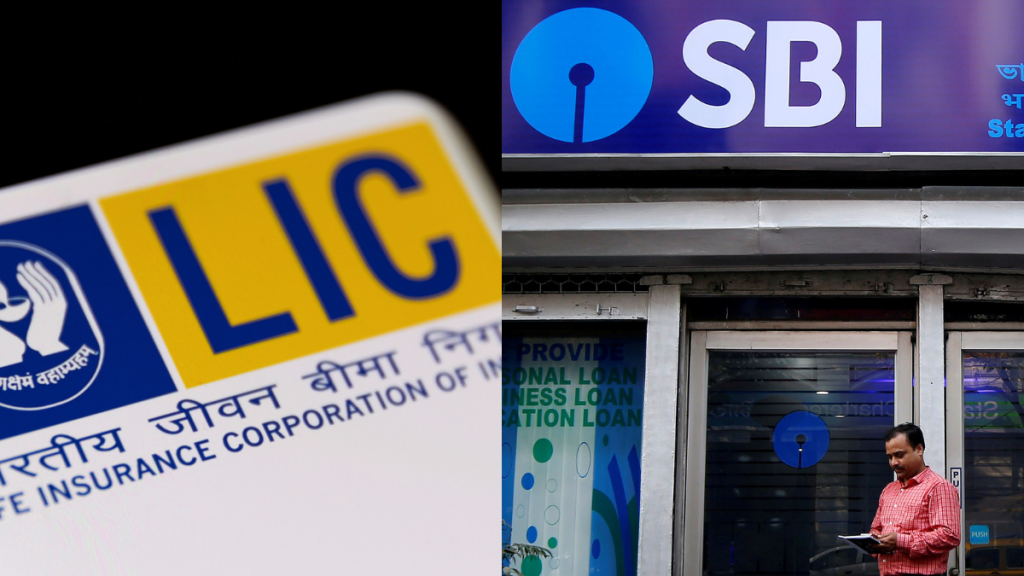
July 21, 2025 — In a major development in the financial sector, the Life Insurance Corporation of India (LIC) has increased its stake in the State Bank of India (SBI) to 9.49%, following the successful closure of SBI’s Qualified Institutional Placement (QIP) issue. The insurance giant invested ₹5,000 crore in the equity offering, underlining its continued confidence in the country’s largest public sector lender.
SBI concluded its QIP on Monday, raising over ₹25,000 crore from a mix of domestic and global institutional investors. The issue price was set at ₹672.25 per share, and the fundraising is one of the largest by a public sector bank in India. The proceeds are expected to significantly enhance SBI’s Tier-1 capital, helping the bank meet future credit demand and support its growth ambitions.
According to exchange filings, LIC’s shareholding in SBI rose from 8.27% to 9.49% after it subscribed to over 15 crore shares in the QIP. This strategic investment makes LIC one of the largest institutional shareholders in SBI, reinforcing the government’s broader objective of strengthening public sector financial institutions through mutual support.
SBI, which is regarded as a bellwether for the Indian banking sector, plans to utilize the fresh capital to support lending in key sectors, including infrastructure, green energy, and large-scale corporate projects. The bank has been witnessing strong credit growth and improving asset quality over recent quarters, aligning with India’s broader economic momentum.
SBI Chairman Dinesh Khara welcomed the successful closure of the QIP and LIC’s participation, stating that the funds will help enhance the bank’s capital adequacy and expand its lending capabilities. “The capital raise positions us strongly to participate in India’s future growth, especially in areas where capital-intensive projects require long-term financing,” he said.
LIC’s decision to deepen its investment in SBI has been viewed positively by market analysts. It not only strengthens LIC’s long-term equity portfolio but also signals confidence in the banking sector’s resilience and future profitability. The move also ensures continued synergy between two of India’s most significant state-run financial entities.
Market observers believe that this strategic alignment between LIC and SBI comes at a crucial juncture, as Indian banks prepare for increased demand for credit amid ongoing economic recovery. The capital raised through the QIP will also help SBI comply with Basel III norms and maintain a healthy capital buffer.
With LIC’s increased stake and robust participation from institutional investors, SBI is expected to remain a key player in the country’s banking landscape. The bank’s focus on prudent lending, digital transformation, and risk management continues to drive investor interest and long-term value creation.