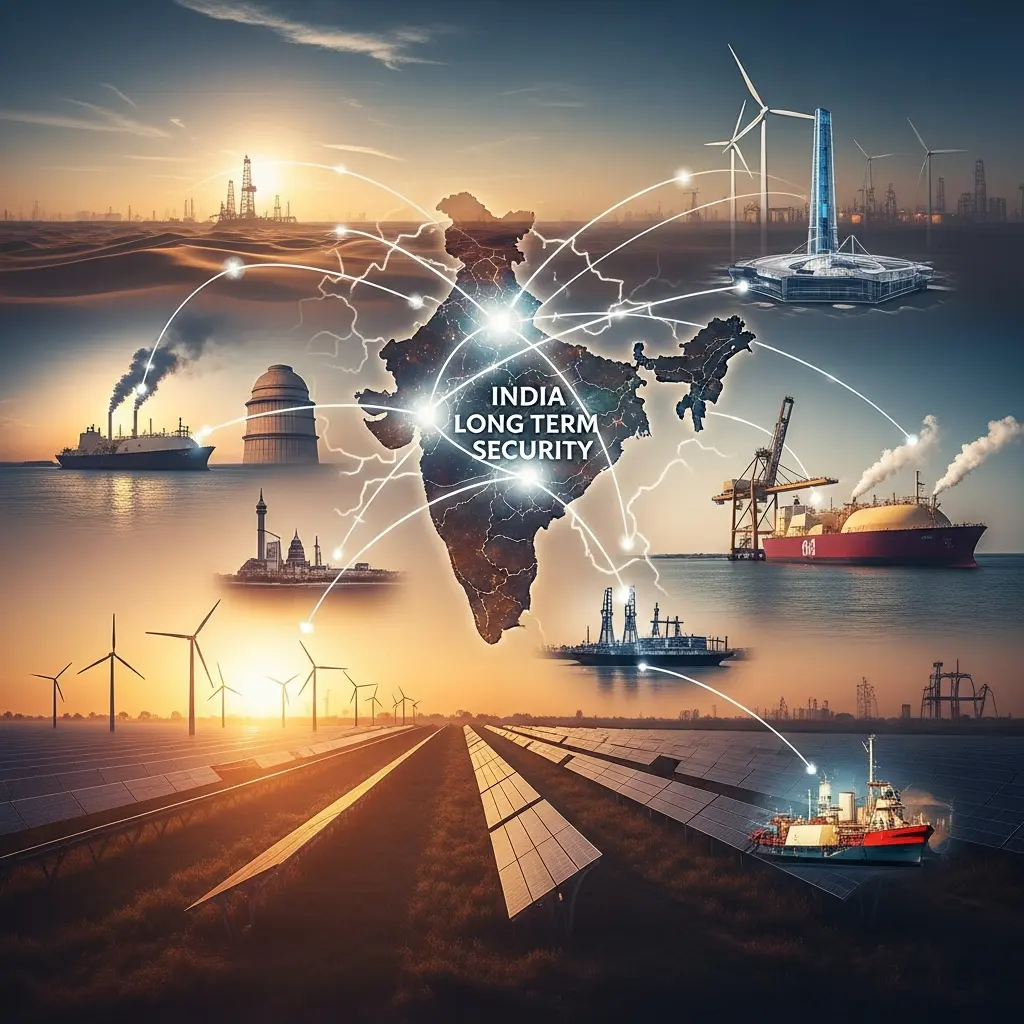
New Delhi is not waiting to be caught off guard as tensions in the Gulf shake up oil markets and shipping lanes get tighter. A carefully planned effort to improve India’s energy security is already well underway, and the stakes are very high for a country with 1.4 billion people.
When the Persian Gulf starts to heat up, energy ministries get a certain kind of nervousness. It’s not the panic that comes with a sudden crisis that makes headlines; it’s calmer and more planned than that. The country is worried because it knows how much it needs a distant, unstable area for the fuel that keeps its factories running, its trucks moving, and its 1.4 billion people going about their daily lives. That worry is very real right now in New Delhi. But a plan is also becoming more and more important.
India’s energy security has never been an easy topic to talk about. About 85% of the country’s crude oil comes from other countries, which makes it one of the world’s most vulnerable major economies to changes in the global oil supply. A lot of those imports go through the Strait of Hormuz, so every time tensions rise in the Gulf, Indian energy planners have to deal with it right away. The current situation, with more naval activity, higher shipping costs, and strained diplomatic channels, has made that problem more urgent than it has been in years.
Analysts say that what makes India’s response this time different is that it is proactive. Instead of waiting for problems to happen and then responding, the government has acted quickly and on many fronts at the same time. Senior officials have been quietly but intensely reaching out to other countries through diplomacy. They’ve been talking to Gulf producers, alternative suppliers in Africa and the Americas, and transit partners whose help will be very important if the main shipping routes come under a lot of pressure.
India is no longer just a passive buyer in the world’s energy markets. It is using the amount of imports it sends as real diplomatic leverage.
India needs too much oil, and it has too big of an impact on the economy, for the country to rely on goodwill alone. New Delhi has made it clear in its bilateral talks that uninterrupted access to energy is a basic requirement for its wider economic partnerships. India’s new view of its place in the world is shown by the fact that it now sees energy diplomacy as a key part of its foreign policy instead of just a technical detail. Because of how much it needs, this country has earned a place at tables where it used to have to watch from the outside.
The government has tried to calm down a public that is very worried about fuel prices at home. Petrol and diesel prices affect almost every part of daily life in India. For example, an auto-rickshaw driver has to figure out if the day’s fares will cover his fuel bill, and a logistics company has to figure out how much it will cost to deliver goods to customers. Official statements stressing the stability of fuel supplies and the need for enough strategic reserves have been carefully timed to stop people from panic buying before they need to, which can cause supply problems.
Diversification: the longer way to go
India’s energy policy is going through a big change that has been in the works for years and is now more important than ever. The goal of diversification is to cut down on reliance on any one region or supplier. This is happening faster in many ways. India has gotten closer to Russian oil suppliers. This relationship grew a lot after Western sanctions changed the flow of crude oil around the world. At the same time, it is making long-term supply deals with producers in West Africa, the US, and Latin America.
Key moves to diversify are happening: buying more Russian crude oil at lower prices · New long-term deals with US LNG exporters · Expanding the strategic petroleum reserve to a 90-day buffer target • Speeding up the growth of renewable energy sources in the US to reduce reliance on oil over time • Recent diplomatic visits have strengthened bilateral energy agreements with the UAE, Saudi Arabia, and Qatar.
India’s energy policy should pay special attention to the part that deals with renewable energy. New Delhi’s long-term solution to being vulnerable to oil imports is not just to get oil from more places; it is also to use less oil. India has set high goals for solar, wind, and green hydrogen capacity. If these goals are met, they will significantly lower the economy’s exposure to changes in global crude oil prices over the next ten years. These goals have both an economic and a strategic purpose: every gigawatt of clean energy produced in the US is one less gigawatt that needs to be shipped on a tanker through a disputed waterway.
This doesn’t mean that India won’t be affected by what happens in the Gulf. In the short term, any problems with India’s oil supply would still cause prices to rise, which would be hard for the government to handle both politically and economically. Strategic reserves are not a solution; they are a buffer. Having a variety of suppliers helps a little, but it doesn’t make up for the large amounts of goods that are already moving through the Strait of Hormuz.
But what India is showing right now is important: that a country can go from being weak to being strong, even in the middle of a crisis that it didn’t start, if it has the right mix of diplomatic weight, strategic patience, and policy ambition. Today’s energy diplomacy work in New Delhi isn’t very exciting. It happens in calls between ministers and meetings between ministers, in new supply contracts, and in cargo flows that are quietly changed. It doesn’t make for exciting news. But for 1.4 billion people whose daily lives depend on stable fuel prices, this may be the most important thing that Indian foreign policy is doing right now.