
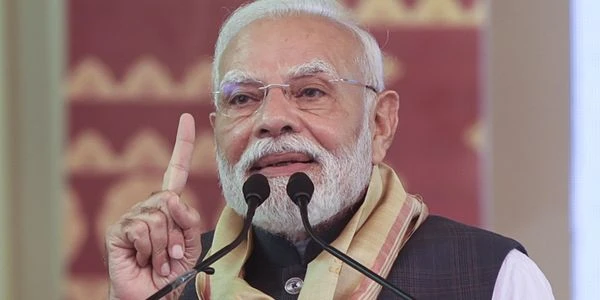
Prime Minister Narendra Modi on Thursday laid the foundation stone for the Mahi-Banswara Nuclear Power Project, part of development initiatives worth over ₹1.22 lakh crore in Rajasthan. The announcement underscores India’s commitment to expanding clean energy capacity and strengthening the nation’s infrastructure.
The Mahi-Banswara Rajasthan Atomic Power Project (MBRAPP), with an estimated investment of ₹42,000 crore, will be among the country’s largest nuclear power facilities. Situated near the Mahi Bajaj Sagar Dam in Banswara district, the project will house four indigenous 700 MW Pressurized Heavy Water Reactors (PHWRs), bringing a total installed capacity of 2,800 MW.
This landmark project will be executed through Anushakti Vidhyut Nigam Ltd (ASHVINI), a joint venture between the Nuclear Power Corporation of India Ltd (NPCIL) and the National Thermal Power Corporation (NTPC). It marks NTPC’s debut entry into India’s atomic energy sector, a significant step in diversifying the nation’s energy mix.
Addressing the gathering, PM Modi highlighted the strategic importance of the MBRAPP, stating that it will enhance India’s clean energy capabilities, reduce dependence on fossil fuels, and create substantial employment opportunities in the region. “This project will not only empower Rajasthan but also strengthen India’s energy security and climate goals,” he remarked.
The Mahi-Banswara project is part of a broader ₹1.22 lakh crore development package announced for Rajasthan, which includes investments in infrastructure, renewable energy, and industrial growth. This initiative aligns with India’s broader objective of achieving net-zero carbon emissions by 2070 while ensuring energy affordability and sustainability.
Experts say that nuclear power will play a vital role in India’s future energy roadmap. The MBRAPP is expected to contribute significantly to meeting the growing electricity demand, supporting industrial growth, and stabilizing the power grid. Moreover, the indigenous design of the reactors highlights India’s technological prowess in the nuclear sector.
The project is expected to generate thousands of direct and indirect jobs, boosting local economies and skill development in Banswara. It will also promote ancillary industries and infrastructure growth, contributing to the socio-economic development of the region.
In conclusion, the Mahi-Banswara Nuclear Power Project represents a milestone in India’s clean energy journey. It reflects a commitment to sustainable development, energy security, and technological advancement, strengthening the foundation for a greener and more prosperous future.

