June 26, 2025:
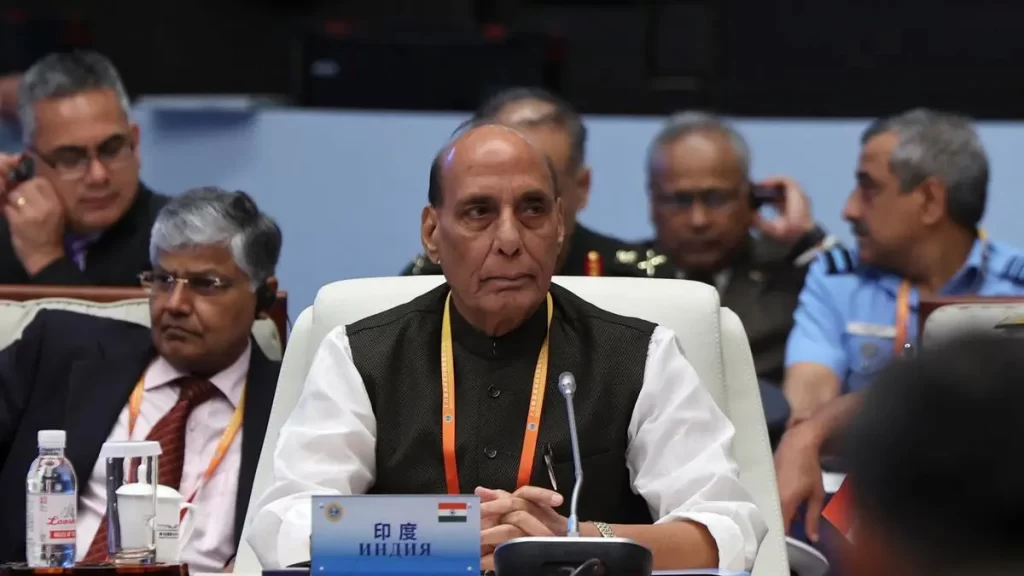
In a strong diplomatic move, Defence Minister Rajnath Singh on Wednesday refused to endorse the joint communique at the Shanghai Cooperation Organisation (SCO) Defence Ministers’ meeting, after Pakistan and China reportedly blocked key references to terrorism and omitted the mention of “Pahalgam” — the Indian venue for last year’s meeting.
According to official sources, Singh chose not to sign the final document after India’s core concerns were sidelined. New Delhi objected to the removal of specific language that acknowledged the threat of terrorism and expressed disapproval over the deliberate exclusion of Pahalgam, located in Jammu and Kashmir, from the SCO record. India hosted the 2023 defence ministers’ meeting in Pahalgam, a fact it views as essential to be officially acknowledged in the spirit of cooperation and transparency.
“India cannot be part of any joint statement that ignores terrorism or undermines its territorial integrity,” sources in the Indian delegation said. The move highlights India’s commitment to addressing cross-border terrorism — a consistent demand at multilateral forums, especially those that include Pakistan and China.
In his address at the summit, Singh reaffirmed India’s stand on terrorism, saying, “Any effort to dilute the focus on terrorism is unacceptable. Terrorism continues to be the most serious threat to international peace and security.” He urged all SCO members to collectively recognize and combat the menace of terrorism without politicisation or selective approaches.
This is not the first time India has pushed back against attempts to weaken global consensus on terrorism at the SCO. In previous meetings, India has consistently raised concerns over the lack of accountability from countries that support or harbour terrorist entities.
China and Pakistan’s actions at the summit have once again raised questions about the internal dynamics of the SCO, a regional bloc that includes India, China, Russia, Pakistan, and Central Asian nations. While the SCO was originally formed to enhance regional security cooperation, growing divisions over terrorism and territorial disputes have often hampered progress.
India’s principled stand is being seen as a message to the international community that it will not compromise on issues related to its sovereignty or national security. Officials have reiterated that India remains committed to constructive engagement within the SCO, but only on the basis of mutual respect and shared values.
The incident is likely to further strain India’s already tense relations with both China and Pakistan. However, India’s refusal to sign the document has garnered attention as a bold assertion of its strategic priorities on the international stage.