The numbers are in — and they are harder to ignore than ever before.
There is a moment in every crisis when the data stops being abstract and starts feeling personal. For millions of people around the world who have survived record floods, endured brutal heatwaves, or watched wildfires consume entire communities, that moment has already arrived. Now, the science is catching up to what many already feel in their bones: our planet is warming faster than previously predicted, and the window to do something meaningful about it is narrowing with every passing year.
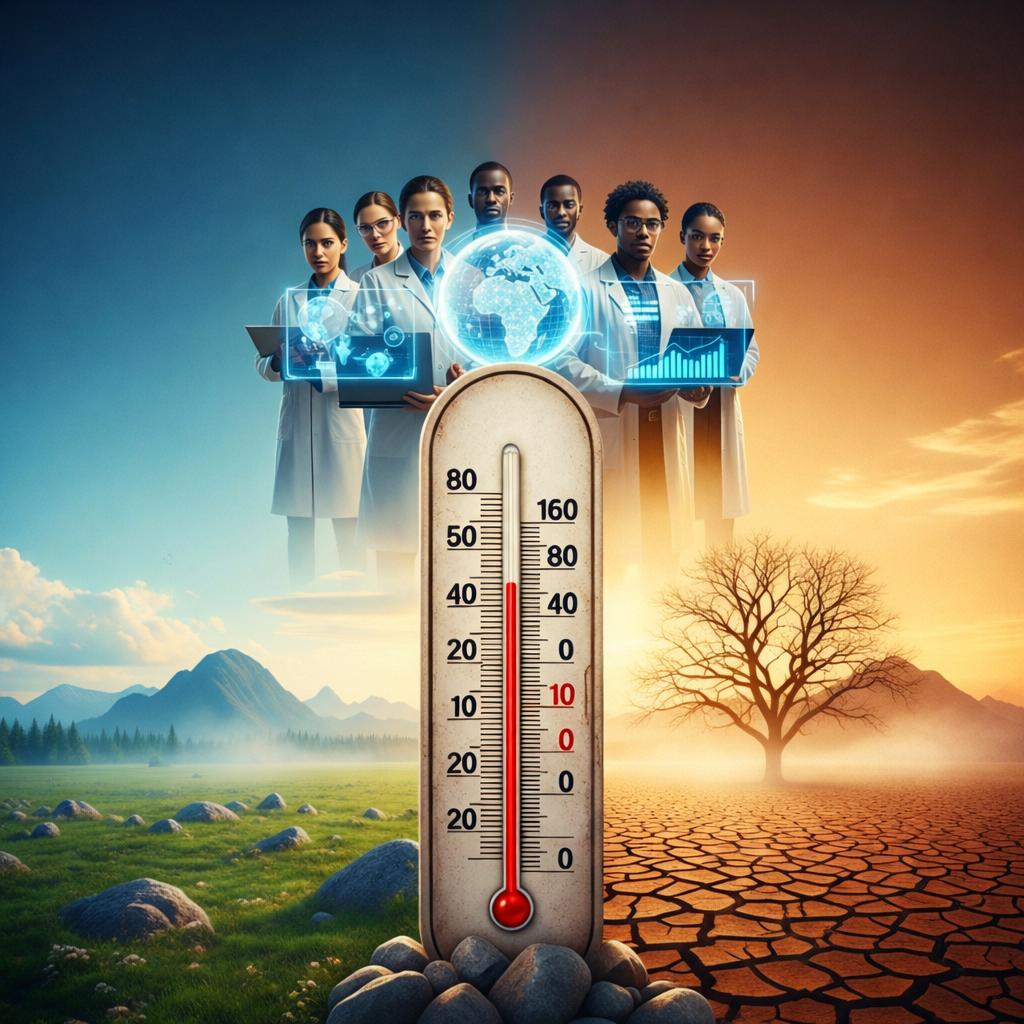
A landmark new climate change research study published in Geophysical Research Letters in early March 2026 has delivered what scientists are calling a historic finding. For the first time, scientists have stated with statistical confidence that global warming is accelerating — not merely continuing at a steady pace. The past decade ranks as the fastest-warming on record, and at the current pace, Earth will exceed the 1.5 degrees Celsius limit set by the Paris Climate Accord before 2030.
That is not a distant warning. 2030 is four years away.
What the New Global Warming Study Actually Found
For years, climate scientists debated whether the recent string of record-breaking temperatures represented a genuine long-term shift or just natural variability — the kind of noise that comes from El Niño cycles, volcanic eruptions, and solar fluctuations. In this new study, researchers subtracted the estimated influence of El Niño events, volcanic eruptions, and solar variations from the global temperature data, leaving behind a cleaner signal — and what that signal revealed was a statistically significant acceleration in global warming beginning around 2015.
The numbers are striking. The rate of global warming has surged since 2015 and is now nearly double what it was in the 1970s, with Earth currently warming at a rate of around 0.35°C per decade. To put that in perspective, the warming rate hovered at roughly 0.2°C per decade for the four decades before 2015. Something changed — and we are only beginning to fully understand what.
“We can now demonstrate a strong and statistically significant acceleration of global warming since around 2015,” said Grant Foster, a co-author of the study and retired statistician formerly at Tempo Analytics.
The authors concluded that their adjusted data show acceleration with over 98% confidence, with faster warming over the last decade than during any previous decade on record.
Why Is It Speeding Up?
This is the question scientists are now grappling with most urgently. The leading explanation is one that most people would find surprising. Many scientists agree that the recent acceleration is mainly due to a reduction in air pollution following the introduction of fuel regulations for international shipping, which resulted in fewer pollutant particles that reflect sunlight into space and help form insulating clouds. In other words, cleaner air — while beneficial for human health — has inadvertently removed a layer of unintentional cooling that was partially masking the true pace of global warming.
There is also a broader concern about feedback loops. Recent climate assessments highlight an accelerating planetary energy imbalance, unprecedented ocean warming, and a weakening land carbon sink — the natural systems that absorb CO₂ from the atmosphere are becoming less effective just as emissions remain stubbornly high. The planet, in short, is losing some of its natural buffers at the worst possible time.
Extreme Weather Events: The Human Face of the Data
Climate data can sometimes feel remote and clinical. But the consequences of accelerating global warming are anything but. The impacts of heat are clear — vast regions of the world have reeled from devastating climate-fuelled extreme weather events including heatwaves, hurricanes, wildfires, and floods.
Extreme weather events are no longer rare anomalies. They are the new pattern. The last 11 years have been the warmest years on record. According to an analysis by Berkeley Earth, if we assume a constant rate of warming since the 1970s, the last three years have less than a 1-in-100 chance of occurring solely due to natural variability.
Rising sea levels compound the threat. As ice sheets in Greenland and Antarctica melt at accelerating rates, coastal communities face the slow-motion reality of permanent inundation. Island nations, low-lying deltas, and major port cities are already making long-term plans that involve retreat, not just adaptation.
The World Meteorological Organization confirmed that 2024 was the warmest year on record, coinciding with record ocean temperatures, sea-level rise, rapid glacier loss, low Antarctic sea ice, and more frequent extreme weather.
Is There Still Time to Act?
The science delivers both a warning and, buried within it, a reason for urgency that borders on hope. The study authors wrote that stopping this trend remains within humanity’s reach — research shows that global warming will stop around the time humanity reaches zero CO₂ emissions. The planet’s fever does not have to keep rising forever. But the medicine requires an honest acknowledgment of how serious the illness has become.
Robert Rohde, chief scientist at Berkeley Earth, captured the moment plainly: “The past warming rate is no longer a reliable predictor of the future.”
That observation should reshape how every government, every industry, and every individual thinks about climate risk. Plans built on historical climate averages are already obsolete. Infrastructure, agriculture, water management, public health — every system built around the assumption of a stable climate now needs to be re-evaluated in light of what the latest global warming study confirms.
What This Means for the World
This new climate change research does not arrive in a political vacuum. At a time when some governments are rolling back environmental regulations and withdrawing from international climate agreements, the scientific community is delivering its clearest warning yet. The study’s authors noted that accelerating warming is a cause of concern and demonstrates how insufficient efforts to slow global warming under the Paris Climate Accord have so far been.
The 1.5°C threshold matters because beyond it, scientists warn that the impacts of climate change will increasingly outpace the ability of both human societies and natural ecosystems to adapt. Coral reefs collapse. Agricultural zones shift faster than farming systems can follow. Heat stress becomes a daily reality for billions in tropical regions.
The new data is not a reason for despair. It is a reason for seriousness — the kind of clear-eyed, urgent seriousness that matches the scale of the challenge. The climate is not waiting for political consensus. It is moving, right now, faster than the models that shaped a decade of global policy predicted it would.
The scientists have done their job. The question now is whether the rest of us are ready to do ours.