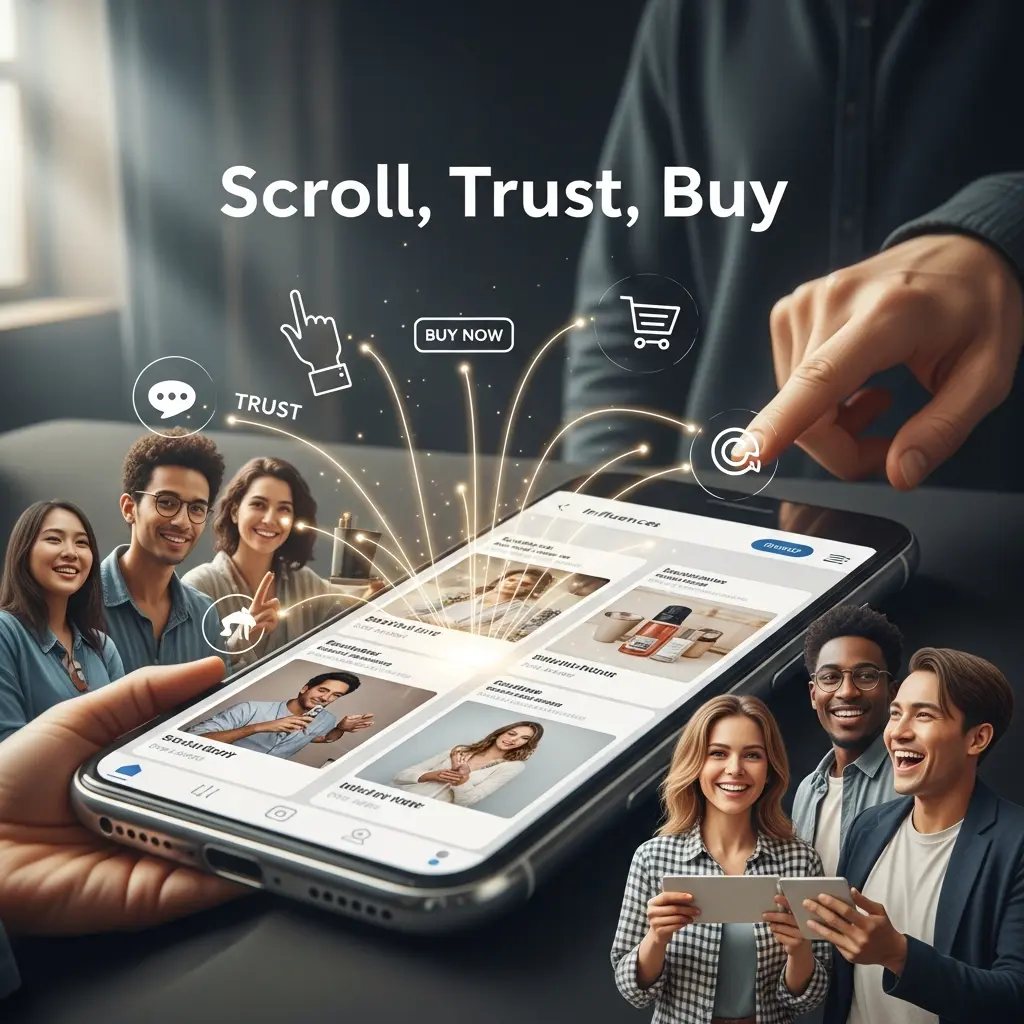
Think about the last time you bought something because a stranger on the internet told you to. Chances are you do not even remember it as a commercial transaction. You remember it as a recommendation from someone whose taste you trusted, whose content you had been watching for months, whose life felt adjacent to yours in some way that a television advertisement never could. That gap — between feeling sold to and feeling advised by — is the entire engine of the influencer economy. And in 2026, that engine is running at a scale that would have seemed fantastical just a decade ago.
The numbers are almost difficult to absorb in their totality. The broader creator economy — every dollar flowing through influencer channels, platform technologies, agency services, and creator compensation globally — is valued at $234.65 billion in 2026, up from $191.55 billion the previous year. The global influencer advertising market specifically has hit $39.33 billion, growing at a compound annual rate of roughly thirty percent since 2020. Influencer marketing has not just become a legitimate channel. According to the 2026 Creator Economy Report, published by the Influencer Marketing Factory after surveying one thousand US-based creators and analysing five million accounts across Instagram, TikTok, and YouTube, creators are no longer competing with traditional media. They are the media.
The Rise of the Creator Middle Class
One of the most significant online trends reshaping the influencer landscape in 2026 is the emergence of what researchers are calling a creator middle class — a vast, commercially sustainable tier of professionals operating between the mega-famous and the purely hobbyist. Nearly forty-six percent of creators now earn between $10,000 and $100,000 annually from their content, a range that represents real income rather than pocket money, supporting careers and households in a way that the early influencer economy simply did not. Just over half of all creators surveyed achieved earnings growth year-over-year in 2025. Product and merchandise sales alongside affiliate marketing now make up over twenty-one percent of creator income, reflecting a decisive shift away from reliance on single-brand sponsorship deals toward diversified, recession-resilient revenue structures.
The professionalism that accompanies this shift is visible in how creators talk about their work. The 2026 data shows that creators are focusing on video production and deliberate branding — not as vanity exercises, but as competitive advantages in a space that has become dramatically more crowded. About sixty-two percent of surveyed creators had been in their current careers for three years or less. The barriers to entry have never been lower, which means the competition for audience attention has never been fiercer. In that environment, the creators who survive and scale are those who study their analytics, build recurring revenue streams through affiliate partnerships, and operate their channels with the rigour of a funded media business — because that is exactly what they are.
Why Brands Have Shifted Billions from TV to Creators
The brand side of the influencer marketing equation has undergone an equally profound transformation. The reason that eighty-six percent of US marketers now actively use influencer marketing — up from sixty-four percent in 2020 — is not fashion. It is return on investment. Brands earn an average of $5.78 for every dollar spent on influencer marketing, with high-performing campaigns reaching between eleven and eighteen dollars per dollar invested. That figure puts creator partnerships comfortably ahead of most traditional advertising channels on a cost-per-impact basis. For a Chief Marketing Officer facing budget scrutiny and pressure to demonstrate measurable outcomes, the decision to reallocate spending from television and display advertising to digital creators is not a creative preference — it is an evidence-based business decision.
The consumer data reinforces the commercial logic. Sixty-one percent of consumers trust influencer recommendations, and forty-nine percent report making purchase decisions based on creator content — figures that no amount of premium television creative has historically been able to match in converting directly to commercial action. Fifty-six percent of Gen Z now consider creator content more relevant than film or television, and forty-one percent use social platforms as their primary search engine. That last statistic is particularly significant for branding strategy: when a potential customer’s first instinct is to open TikTok or Instagram to research a product rather than Google, the creator who owns that category becomes, in effect, the point of discovery for an entire consumer journey.
Micro Over Mega: The Engagement Paradox
One of the most counterintuitive but now thoroughly documented online trends in influencer marketing is the consistent outperformance of smaller creators over larger ones in virtually every engagement and conversion metric that matters. Nano-influencers — creators with followings typically under ten thousand — now represent nearly seventy-six percent of Instagram’s influencer base and achieve engagement rates fifty percent higher than micro-influencers and dramatically outperforming macro-tier creators. The explanation is not complicated: a creator who speaks to a tightly defined community about a specific interest area generates conversations among people who genuinely share that interest. When someone in a passionate community of home baristas recommends a specific espresso machine, the recommendation carries the weight of peer expertise, not celebrity endorsement. The community recognises authenticity in a way that a general audience simply cannot.
The data on gifted versus paid partnerships carries a similar lesson about authenticity. Gifted collaborations — where creators receive products rather than fees — deliver engagement rates twelve percent higher than paid campaigns. This does not mean brands should stop paying creators. It means the most effective influencer marketing strategy is one in which the creator’s genuine relationship with a product is the foundation of every campaign, and the compensation structure reinforces rather than replaces that authenticity. The fastest-growing creator niches in 2026 tell the same story: athlete and sports content is up one hundred and eight percent year-over-year, skills and trades up one hundred and three percent, with wellness and self-improvement rounding out the top five. The common thread is utility — content that helps people do something, learn something, or become something.
The Challenges the Industry Still Has to Solve
Not everything in the influencer economy points upward. Fraud remains a structurally significant problem: global losses to influencer marketing fraud are estimated at $1.3 billion annually, twelve percent of celebrity influencer campaigns showed signs of fraudulent engagement in 2024, and thirty-four percent of marketers cite fake followers as their top concern when working with high-profile creators. For an industry whose entire value proposition rests on genuine audience relationships, the persistence of bot-inflated accounts and fake engagement is not a peripheral issue — it is an existential threat to the trust that makes the whole system work.
The 2026 creator economy is an industry in its most interesting phase: large enough to be taken seriously by every major brand on earth, diverse enough to support a genuine professional middle class, yet still evolving rapidly enough that the rules are being written in real time. The single most important trend beneath all the statistics is a shift in what audiences expect from the creators they follow — not just entertainment, but credibility; not just reach, but relevance; not just a face they recognise, but a voice they trust. In a fragmented media landscape where traditional advertising has been losing the battle for genuine attention for a decade, the influencer economy has won precisely because it figured out something that no television spot ever could: the most powerful sales tool ever invented is a person you feel you actually know.