
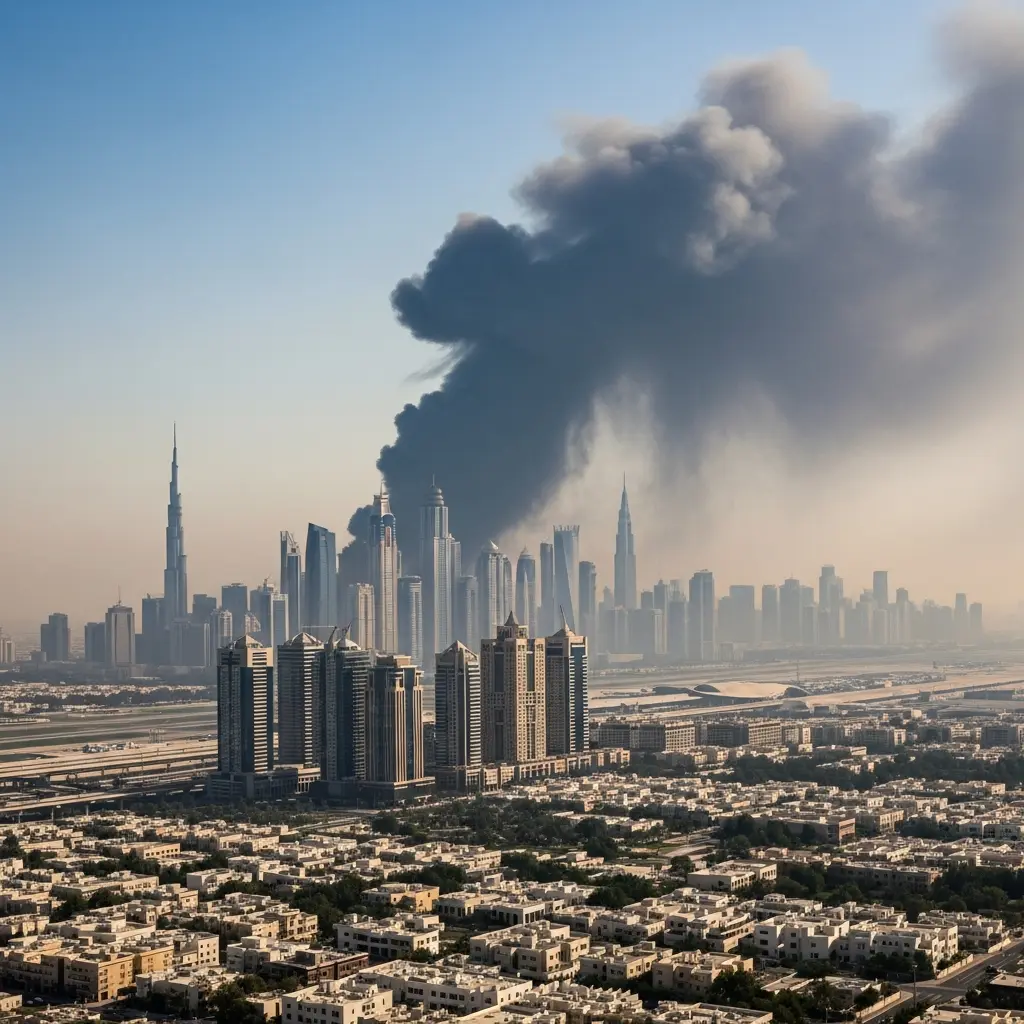
Dubai International Airport is more than just a stopover for millions of travelers. It is a shining gateway that connects East and West and represents modern ambition. That symbol shook on the morning of March 16, 2026. Over one of the busiest airports in the world, thick black smoke rose into the early morning sky. For a few tense hours, the skies above Dubai were quiet.
A drone had hit its target.
The Attack
A drone attack caused a big fire to break out near Dubai International Airport early on Monday. The Dubai Media Office said that the drone hit a fuel tank near the airport, and civil defense teams were sent in right away to put out the fire. Investing.com: Videos going around on social media showed flames rising near airport infrastructure. Passengers were evacuated, and flights were stopped at one of the busiest airports in the world. IEA emergency services were on the scene within minutes, and the fire was put out without any injuries. However, flights at Dubai International Airport were temporarily stopped, and some were redirected to Al Maktoum International Airport in Jebel Ali, which is about 20 miles away. The Emirates airline stopped all flights to and from Dubai and told customers not to go to the airport. They promised to keep them updated as the situation changed. Yahoo Finance It was a strange morning for a city that prides itself on having world-class infrastructure and easy access to everything.
Not a One-Time Thing
It’s not just what happened on Monday that is so scary; it’s the pattern it fits into. Since the start of the U.S.-Israeli war on Iran on February 28, Gulf Arab states have been hit by more than 2,000 missile and drone attacks. These attacks have hit U.S. diplomatic missions and military bases, as well as important Gulf oil infrastructure, ports, airports, hotels, and residential and office buildings. Since the start of the regional conflict, Iran has fired more than 1,800 missiles and drones at the UAE, making it one of the most targeted countries in the crisis. Most incoming missiles have been stopped by air defense systems, but this latest attack was able to get past those defenses and hit a very sensitive civilian target. The airport had been threatened before since the conflict started. Earlier strikes and debris from interceptions damaged Terminal 3 and hurt a number of people during the first Iranian launches. The attack on a fuel storage facility on Monday by the World Economic Forum was arguably more dangerous because it could have led to a catastrophic escalation. Fuel tanks near active runways are some of the most vulnerable infrastructure there is.
Why choose Dubai? Why Now?
The time and place were not by chance. Iran said on Sunday that the UAE let U.S. troops use its land to attack Kharg Island, which is Iran’s main oil export terminal. Seyed Abbas Araghchi, Iran’s foreign minister, said that HIMARS rockets were fired from places in the UAE, such as Ras Al Khaimah and places near Dubai. Before Monday’s event, an Arabic-language warning from Iran’s Media Operations Center spread online, telling people to leave certain parts of Dubai, such as Dubai Marina and Arabian Ranches, because U.S. troops were allegedly there and those areas could be attacked. World Economic Forum That warning, whether it was coordinated psychological pressure or a real signal of intent, shows how the conflict has moved from far-off battlefields to the daily life of a city of 3.5 million people.
Aviation Security in the Spotlight
The attack has started a heated debate about protecting critical infrastructure and aviation security in the Gulf. In a normal year, Dubai International Airport serves more than 85 million people. It is the UAE’s economy’s beating heart, the center of Emirates airline, and a key link in the world’s transportation system. Any long-term disruption has effects that go far beyond just flight delays.
The Saudi Arabian defense ministry said that during a recent operation, its air defenses shot down and destroyed 62 drones. On Sunday night, they also shot down 14 more drones over Riyadh and the Eastern Province. IEA But as Monday showed, even the best air defense systems can’t guarantee that they will catch every threat. One drone getting through to the right target can cause a lot of problems.

