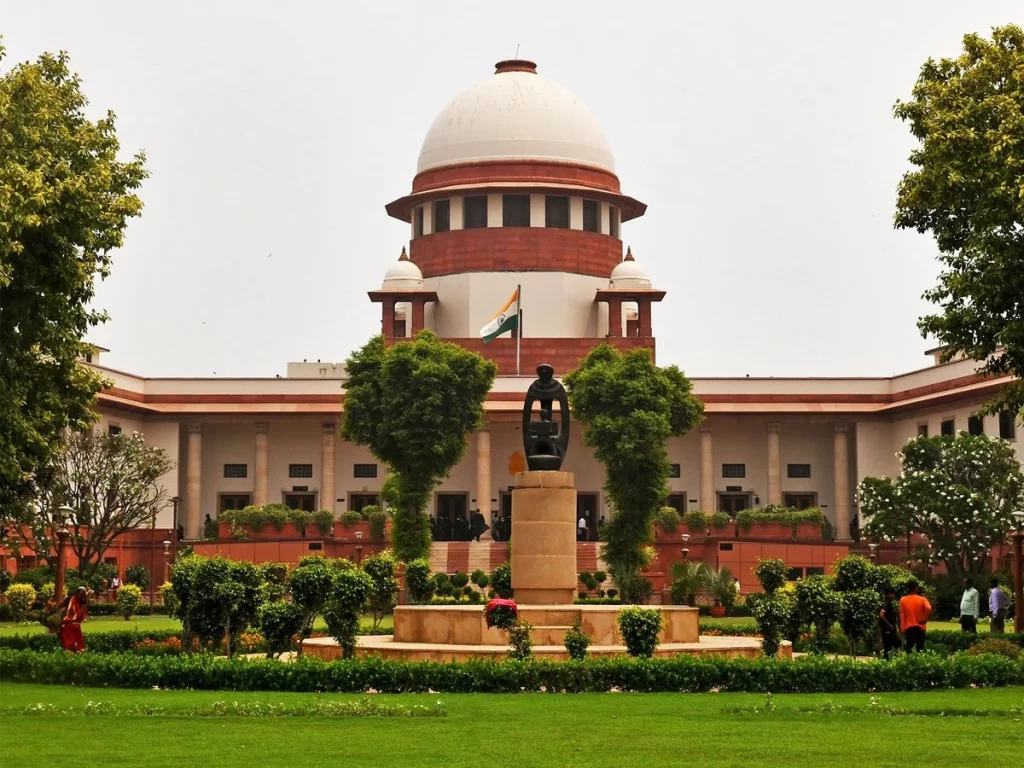
The Supreme Court has agreed that those who are dying can have passive euthanasia. This is a very interesting choice that could change how people in India think about their personal freedom and medical ethics. Article 21 of the Constitution gives people the “right to die with dignity.” On March 10, 2026, this critical decision was made. The court has added a new chapter to the long-running debate over passive euthanasia by letting people who are in a coma or in a chronic vegetative condition quit getting care that keeps them alive. This achieves a balance between the value of life and the right to choose.
The decision comes from a group of petitions that challenge the severe rules about euthanasia and living wills that were put in place in 2018. This is a big change from how the court used to be careful. This choice gives patients and their families who have been in agony for a long time hope and peace of mind. It also starts fresh conversations about moral protections, how hard they will be to put into place, and how they will change society.The verdict illustrates that the law is growing better at dealing with how medicine works today. India is currently one of only a few places that lets these kinds of procedures happen.
The Start of India’s Right to Die Movement
The Supreme Court’s ruling on passive euthanasia has been in the works for decades because people’s beliefs about what constitutional rights mean have changed. The Aruna Shanbaug case in 2011 made the idea popular at first. The highest court said that active euthanasia, which involves killing someone with a lethal injection, was not allowed. But passive euthanasia was okay as long as the courts kept a close eye on it. This difference became very important: passive euthanasia means not giving or taking away artificial life support, which lets death proceed naturally, whereas active ways hurry it up.
The Constitution Bench of five judges in Common Cause v. Union of India ruled in 2018 that people have the right to refuse life-prolonging treatment through “living wills” or advance medical directives. But it took longer because it needed the consent of two medical boards, a magistrate, and the Governor. This made things harder. Petitions argued that these rules were against people’s freedom, especially for those who were in a persistent vegetative state (PVS) and didn’t have any directives prior.
In the most recent instance, a different Constitution Bench, led by Chief Justice D.Y. Chandrachud, looked at the same concerns. People who filed petitions, like family members of comatose patients and activists for the rights of the elderly, complained of real-life catastrophes, like a 78-year-old cancer patient who had to stay on ventilators for years or a young accident victim in PVS who was sucking up family resources. The court declared that passive euthanasia is a basic right, just like Justice Puttaswamy said privacy is a basic right. This made things go more smoothly and swiftly.
Key Parts of the Landmark Decision
The Supreme Court’s judgment on passive euthanasia is based on a new framework that doesn’t take away any protections. The bench didn’t have to include the Governor in 2018. This helps district collectors and medical boards make decisions faster. Here are the most important orders:
Now, anyone over 18 can sign a living will that says they don’t want to be treated if they are dying. Witnesses and video recording make sure that the information is correct and that the formats are the same all throughout the country.
Don’t want to stay alive? Families of patients who don’t have instructions can file a fast-track petition with the top courts to ask for judicial mercy. Within 72 hours, two medical boards, one from the petitioner’s hospital and one chosen by the government, must agree that the condition cannot be modified.
Time-Limited Process: Collectors are in control of making boards and want to make decisions in three weeks. High courts can still watch over things, but they can’t make treatment go on.
No active euthanasia: The verdict makes it clear that physician-assisted suicide or active euthanasia are not permissible. This makes it apparent what the moral line is between doctors and patients.
Medical Perspectives and Ethical Quandaries
The right-to-die issue in India makes old disagreements about freedom, the value of life, and government action even worse. People who support passive euthanasia say it helps with “therapeutic obstinacy,” which involves keeping someone alive longer even if it hurts their dignity. Dr. Devi Shetty, who created Narayana Health, was pleased with the choice. He said, “Modern medicine can keep heartbeats going forever,” but “quality of life is more important.” This choice makes care at the end of life more human.
Some religious leaders from Hindu, Muslim, and Christian groups believe that this could lead to the wrong use of euthanasia. The Catholic Bishops’ Conference labeled it “a threat to the vulnerable” because they didn’t want to put too much stress on sick or old people. “Death on demand” is something that Dr. Jacob Puliyel and other bioethicists caution against. They use the Netherlands as an example, where demand for euthanasia rose up 15% after it became legal in 2002.
Medical groups still don’t see eye to eye. The Indian Medical Association (IMA) agrees with passive withdrawal for persons who are brain-dead, however they think that counseling should be required to keep people from making quick decisions. A study in The Lancet from 2025 found that 68% of Indian intensivists support passive euthanasia, but only 22% say they are willing to give ethical guidance. This means that the training isn’t done yet.
What India Does in the World of Passive Euthanasia
India’s recognition of passive euthanasia puts it in step with more than 20 other countries, including the U.S. (through state laws) and Colombia, which was the first Latin American country to make it legal in 1997. Belgium and Luxembourg in Europe even authorize active euthanasia in specific situations. In the UK, though, the only thing you may say is “do not resuscitate.”
Because Japan’s culture values life, it’s against the law, and everyone in the family must to agree. Australia’s rules from 2021 that allow voluntarily assisted death only for those with terminal illnesses led to more than 1,000 cases in two years. There are steps in place to stop abuse. India’s system is like Canada’s in that it needs two different examinations. Both systems rely significantly on judicial checks.
India is at the top of the global South because it doesn’t have adequate resources, which makes things a lot worse when you get older. There are 1.4 billion individuals in the world, and more and more of them are getting long-term illnesses. The World Health Organization believes that by the year 2030, there might be 1.5 million cases of cancer. Passive euthanasia could lower the demand for medical care by freeing up ICU beds for patients who can be treated.
Putting it into action is hard.
The decision is good news, but it does have some drawbacks in real life. The Indian Academy of Neurology says that there are just 1,500 neurologists for 1.4 billion people, and 65% of those people live in rural areas. The court said that there should be a national database for living wills. This will need Aadhaar to be connected and safe.
An ORG-Marg study from 2025 found that 62% of people didn’t know what living wills were. individuals who lived in cities and individuals who lived in the country were not the same. States with good end-of-life care, like Kerala and Tamil Nadu, might be the first to adopt it. Bihar and Uttar Pradesh, on the other hand, might have to wait because their infrastructure isn’t as good.
Lawyers think that at initially, there will be a number of applications to the high court, which will place a lot of burden on the courts. The court told the states to turn in reports every year about the cases they worked on. This helped keep them honest. Dignity in Dying and other NGOs want to reach 100 million people through social media by 2027 with their campaigns to raise awareness.
Voices from the Ground: Stories of Loss and Hope
The ruling has an effect on people’s real lives. Rita Desai’s family, who is 62 years old and has been in a PVS since she had a stroke in 2024, called it “liberation.” Their son Vikram, who owes ₹15 lakh, said, “We’ve prayed for this.” On the other hand, a Delhi oncologist talked about a quadriplegic whose six-year nightmare ended with passive withdrawal, which gave him a dignified conclusion.
Pinki Virani, a patient advocate, claimed it was “justice delayed but delivered.” Her book Aruna Shanbaug led to revisions in 2011. But families with modest incomes are anxious that people won’t obtain palliative care because they can’t afford it, not because they don’t want to.
Broader consequences for the law and society
This choice about passive euthanasia has repercussions that transcend beyond medicine. It strengthens the broad scope of Article 21, which covers privacy and dignity. It goes against what people think about dying and asks for a shift from harsh therapies to more comprehensive care. Ficci says that it might save ₹50,000 crore a year on treatments that don’t work. People could then use this money for health care that keeps them from getting sick.
Feminist ideals stress empowerment since women, who are often the main caregivers, can now make decisions that men used to make. Disability rights activists want people with “locked-in syndrome” to be included in tests that are incorrectly called PVS.
Supreme Court Greenlights Passive Euthanasia: Right-to-Die Becomes Law in Historic Verdict