
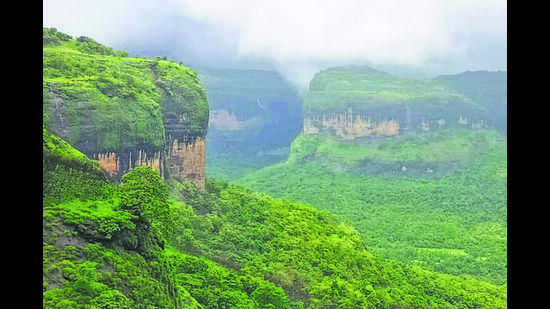
June 27, 2025 — Tamhini Ghat in Maharashtra has witnessed record-breaking rainfall this June, with the total precipitation crossing the 2,000 mm mark — the highest ever recorded for the month in the region, according to data released by the India Meteorological Department (IMD).
As of June 26, the ghat section — located in the Western Ghats west of Pune — had received 2,010 mm of rainfall, significantly surpassing its long-term monthly average. Meteorologists have attributed the excess rainfall to strengthened south-west monsoon winds and persistent low-pressure systems along the Konkan coast.
“Tamhini Ghat has been receiving continuous heavy to very heavy rainfall, driven by moisture-laden monsoon currents from the Arabian Sea,” said a senior IMD official. “There have been several instances of extremely heavy rainfall, with daily totals exceeding 200 mm on multiple occasions.”
The unusual rainfall intensity has triggered multiple alerts from local authorities. The Pune district administration has urged caution for those traveling through the region. The Maharashtra State Road Development Corporation (MSRDC) has also issued advisories discouraging travel along the ghat section during peak rain hours, citing risks of landslides and road blockages.
Tamhini Ghat, known for its lush greenery and waterfalls, is a popular monsoon destination. However, the current weather conditions have disrupted tourism activity. Environmentalists have raised concerns about the potential ecological impact of excessive footfall and vehicle movement during heavy rains.
“The rains rejuvenate the ecosystem, but overexposure and unmanaged tourism during such periods can lead to long-term ecological damage,” said Dr. Meena Kulkarni, an ecologist working in the Western Ghats region.
Infrastructure in the area is also under pressure. Several connecting roads, including those leading to Mulshi and Mangaon, have reported minor damage and waterlogging. Disaster response teams have been kept on alert amid fears of potential landslides.
While the rainfall is expected to boost water levels in key reservoirs such as Mulshi and Bhira, experts warn that the event is part of a broader pattern of erratic weather linked to climate change.
“Intense rainfall events like this are becoming more frequent due to changes in ocean temperatures and atmospheric dynamics. We need to incorporate these trends into our infrastructure and disaster planning,” a climate expert at the Indian Institute of Tropical Meteorology (IITM) said.
With the monsoon season still in its early phase, authorities remain on high alert. The IMD has forecast continued heavy rainfall in the region over the coming days, and has advised residents and tourists to follow official weather updates closely.

