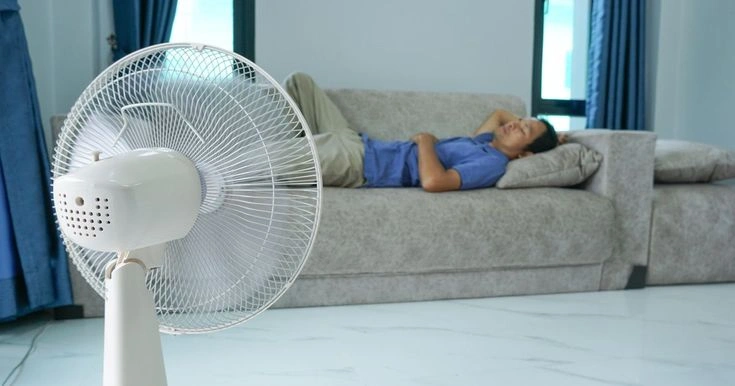
As climate change gets worse, hot nights are a tiny but widespread threat to people’s health around the world. The top weather organizations’ most recent data for 2026 shows a scary trend: warm nights are getting longer faster than hot days. This implies that a lot of individuals aren’t getting the sleep they need to heal their bodies and minds. People sometimes call this the “silent killer” of sleep because it happens when the temperature at night doesn’t drop enough, which keeps the body’s core temperature from dropping as it should. The effects of urban heat islands increasing bigger and global warming getting faster go far beyond making people tired. They also make people sick for a long time, make them less productive, and even hurt their mental health. This site explains about the science behind warm nights, how often they happen, how they affect health, and how to sleep well even when the weather is getting hotter.
The Scary Rise of Warm Nights in 2026
Meteorologists state that warm evenings in temperate areas are nights when the lowest temperature is above 18°C (64°F). It is substantially higher in tropical climates. These nights are a major change in how the weather functions. The World Meteorological Organization (WMO) and NASA’s Goddard Institute for Space Studies both claimed in 2026 that these events happen 25% more often around the world than they did in the preceding decade. This is worse than enduring relentless heat waves. The India Meteorological Department (IMD) reported that during the summer of 2026, major cities such as Pune, Mumbai, and Delhi experienced over 40% more warm nights. The average nighttime low hovered between 28 and 30 degrees Celsius.
The main reason for this difference is the urban heat island effect.
Concrete jungles keep heat in all day and let it out slowly at night. Along with other changes in the weather, such weaker winds at night and more humidity from monsoon storms, warm evenings are becoming the new normal. The Copernicus Climate Change Service did a study that showed Europe had the most tropical nights ever in 2026, and Asia had a 30% increase. As the waves get warmer, they let off heat that has been stored during the day. This makes things worse in coastal cities like those in Maharashtra.
It’s not weird that the trend is speeding up. Since 2000, warm nights have gotten 1.5 times faster than hot days.
What Sleep Science Calls the “Silent Killer” of Hot Nights
Thermoregulation has a huge effect on how people sleep at different times of the day. When you are in deep non-REM sleep, your body’s core temperature drops by 1 to 2 degrees Celsius. Melatonin is a hormone that makes you sleepy. It comes from the pineal gland in the brain. Warm nights mess things up since they keep the core temperatures high and break up sleep cycles.
Neuroscientists have found that the hypothalamus, the part of the brain that regulates body temperature, struggles to initiate sleep when the temperature exceeds 24°C. This, in turn, keeps people awake for longer periods. A 2026 study, published in The Lancet Planetary Health and reviewed by experts, showed that for every 1°C rise in nighttime temperature, slow-wave sleep—a stage critical for repairing tissues, boosting the immune system, and solidifying memories—diminishes by 5–10%.
People who slept in controlled experiments at 26°C nights got 20% less restorative sleep than people who slept at 20°C nights.
The effects on health are really negative. The American Heart Association notes that not getting enough sleep on warm nights can raise cortisol levels. This can raise the risk of heart disease, diabetes, and high blood pressure by up to 40%. India’s National Health Profile from 2026 showed that warm evenings in cities were associated to a 15% rise in complaints about not being able to sleep. This hurt shift workers and older people the most. Mental health suffers too: sleep problems make anxiety and despair more likely. Berkeley Lab did a study that found that mental illnesses were 25% more likely to happen when it was hot.
The amount of work that gets done also goes down. The whole Bank thinks that heat that keeps people awake would cost the whole economy $500 billion a year by 2030. In 2026, more people will be in danger of bedroom heat traps since working from home has made it harder to tell the difference between home and work.
Things that make it hard to get a good night’s sleep when it’s hot:
Your body takes 30 to 60 minutes longer to make melatonin when your core body temperature rises.
More awakenings (arousals) cut sleep time by 45 to 90 minutes every night.
Blocking REM sleep affects your brain’s ability to think and makes you 15% less aware the next day.
Dr. Sara Mednick, a sleep researcher at the University of California, is one of many experts who say this “silent killer” makes inequality worse, especially for families with low means who don’t have air conditioning.
A Closer Look at 2026 Data: Its Effects on the World and Different Areas
The main story of the 2026 heat wave is how the nights got warmer without our noticing. NASA’s Vital Signs report says that the average temperature on Earth at night is now 1.2°C higher than it was before civilization. For the first occasion in history, temperatures at midnight were higher than those during the day. There were more than 100 tropical nights in France and Spain, which led to a 12% surge in hospital visits due to heat.
Reports from IMD say that Pune, India, which is a center for IT workers, saw warm evenings that lasted 20 to 50 nights every summer. AIIMS Pune said that this is because there has been an 18% rise in visits to sleep clinics. Farmers in Maharashtra’s agricultural regions have two problems: warm evenings that harm crops like sugarcane and people in the city who can’t use fans because the electricity is out.
The most affected countries are those that are still developing. According to the UN Environment Programme, 70% of the world’s warm-night hotspots are in low- and middle-income countries, where infrastructure that can change is not keeping up. Women and children who have to do chores at home at night report they have a 30% harder time sleeping.
The IPCC’s 2026 update on climate models suggests that if emissions keep going up, there will be twice as many warm nights by 2040. This means that regulations need to change right away, including putting green roofs on buildings and planting trees in towns.
Experts provide you ideas on how to keep your sleep clean so you can get through the crisis.
The study of sleep hygiene is about making your surroundings and actions as good as possible for getting a good night’s sleep. If you want to sleep better on warm nights, you need to do things that are good for your sleep hygiene. One strategy to fix the problem is to build cooling infrastructure based on policy. However, people can also take action right away by employing evidence-based methods.
It is nevertheless very vital to keep the bedroom cool. The best temperature for sleeping is between 16 and 20 degrees Celsius, which is close to the body’s natural decrease. When the air is really humid, fans don’t work well on their own. Instead, use cooling gels or phase-change materials in beds.
A list of activities to do in the summer to help you sleep well
The best temperature for a room is between 18 and 22 degrees Celsius. You can reach this temperature using air conditioners set to “sleep mode” or evaporative coolers. Blackout curtains keep the heat from the day out, which makes the inside 3 to 5 degrees Celsius cooler.
Textile research shows that bamboo sheets and pillowcases are better at drawing moisture away than cotton sheets and pillowcases. They keep the temperature stable, which cuts down on night sweats by 40%.
Don’t eat heavy, spicy foods after 6 PM or consume coffee after 2 PM. These are changes to your evening diet. These foods make your body work faster and boost your temperature. Choose meals that can help you sleep, such cherries (which include natural melatonin) or bananas (which are high in magnesium).
Before bed, take a shower that isn’t too hot or too cold. This will bring your core temperature down by half a degree Celsius. Drink 500 cc of water, but do it slowly to make it easier.
Tech and Light Management: Lower the brightness of your screens two hours before bed to keep your melatonin levels high. If you need to, use blue-light filters. Put a wedge pillow under your feet to raise them a little. This will help with circulation and cooling.
Magnesium glycinate, at a dosage of 300mg, is a supplement some people use to promote relaxation. Research involving randomized trials suggests it might help you drift off to sleep about twenty percent quicker, particularly in warmer conditions.
Putting these things together really helps. For example, the Sleep Research Society found in a 2026 study that people who used these checklists had an extra 1.2 hours of good sleep on warm evenings.
Architects suggest that passive cooling features like cross-ventilation and light-colored roofs are preferable for long-term durability, especially in Pune’s high-rise corridors.
The “Silent Killer” of Sleep: How the hot nights of 2026 are making it difficult to sleep better and what you can do about it