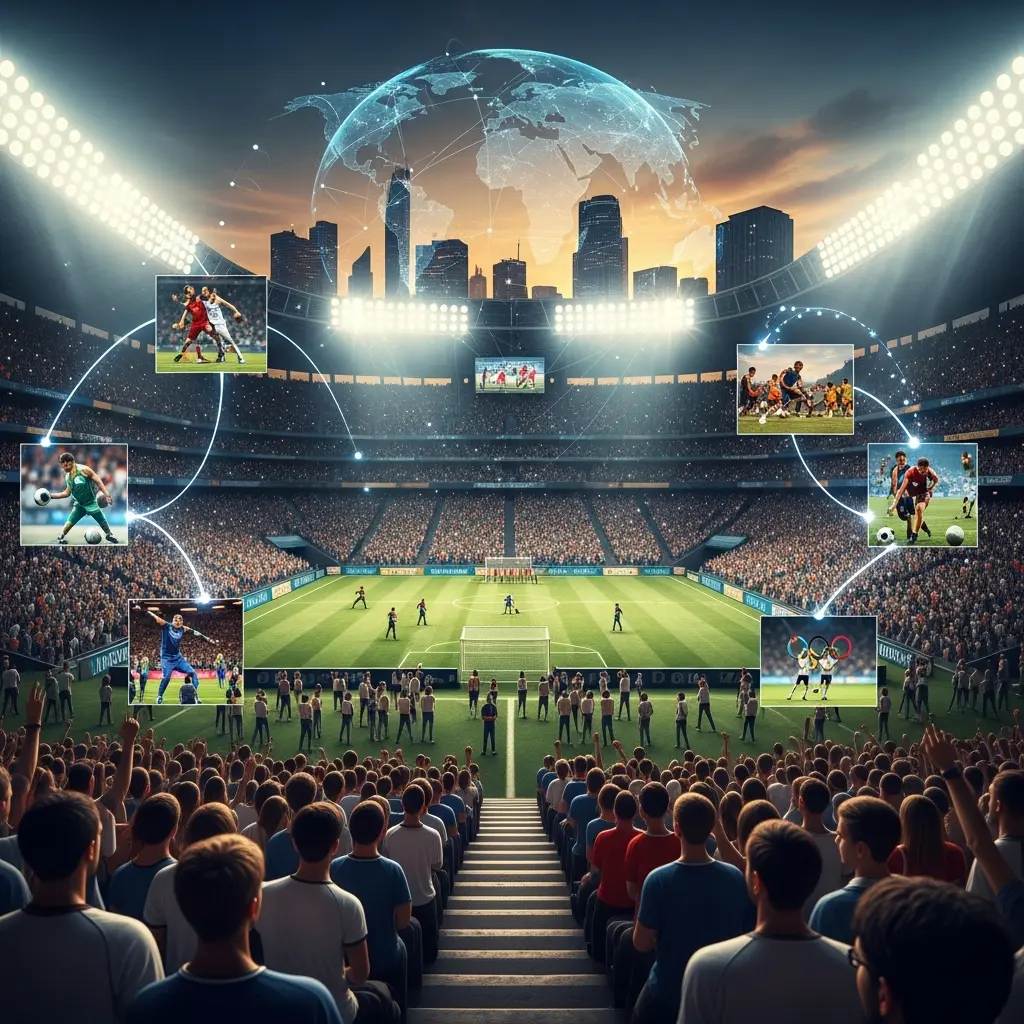
There is a moment that happens during major sporting events — a collective holding of breath, a shared spike of adrenaline — that nothing else in human experience quite replicates. It does not matter whether you are watching in a packed stadium in Manchester, a living room in Lagos, a sports bar in Buenos Aires, or on a phone screen during a lunch break in Seoul. For that moment, millions of people are feeling exactly the same thing at exactly the same time.
That moment, it turns out, is worth an enormous amount of money. And in 2026, the global sports industry is collecting on that value like never before.
Major international sporting events are drawing record audiences across television and digital platforms, sponsorship deals are reaching valuations that would have seemed implausible a decade ago, and the convergence of streaming technology, social media, and global marketing is reshaping what it means to be a sports fan anywhere on earth. The numbers tell one story. The human experience behind them tells a richer one.
The Audience Has Never Been Bigger
Sports broadcasting growth in the current era is being driven by a simple but powerful reality: the global middle class is expanding, smartphone penetration is deepening, and the appetite for live sports — one of the last truly appointment-viewing experiences in an on-demand world — is insatiable.
Streaming technology has been the great equalizer. A fan in Nairobi who could never afford a cable subscription can now watch Premier League football on a mobile data plan. A viewer in rural Indonesia can follow Formula 1 races in real time on a streaming platform that costs less per month than a cup of coffee. The geographic and economic barriers that once defined who could access premium international sports content have been systematically dismantled, and the audience figures reflect that transformation dramatically.
The sports streaming audience has exploded accordingly. Digital viewership for major events now regularly exceeds traditional broadcast numbers in several markets, and platforms are investing aggressively to capture that growth. The competition for streaming rights to top-tier sporting properties — NFL games, UEFA Champions League matches, Olympic events, Grand Slam tennis — has become one of the most expensive battlegrounds in the entire media industry.
Rights Deals That Rewrite the Record Books
The financial architecture of the international sports events business has been rebuilt around this streaming reality. Broadcasting rights deals that once ran into the hundreds of millions are now routinely valued in the billions, as streaming giants, traditional broadcasters, and tech platforms compete fiercely for exclusive or partial rights to the properties that audiences will pay to follow.
Apple’s multi-billion-dollar deal for Major League Soccer rights. Amazon’s ongoing investment in NFL Thursday Night Football.
Sponsorship deals are following the same trajectory. Global brands have recognized that major sporting events offer something increasingly rare in the fragmented media landscape: a guaranteed, massive, engaged audience watching in real time. The sports business model, built on that guaranteed attention, has become one of the most resilient revenue frameworks in the entertainment economy. Even during periods of broader economic uncertainty, major sports sponsorships have held their value — because the eyeballs never stop showing up.
Social Media and the New Fan Experience
Beyond streaming, social media engagement has fundamentally changed the relationship between sports and its audience. The game no longer ends when the final whistle blows. It continues in real time across Instagram, TikTok, X, and YouTube — in highlight clips, in commentary threads, in athlete personal content, in fan-generated analysis that sometimes rivals professional broadcasting in insight and production quality.
Athletes themselves have become media properties in their own right. A footballer with 50 million Instagram followers is not just a player — they are a distribution channel, a brand partnership opportunity, and a direct line to a global audience that no traditional broadcaster can replicate. The sports industry has been quick to recognize and monetize this reality, building social media followings into contract valuations and sponsorship structures in ways that were unimaginable just five years ago.
This social layer has also accelerated the globalization of sports fandom in ways that defy traditional geographic logic. The NBA has passionate fan communities in the Philippines and France. Cricket’s Indian Premier League draws viewership from the Caribbean to Canada. American football is quietly building genuine audiences in Germany, the UK, and Brazil. Sport, amplified by social media, travels faster and further than any other form of cultural export.
Where the Industry Goes From Here
Experts tracking the convergence of entertainment, technology, and global marketing agree on one thing: the ceiling for the global sports industry has not yet been reached. Emerging markets in Africa, Southeast Asia, and South Asia represent hundreds of millions of potential new fans who are just beginning to access the infrastructure — smartphones, affordable data, streaming platforms — that connects them to global sports content.
The sports business of 2026 is already extraordinary in scale.
No algorithm created that. No streaming platform invented it. It is simply what sport does to people.
And as long as it keeps doing that, the whole world will keep watching.