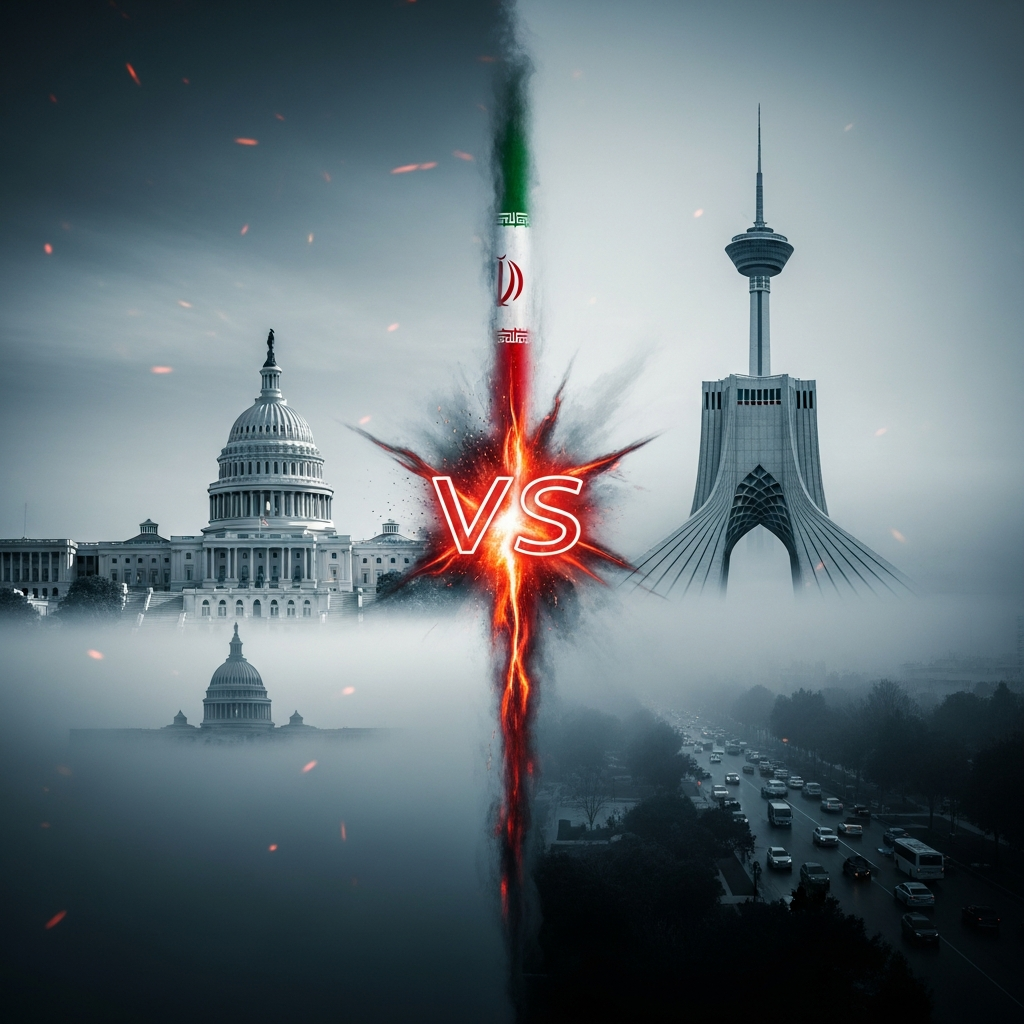
There is a particular kind of dread that settles over a region when two powerful nations stop talking and start shooting. That looming fear has morphed into a constant presence throughout the Middle East. The US-Iran conflict, a fire smoldering for years beneath the weight of sanctions, covert operations, and diplomatic failures, has now ignited into one of the most significant military clashes of the current century.
The Middle East crisis that many had warned about for years had finally arrived, and it arrived all at once.
How Did We Get Here?
The roots of the US–Iran conflict stretch back to 1979, but the spark that ignited the most recent flare-up came from a mix of pressures that built up in late 2025 and early 2026.
The Iranian government reacted with extreme violence. Human rights organizations reported over 6,000 civilian deaths, including protesters and innocent bystanders, who were shot in the head and torso by security personnel.
Meanwhile, Iran’s nuclear program had quietly surged. Diplomatic talks in Oman and Geneva in February 2026 came tantalisingly close to a deal. Iran’s foreign minister described a “historic opportunity” within reach. But Washington walked away, convinced that Tehran was stalling. Days later, the bombs fell.
A Region on Fire
Seventeen days into the strikes, the scale of destruction is staggering. Independent conflict monitors have documented nearly 2,000 distinct attack events across 29 of Iran’s 31 provinces. Tehran has endured the heaviest bombardments. Historic sites — including areas near the UNESCO-protected Golestan Palace — have been damaged.
Iran has not been passive. Its retaliatory strikes have reached oil refineries, airports, and US military installations across Gulf states. Dubai’s international airport temporarily suspended flights after a drone-sparked fire near its perimeter. Saudi Arabia intercepted dozens of Iranian drones in a single day. The Lebanese militant group Hezbollah has joined the fray, triggering a parallel escalation in Lebanon. This is no longer just a bilateral US–Iran conflict — it is a regional war with global consequences.
The Strait of Hormuz: A Global Flashpoint
No other body of water on the planet exerts as much economic influence as the Strait of Hormuz. This slender channel is the conduit for almost a fifth of all the world’s oilIran, for years, has issued warnings about closing the Strait if hostilities erupted, and those warnings now resonate with an unprecedented level of urgency.
Qatar’s energy minister has warned that if the war continues, Gulf producers may be forced to declare force majeure and halt exports entirely — a move that analysts say could send shockwaves through economies worldwide. Oil prices have already surged. Iran has openly stated that keeping energy prices high is part of its strategy to pressure the world into demanding a halt to the conflict. Stock markets have responded nervously, with major indices tumbling on news of fresh escalations.
Diplomatic Paralysis and Global Geopolitics
The international community is deeply divided. Global powers have urged restraint, but urgency without unity rarely moves the needle. China’s foreign minister warned at the Munich Security Conference that any war involving Iran would have cascading consequences across the entire region. Russia offered to store Iran’s enriched uranium as a diplomatic compromise. France urged Tehran to make concessions. Pakistan called for dialogue. Yet none of these voices have been enough to silence the guns.
President Trump has claimed Iran wants to negotiate, tweeting that Tehran is “militarily ineffective and weak.” Iran’s Foreign Minister Abbas Araghchi flatly contradicted him in a CBS News interview: “No, we never asked for a ceasefire, and we have never asked even for negotiation. We are ready to defend ourselves as long as it takes.” This is not the language of a conflict approaching its end.
What Comes Next?
Analysts at the Atlantic Council and other foreign policy institutions warn that Iran’s leadership views this as an existential fight — not a skirmish it can walk away from. Tehran is reportedly calculating that a slow, grinding war of attrition will ultimately sap American and Gulf resolve more quickly than its own. If Iran retains even diminished capabilities to strike regional targets and keep oil prices elevated, it believes it holds leverage.
The human cost, meanwhile, continues to mount. Over 1,400 people have been confirmed killed in Iran, with nearly 20,000 injured. The UN World Food Programme warns of long-term global food price spikes. Gulf nations that have spent years building modern economies tied to global trade now find themselves in the crossfire of a conflict they have little power to stop.
The US–Iran conflict has always been about more than two countries. It is a contest over the shape of the Middle East, over who controls the energy arteries of the global economy, and over whether diplomacy can survive in an era of maximum pressure. Right now, none of those questions have comforting answers. And as long as missiles are flying over the Persian Gulf, the world is holding its breath — and wondering who will blink first.
The World Holds Its Breath: Inside the US–Iran Conflict That Is Reshaping the Middle East