
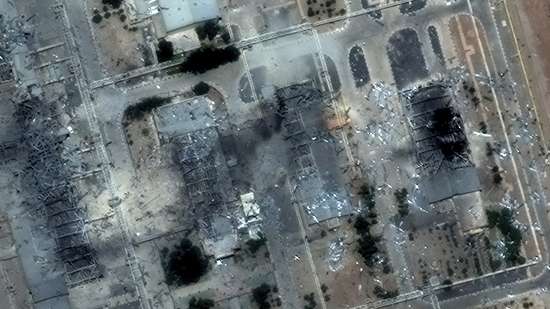
June 25, 2025 — Satellite images have surfaced indicating heavy damage at several Iranian nuclear sites, appearing to support former U.S. President Donald Trump’s recent claim that these facilities were “obliterated” during his administration. The revelation coincides with a critical move by the Iranian Parliament, which on Wednesday voted in favor of suspending the country’s cooperation with the International Atomic Energy Agency (IAEA), further intensifying global concerns over Iran’s nuclear trajectory.
According to defense analysts and independent intelligence groups, high-resolution satellite images reveal significant structural damage at nuclear facilities located in central Iran. The destruction reportedly aligns with the scale suggested by Trump, who stated during a campaign rally earlier this week that “multiple nuclear sites in Iran were completely taken out” under his presidency.
While Iranian officials have dismissed the claims as “Western propaganda” and “psychological warfare,” the legislative decision to halt collaboration with the UN nuclear watchdog has added weight to the growing suspicions. State-run IRIB confirmed that the measure passed with an overwhelming majority, citing “persistent foreign interference” and “national security threats.”
“The Parliament has decided to restrict access to certain sites and data from the IAEA until sanctions are lifted and Western hostilities cease,” an Iranian lawmaker told local media.
The IAEA has not issued an official response to the latest development. However, reports indicate that access for international inspectors has already been limited in recent weeks, particularly at sites linked to uranium enrichment and advanced centrifuge testing.
The suspension is seen as a blow to efforts aimed at reviving the 2015 Joint Comprehensive Plan of Action (JCPOA), which was unilaterally abandoned by the United States in 2018 under Trump. Negotiations to restore the deal have stalled for months amid growing mistrust between Tehran and Washington.
International reaction has been swift. The European Union expressed “deep concern” over Iran’s move, urging the country to reverse its decision and fully cooperate with the IAEA. The United Nations echoed similar sentiments, emphasizing the importance of transparency in maintaining regional stability.
Security analysts have also raised concerns about a potential escalation. “If the destruction of these sites was indeed carried out covertly, it signals a dangerous precedent,” said Dr. Leila Farzan, a Middle East policy expert. “Combined with Iran’s withdrawal from inspections, the situation could quickly spiral into a broader crisis.”
Meanwhile, Israel, which has consistently opposed Iran’s nuclear program, has refrained from commenting on the satellite imagery or Tehran’s parliamentary action, prompting speculation about its possible involvement in previous covert operations.
As tensions mount, the global community now faces renewed uncertainty over Iran’s nuclear intentions and the future of diplomatic engagement. The combination of visible damage to nuclear infrastructure and Iran’s distancing from international oversight mechanisms is likely to dominate global security discussions in the coming weeks.

