
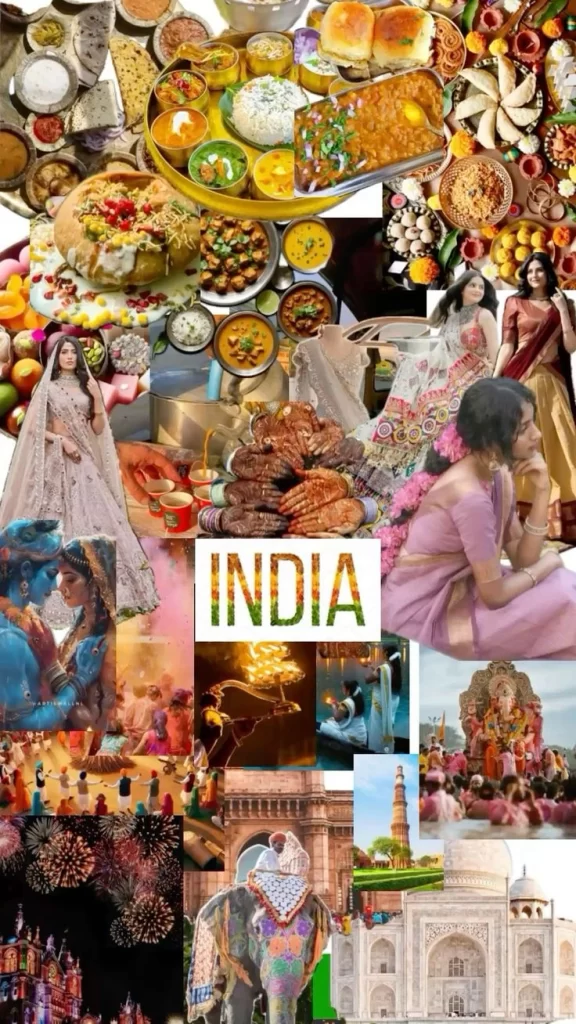
People from all over the world are fascinated in India because it has a lot of different cultures, old knowledge, and new energy. This thorough research looks at 101 amazing facts about India, focusing on population patterns, the wide range of Indian cultures, and amazing accomplishments in history, science, and society.
The size of India’s population
India is a big player in the world since it has a lot of people. India’s population had expanded to more over 1.45 billion by early 2026, making it the most populous country in the world. In 2023, it crossed China.
More than 65% of the people in the country are under 35 years old, hence it has a young population. This makes the workforce strong. Cities like Mumbai and Delhi, which each have more than 20 million people living there, are growing faster than ever. These two cities are home to almost 36% of all the people who live in cities in India.
India’s median age is 28 and its education levels are growing, so by 2030 it will add trillions to the global economy.
Indian cultural customs that are full of life
Indian culture is a mix of festivals, arts, languages, and philosophies that have been around for thousands of years. There is diversity in every part of life in 28 states and 8 union territories.
The festival of lights, Diwali, celebrates the victory of good over evil and fills homes with sweets and candles. Holi is a colorful holiday that celebrates the start of spring. Boat racing and huge banquets are part of Onam in Kerala.
Kathak from the north and Bharatanatyam from the south are traditional dances that portray epic stories via exquisite gestures. Yoga began in the Indus Valley more than 5,000 years ago. Now, 300 million people throughout the world practice it. June 21 is International Yoga Day.
Ayurvedic balance is the basis for the many flavors in Indian food, such as fiery Andhra spices, creamy Punjabi butter chicken, and delicate Kerala appams. There are more than 1,600 languages spoken, and 22 of them are official, such as Hindi, Tamil, and Bengali.
The sari, which may be worn in numerous ways, and the turban in Punjab are two examples of elegant clothes.
The Mahabharata and the Ramayana are two of the most important works of fiction, drama, and moral philosophy in the world.
Every day, millions of street food vendors feed hungry people with chaat and dosa.
These elements keep Indian cultural traditions alive.
Ancient History and Civilizations
The Indus Valley Civilization in Harappa and Mohenjo-Daro, which had organized communities with advanced drainage, is 5,000 years old in India. It was during the Vedic age that deep thoughts were born that are still researched today.
Nalanda was a university constructed in the 5th century CE that had 10,000 students and drew individuals from all over the world. The Maurya Empire of Ashoka spread Buddhism over Asia.
India came up with the idea of zero and the basics of math. Aryabhata made it better around 499 CE. Around 280 AD, chess sprang out of Chaturanga and became popular with both monarchs and regular people.
Great works of architecture
The structures in India are beautiful, from the way Mughal buildings are symmetrical to the way Dravidian buildings have spires. The Taj Mahal, which was constructed in 1653, is composed of flawless marble and is a symbol of love that lasts forever. Every year, millions of people come to see it.
Since 2018, the Statue of Unity has become the tallest statue in the world. It measures 182 meters tall. It is a tribute to Sardar Patel. The 24 wheels on the chariot at the Konark Sun Temple are etched so that it works like a sundial.
Rani ki Vav and other stepwells go down 20 meters into carved stone. The Qutub Minar is the tallest brick minaret in India. It is 73 meters tall and has calligraphy on it.
The Chenab Rail Bridge is 359 meters high, and the Delhi Metro has a 400-kilometer network that serves millions of people every day. These are two examples of modern wonders. These accomplishments mix old and contemporary concepts to serve India’s growing population.
Natural Wonders and Different Types of Life
India possesses 8% of the world’s biodiversity, which may be found in many different types of environments. The Sundarbans mangroves and the Thar Desert, which are rich with life, meet the tops of the Himalayas.
Kaziranga is home to two-thirds of the world’s one-horned rhinoceros and protects elephants. UNESCO has included the Western Ghats on its list of World Heritage Sites because they are home to thousands of rare species.
India grows 70% of the world’s mangoes, and there are 1,500 different kinds. It also produces more than 200 million tons of milk every year. Mawsynram has the most rain, about 12,000 mm a year.
Lakshadweep’s coral reefs are home to many aquatic species.
The Great Indian Bustard, which is in serious danger of extinction, is a symbol of how vital it is to take care of the environment.
People take care of woods by respecting sacred groves.
Indian cultural customs that honor the land are based on what nature gives us.
Space and Scientific Triumphs: India’s ISRO’s Chandrayaan-3 landed on the Moon’s south pole in 2023. This made India the fourth country to achieve this. Mangalyaan made it to Mars for the least amount of money in 2014.
In 2017, one launch sent up 104 satellites, which was a record. Gaganyaan intends to send people into space soon. This will help people travel in space.
India makes 60% of the world’s vaccines at sites like the Serum Institute. UPI is a frontrunner in digital finance since it processes billions of transactions every month.
PARAM was the first supercomputer in India in 1991. The National Quantum Mission spends a lot of money developing technology that will be useful in the future. The $35 Aakash tablet is an example of an affordable new product that helps reduce the education gap.
Food and Holidays
More than 40 festivals make the calendar look bright. The Kumbh Mela in 2025 was the biggest event ever, with 400 million people attending. There are big idols in the streets of Mumbai during Ganesh Chaturthi.
During Pongal, people employ rangoli art to thank the crop, and during Bihu dances, they honor Assam’s wealth. People all across the world utilize spices like saffron and turmeric in Indian food.
There are 2.5 million vendors selling street food, including pav bhaji and idli. Bengali sweets and Goan fish stew are two regional cuisines that are sure to be a hit.
Growth of the economy
India has the fifth largest GDP in the world at $4.1 trillion. By 2030, it intends to have the third largest GDP. Unicorns like Flipkart do very well in a startup ecosystem.
Digital India has 1.2 billion people connected via Aadhaar. Solar power has reached 100 GW, and renewable energy is growing. More than $50 billion worth of drugs are sent to other countries, and more than $100 billion in money is sent back to the US from 30 million people living overseas.
Infrastructure like the Bandra-Worli Sea Link helps ease traffic in cities.
Improvements in social and humanitarian areas
Polio went away in 2014 after billions of people got vaccinated. There are 120 million toilets in Swachh Bharat. ASHA workers give medical care in rural regions.
Every day, Akshaya Patra gives food to 2 million kids. Beti Bachao boosts the literacy rate for women to 77%. Microfinance offers women who own businesses additional power.
Artistic and Literary Heritage
In 1913, Tagore won the Nobel Prize for Gitanjali, which was a major thing. Bollywood generates 2,000 movies a year that people all around the world watch. Ravi Shankar’s sitar had an effect on the Beatles.
Madhubani and Warli paintings show peace. We learn more from Sanskrit texts.
Strange and Fun Interesting facts
India has a lot of respect for its 200 million cows. Because of their beliefs, Shani Shingnapur doesn’t have doors. Dabbawalas never fail to provide lunches to Mumbai.
The train ride from Jammu Tawi to Mumbai is 1,676 kilometers long. The railroads employ 1.2 million people. People admire the floating post office in Srinagar.
The Effect of the Diaspora
There are 30 million NRIs who make Silicon Valley and UK curry shops what they are. Soft power includes things like six Miss World crowns and the growth of yoga.

