
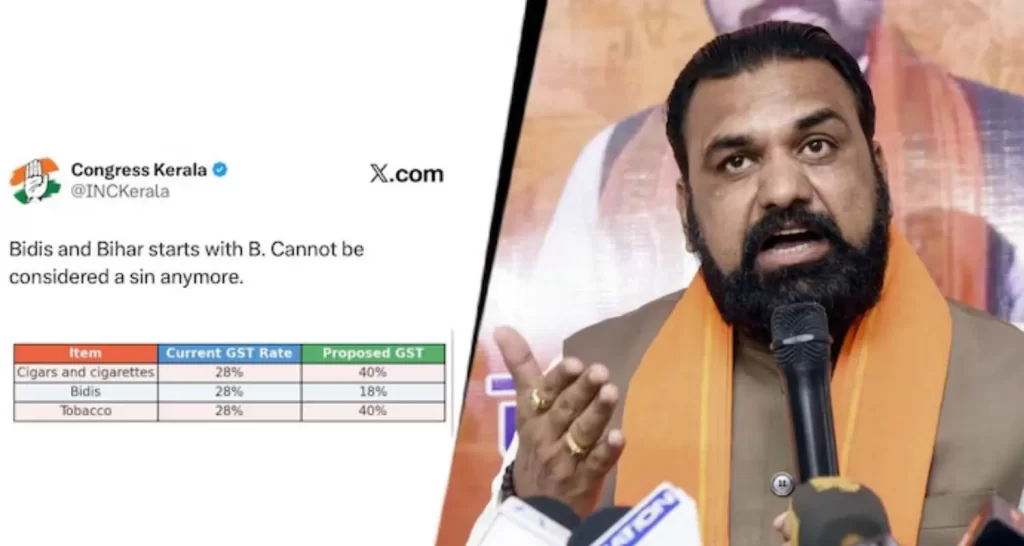
September 5, 2025: The Kerala Congress has come under intense scrutiny following a controversial social media post linking Bihar to the recent GST changes on tobacco products. The post, which has been deleted, was widely condemned by opposition leaders, the NDA, and the public for allegedly mocking the people of Bihar.
The post, shared on X (formerly Twitter), read, “Bidis and Bihar start with B. Cannot be considered a sin anymore.” While the post was intended to comment on the central government’s reduction of GST on bidis from 28% to 18%, many interpreted it as an offensive remark directed at Bihar.
Union Minister Nityanand Rai condemned the comment, saying it showed disrespect towards the residents of Bihar and undermined their dignity. Bihar Deputy Chief Minister Samrat Choudhary also criticized the party, calling the post an insult to the state and noting a pattern of insensitive remarks by the Congress in the past.
The Janata Dal (United), a ruling ally in Bihar, responded sharply, stating, “B is for Buddhi too,” emphasizing that political communication should be guided by wisdom rather than provocative statements.
Facing widespread backlash, the Kerala Congress removed the post and issued a clarification, stressing that their intention was to highlight concerns over GST policy and not to offend Bihar or its citizens. The party expressed regret for any misunderstanding caused by the message.
Political analysts note that this episode highlights the significant influence of social media in shaping political debates. Even minor online remarks can escalate into broader controversies, affecting public perception and party relations. The ‘Bidi-Bihar’ incident demonstrates the importance of careful messaging in political communication, particularly in the digital age and during sensitive periods ahead of elections.

