Lead
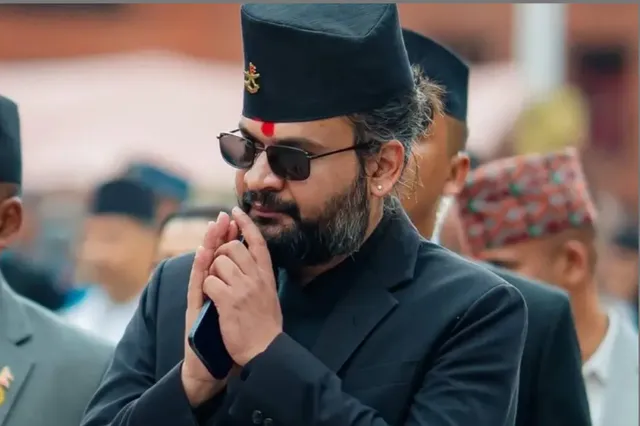
Balendra Shah — widely known as Balen — has urged Nepal’s young protesters to exercise restraint now that Prime Minister KP Sharma Oli has stepped down. Speaking after days of unrest in Kathmandu and other cities, the mayor framed his appeal as both a recognition of the youth movement’s power and a warning that unchecked destruction would harm the very generation driving change.
Body
Shah issued his statement late Tuesday on social media following Oli’s resignation, which had been the primary demand of demonstrators. “You achieved your goal,” he told the young activists, calling on them to stop damaging public and private property and to channel their energy into constructive action.
He reminded them that Nepal’s assets ultimately belong to its citizens and warned that burning or vandalizing infrastructure only deepens the country’s losses. The mayor added that future talks with national institutions, including the army, should be approached calmly and only after constitutional steps such as dissolving Parliament are complete.
The demonstrations — described by local media as the largest youth-led protests in years — began over accusations of government corruption, restrictions on social media platforms, and frustration over limited job prospects. Organisers, most of them under 30, used hashtags, livestreams, and campus networks to mobilise tens of thousands of people nationwide.
While largely peaceful at first, the rallies turned violent in parts of Kathmandu, with police using tear gas and protesters throwing stones. Human-rights monitors estimate that nearly twenty people have died and several hundred have been injured since the unrest started last month.
Shah’s comments are notable because he is one of Nepal’s most popular elected figures among younger voters. As mayor of the capital, he has cultivated an image as an outsider willing to challenge the political establishment, and he initially expressed sympathy with the protesters’ grievances. His latest message signals a shift toward urging the movement to protect its gains rather than escalate confrontation.
Analysts say the appeal reflects both opportunity and risk. “The youth have shown they can force change at the highest level of government,” said Dinesh Adhikari, a Kathmandu-based political commentator. “But without discipline, they could lose public support and hand a pretext to the security forces.”
International observers, including neighbouring India and several Western embassies, have echoed calls for calm and dialogue. Diplomatic missions in Kathmandu have also reminded authorities of their obligation to respect peaceful assembly while urging protesters to avoid violence.
Conclusion
The resignation of Nepal’s prime minister marks a watershed moment for a generation eager to reshape the country’s politics. Mayor Balen’s statement captures both the promise and the peril facing this movement: having demonstrated its power, it must now decide how to translate street protests into sustainable reforms. Whether the young organisers heed his warning may determine whether this moment becomes a catalyst for lasting change or simply another episode of turmoil.