
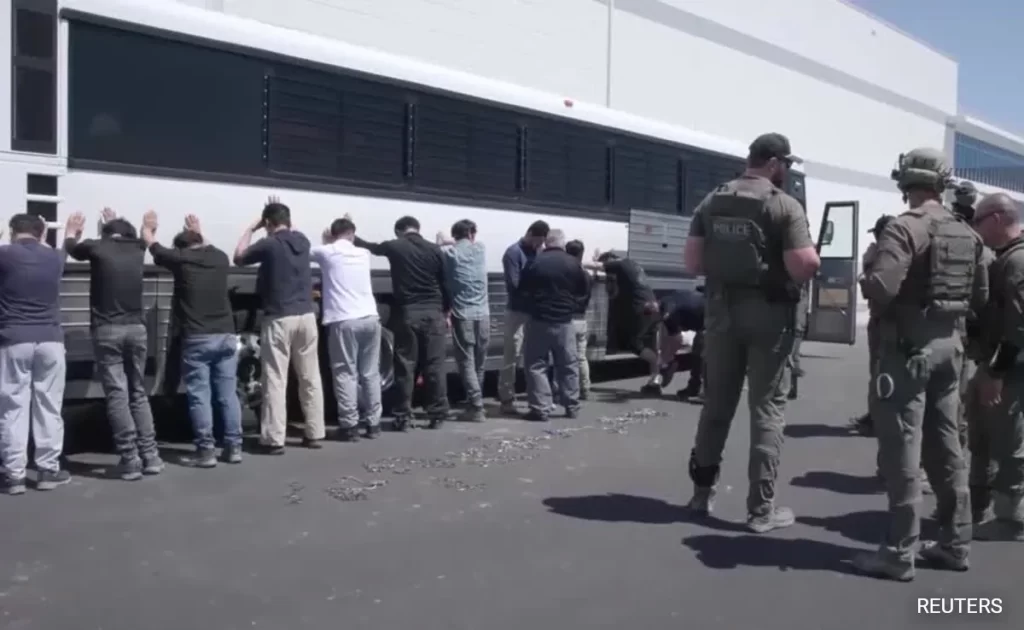
September 12, 2025 — South Korea has repatriated more than 300 of its citizens after a large-scale U.S. immigration raid at the Hyundai-LG battery plant construction site in Georgia earlier this month. The move comes amid heightened diplomatic tensions between Seoul and Washington, with officials on both sides working to mitigate fallout from the high-profile incident.
According to South Korea’s Ministry of Foreign Affairs, the detained nationals arrived in Seoul on a chartered flight arranged through negotiations with U.S. immigration authorities. The workers had been employed at the battery facility, a multi-billion-dollar joint venture between Hyundai Motor Group and LG Energy Solution, aimed at expanding electric vehicle battery production in the United States.
The raid, carried out in early September by U.S. Immigration and Customs Enforcement, targeted alleged violations of visa and labor regulations. South Korean officials expressed strong concern over the scale of the operation and the treatment of their nationals, calling it “excessive” and “damaging to bilateral trust.” Public reaction in South Korea has been critical, with media outlets and opposition lawmakers accusing Washington of undermining a key economic partnership. The Hyundai-LG facility represents one of the largest foreign investments in the U.S. EV supply chain, making the incident a sensitive issue for both governments.
Seoul’s prompt diplomatic engagement was key to securing the workers’ release. South Korean Foreign Minister Cho Tae-yul held multiple rounds of discussions with U.S. counterparts, stressing the importance of protecting Korean nationals and maintaining stable investment conditions. The U.S. Department of State confirmed the repatriation but maintained that the immigration laws would be applied “without exception.” Analysts note that while the dispute may not derail U.S.–South Korea cooperation in the EV sector, it highlights vulnerabilities in labor management at large-scale international projects. Both Hyundai and LG have pledged to review subcontracting and visa compliance practices to avoid further incidents.
The episode comes at a time when Washington and Seoul are deepening collaboration on supply chain resilience, clean energy, and defense cooperation. Experts warn that mishandling such incidents could fuel anti-American sentiment in South Korea, particularly given the symbolic importance of Korean workers contributing to U.S. industrial growth. For now, officials in Seoul have framed the resolution as a “necessary step to restore confidence.” However, lingering questions about labor oversight, visa practices, and the role of subcontractors remain unanswered.
The repatriation of more than 300 South Korean workers underscores the fragile balance between strict U.S. immigration enforcement and the strategic economic partnership underpinning the EV battery sector. While immediate tensions have eased following diplomatic negotiations, the incident has exposed challenges that both nations must address to ensure future cooperation remains unshaken.

