
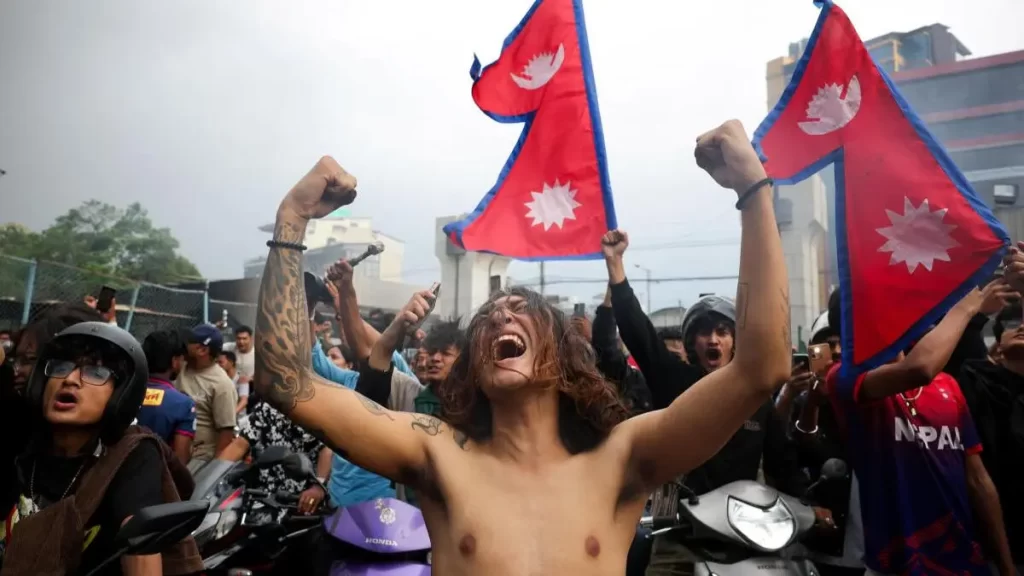
12 September,2025— Nepal is experiencing a new wave of political unrest as widespread anti-corruption and anti-government protests, led predominantly by “Gen Z” youth, continue to disrupt the country’s fragile political landscape. The demonstrations have gained momentum in recent weeks, culminating in the resignation of Prime Minister K.P. Sharma Oli, who stepped down amid mounting public pressure and political deadlock.
The protests, driven by young citizens frustrated with corruption, nepotism, and ineffective governance, mark a turning point in Nepal’s political discourse. Thousands of demonstrators, largely students and first-time voters, have taken to the streets of Kathmandu and other major cities demanding systemic reforms, transparency, and accountability from those in power.
In the aftermath of Oli’s resignation, negotiations are underway to form an interim government. Sources close to the political talks suggest that former Chief Justice Sushila Karki has emerged as a strong contender to lead the transitional administration. Karki, who made history as Nepal’s first female Chief Justice in 2016, is widely respected for her integrity and judicial independence, making her a popular choice among both protesters and reform-minded leaders.
Political analysts believe that appointing Karki could help stabilize the situation by bridging the gap between the disillusioned youth movement and the country’s traditional political establishment. However, critics caution that the transition process will not be easy, as entrenched political interests may resist sweeping reforms.
The current movement has been compared to previous waves of political activism in Nepal, including the 2006 People’s Movement that ended monarchy rule. However, the present uprising is distinguished by its digital organization and grassroots mobilization, with social media platforms serving as catalysts for coordination and awareness. Gen Z activists have effectively used online campaigns to amplify their demands, making corruption scandals and governance failures more visible to the public.
Observers note that Nepal’s political crisis has broader implications for regional stability. The Himalayan nation, strategically positioned between India and China, has long faced external pressure in balancing its diplomatic and economic ties. Prolonged instability could invite geopolitical influence at a time when Nepal is already grappling with economic slowdown, youth unemployment, and public distrust in institutions.
For many young protesters, the movement represents not just a fight against corruption, but a vision for a new political order that prioritizes merit, transparency, and long-term development. “We don’t want recycled politicians who failed us in the past. This is about a fresh start,” said one protester in Kathmandu.
As talks progress, the possibility of Sushila Karki taking charge of an interim government is being closely watched. If appointed, she would not only make history once again but also carry the responsibility of navigating Nepal through one of its most turbulent political chapters.

