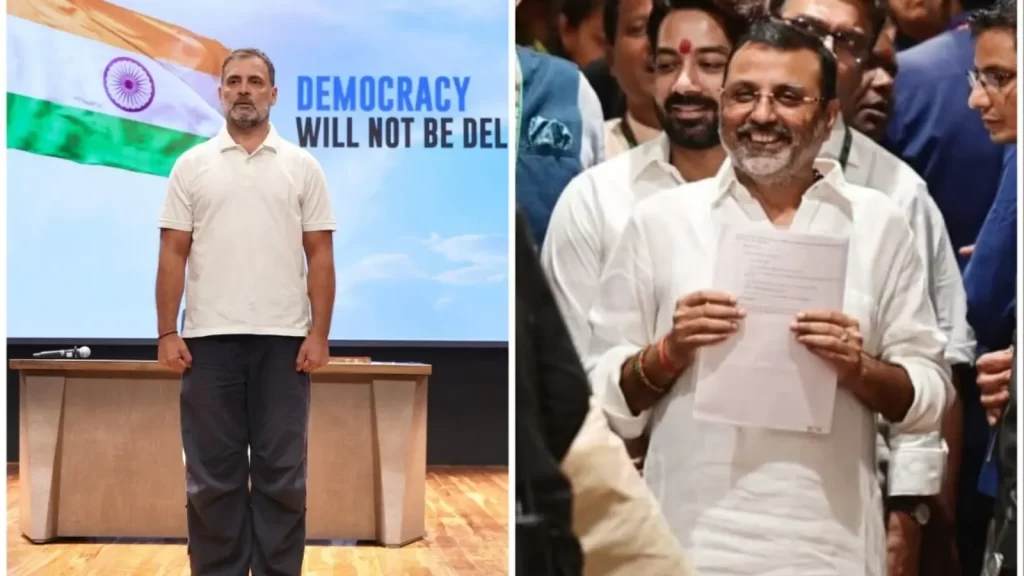
Congress leader Rahul Gandhi on Thursday levelled serious allegations against the Election Commission of India (ECI), accusing it of being complicit in what he described as a “vote chori” (vote theft) conspiracy. Gandhi claimed that names of Congress supporters were being systematically removed from electoral rolls, undermining the integrity of the democratic process.
Addressing a press conference in New Delhi, Gandhi asserted that several constituencies across states had reported irregularities in the voter lists, disproportionately affecting those aligned with the Congress party. He alleged that the ECI, instead of ensuring transparency, was allowing these discrepancies to persist, which he argued could tilt the electoral playing field in favour of the ruling Bharatiya Janata Party (BJP).
“The Election Commission is not a neutral body anymore. It is hand in glove with those orchestrating the deletion of our voters’ names. This is not just malpractice — it is an attack on India’s democracy,” Gandhi said, calling the matter a grave threat to free and fair elections.
The BJP swiftly rejected the accusations, branding them as an attempt by the Congress to deflect attention from its waning public support. Party spokespersons argued that the ECI follows established protocols for voter list updates and any deletions are part of routine revisions aimed at removing duplicate or invalid entries.
“Rahul Gandhi is manufacturing a crisis to stay relevant. His baseless charges only undermine trust in our institutions,” said BJP spokesperson Gaurav Bhatia, adding that such statements could spark unrest. The party also drew parallels with recent youth-led protests in Nepal, warning that Gandhi’s remarks might incite similar disruptions in India if not addressed responsibly.
Political analysts note that Gandhi’s claims reflect a deepening mistrust between opposition parties and constitutional bodies ahead of key state elections later this year. They argue that while concerns over voter roll accuracy are not new, publicly accusing the ECI of bias marks an escalation in opposition rhetoric.
Civil society groups have urged the Election Commission to clarify its position and ensure greater transparency in the voter verification process. Some experts suggested that publishing real-time data on voter list changes could help restore public confidence.
The controversy comes at a time when the Congress party is seeking to consolidate its position as the primary challenger to the BJP in the upcoming Lok Sabha elections. Gandhi has increasingly framed his political messaging around safeguarding democratic institutions, often accusing the ruling party of centralizing power and eroding constitutional checks.
As the war of words intensifies, the Election Commission is yet to issue a formal response to Gandhi’s allegations. Observers say the credibility of the institution — often regarded as the guardian of Indian democracy — could come under heightened scrutiny if transparency concerns remain unaddressed.
For now, Gandhi’s “vote chori” charge has added a fresh flashpoint in India’s already heated political discourse, underscoring how electoral integrity is likely to remain a dominant theme in the months leading up to the polls.