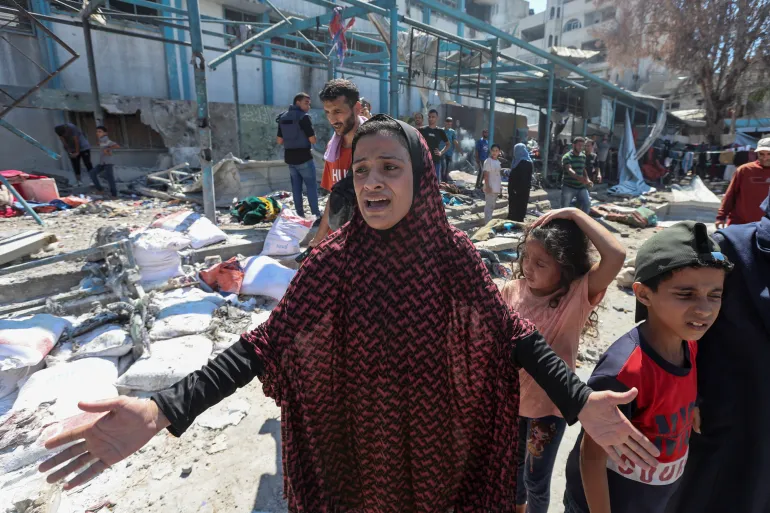
Gaza City is facing one of its deadliest weeks in recent months as an intense Israeli ground and air offensive continues to devastate the region. Heavy bombardments and large-scale military operations have left dozens dead and thousands displaced, adding to what the United Nations has described as a “cataclysmic” humanitarian crisis.
According to local health authorities, relentless airstrikes and artillery fire in the northern parts of Gaza City have killed scores of civilians, including women and children, while critical infrastructure such as hospitals, schools, and shelters has been damaged or rendered inoperable. Humanitarian groups report that thousands of residents have fled to overcrowded camps and temporary shelters, with food, clean water, and medical supplies rapidly running out.
The offensive marks one of the most significant escalations since the war began, with Israeli forces intensifying both ground incursions and aerial bombardments in response to what officials claim are militant strongholds embedded within civilian neighborhoods. However, the scale of civilian casualties has sparked widespread global condemnation and renewed scrutiny of Israel’s military tactics.
On September 16, a UN commission of inquiry concluded that Israel has committed genocide in Gaza, marking the most serious accusation leveled against the country to date. The commission cited evidence of systematic attacks on civilian populations, destruction of essential infrastructure, and deliberate actions that could indicate intent to eradicate a population group. The report has triggered urgent calls for accountability at the International Criminal Court, with human rights organizations urging immediate action to halt further atrocities.
UN Secretary-General António Guterres described the humanitarian situation as “beyond catastrophic,” stressing that Gaza’s already crippled health system is collapsing under the pressure. He emphasized that ongoing restrictions on aid deliveries are compounding the suffering of civilians and urged Israel to allow unhindered access for humanitarian convoys.
International reactions have been mixed. While several governments in Europe and the Global South have called for an immediate ceasefire, the United States has reiterated its support for Israel’s right to defend itself, though it has expressed concern over the mounting civilian toll. Protests have erupted in multiple cities worldwide, demanding an end to the violence and greater accountability for alleged war crimes.
Analysts warn that the conflict is entering a dangerous phase, with fears of regional spillover growing as tensions rise along Israel’s borders with Lebanon and Syria. Diplomats are pressing for urgent negotiations, but prospects for peace remain uncertain given the deepening hostilities and entrenched positions on both sides.
As the offensive rages on, Gaza’s population continues to bear the brunt of the conflict. With thousands displaced, entire neighborhoods reduced to rubble, and the UN’s dire warning of genocide, the crisis has reached a critical point that could shape international relations and accountability mechanisms for years to come.