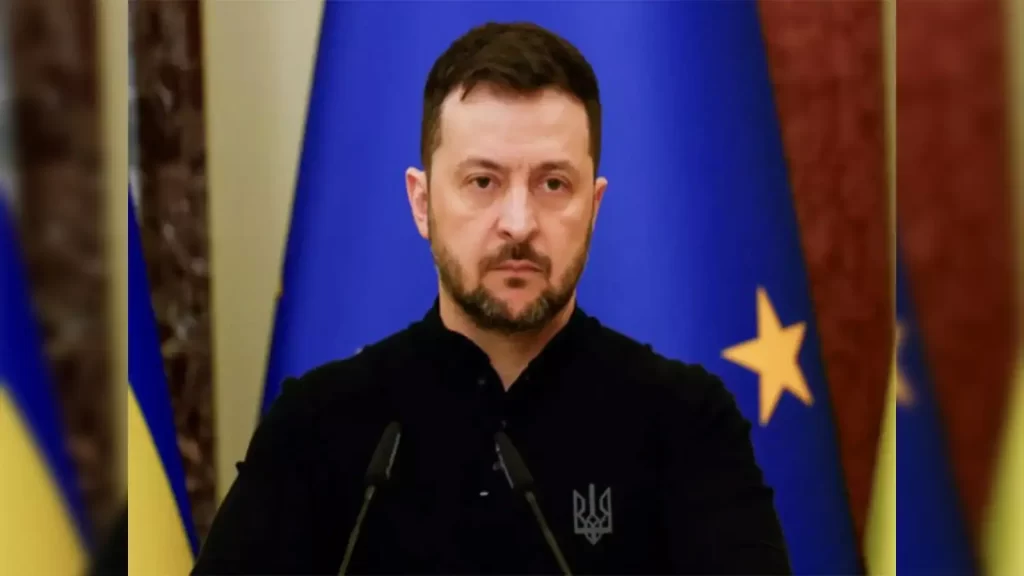
Ukrainian President Volodymyr Zelenskyy, addressing the United Nations General Assembly on September 24, 2025, warned of what he described as “the most destructive arms race in human history” driven by artificial intelligence (AI) in military weaponry. Zelenskyy called for urgent global regulations to govern AI in warfare, comparing the challenge to efforts aimed at preventing nuclear proliferation.
Speaking before world leaders, Zelenskyy cited recent Russian military activities as proof that unchecked AI deployment poses a severe risk to global security. He referenced multiple incidents involving autonomous drones and AI-enabled combat systems being used in Ukraine, describing them as a dangerous precedent that could escalate conflict far beyond the current war.
“Unchecked AI in weaponry is not a distant future threat — it is here today, and it is growing,” Zelenskyy said. “We are entering a new era where war can be fought without human oversight, and the consequences could be catastrophic.”
Zelenskyy’s address highlighted several alarming trends, including Russia’s development and deployment of AI-powered military systems capable of autonomous target selection. He argued that such advancements are fueling a dangerous arms race and urged the United Nations to take decisive steps to create enforceable rules.
The Ukrainian president drew a parallel between AI weapon regulation and the historical efforts to control nuclear weapons, stressing that delay could prove disastrous. “Just as we took action to prevent nuclear proliferation, we must act now to stop AI weaponry from becoming an uncontrollable force in warfare,” Zelenskyy said.
Zelenskyy also pointed to the risk of the conflict expanding beyond Ukraine. He warned that Russia’s ambitions extend to neighbouring states, including Moldova, and stressed that failing to address AI in military systems could destabilize entire regions. “The war in Ukraine is a warning. The unchecked spread of AI weapons will not remain contained. It threatens the future of peace everywhere,” he said.
The Ukrainian leader called for an international treaty on AI in warfare, backed by strict monitoring and enforcement mechanisms. He urged the UN and global powers to “come together, define clear rules, and prevent the dawn of an AI arms era that could surpass nuclear risks.”
Zelenskyy’s speech reflects growing concerns among defence analysts and world leaders about the implications of autonomous weaponry. Experts warn that without global regulation, AI-driven warfare could make armed conflict faster, deadlier, and harder to control, raising the stakes for global stability.
As Zelenskyy concluded, his appeal was clear: the world must address AI weaponisation before it spirals beyond control. “The future of peace depends on action taken today,” he said, urging the assembly to “stand united against the rise of an AI arms race.”