
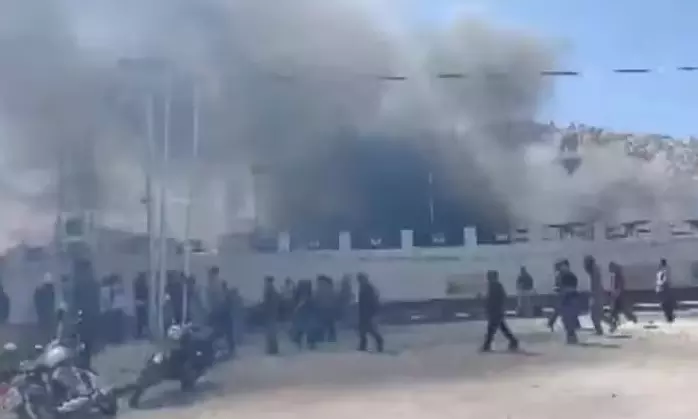
Prohibitory orders, including a ban on gatherings of five or more people, were imposed in Leh in late September 2025 after violent protests erupted demanding statehood and special constitutional safeguards for Ladakh. The unrest followed the collapse of hunger strikers and escalated a long-standing peaceful agitation into deadly clashes, resulting in at least four deaths and dozens of injuries.
The immediate trigger was the deteriorating health of prominent activist Sonam Wangchuk and another protester who had been fasting for 15 days to press for Ladakh’s inclusion under the Sixth Schedule and full statehood. In response, the Leh Apex Body (LAB) and Kargil Democratic Alliance (KDA) called for a shutdown and demonstrations on September 24. What began as a peaceful protest quickly escalated into violent clashes with security forces.
Protesters engaged in stone-pelting, torching vehicles, and setting fire to a Bharatiya Janata Party (BJP) office in Leh. Security forces responded with tear gas and baton charges to control the crowd. Authorities confirmed that at least four protesters were killed and more than seventy injured in the clashes. Over fifty individuals have been detained in connection with the violence.
The Ministry of Home Affairs has accused Wangchuk of delivering provocative speeches that incited violence, while the Leh administration cited threats to public order as the reason for imposing Section 144 prohibitory orders across the region. The curfew, which restricts movement and prohibits gatherings of five or more people, remains in force. Authorities have also canceled the ongoing Ladakh Festival to prevent further unrest.
The protests are rooted in longstanding grievances dating back to Ladakh’s separation from Jammu and Kashmir in 2019. Many residents have expressed concerns over land exploitation, environmental degradation, and lack of self-governance under direct central administration. Ethnic and religious tensions between the Buddhist-majority Leh and Muslim-majority Kargil further compound the unrest.
The Indian government has previously engaged in dialogue with local leaders through the High-Powered Committee (HPC) and its sub-committee. Measures such as 85% reservation for locals and recognition of five official languages have been introduced, but demands for full statehood and Sixth Schedule inclusion remain unresolved. The next round of discussions is scheduled for October 6 in New Delhi.
Security forces are maintaining a heavy presence in Leh, with strict curfew enforcement. Local leaders are calling for an impartial investigation into the deaths and accountability for the violence. As tensions persist, the upcoming talks between the government and Ladakh representatives will be critical in determining the future of the region.
The recent unrest in Leh underscores the deep-rooted challenges faced by Ladakh in its pursuit of autonomy and constitutional recognition. The imposition of prohibitory orders reflects both the seriousness of the unrest and the government’s intent to restore peace, but the demands for statehood continue to fuel uncertainty in the region.

