
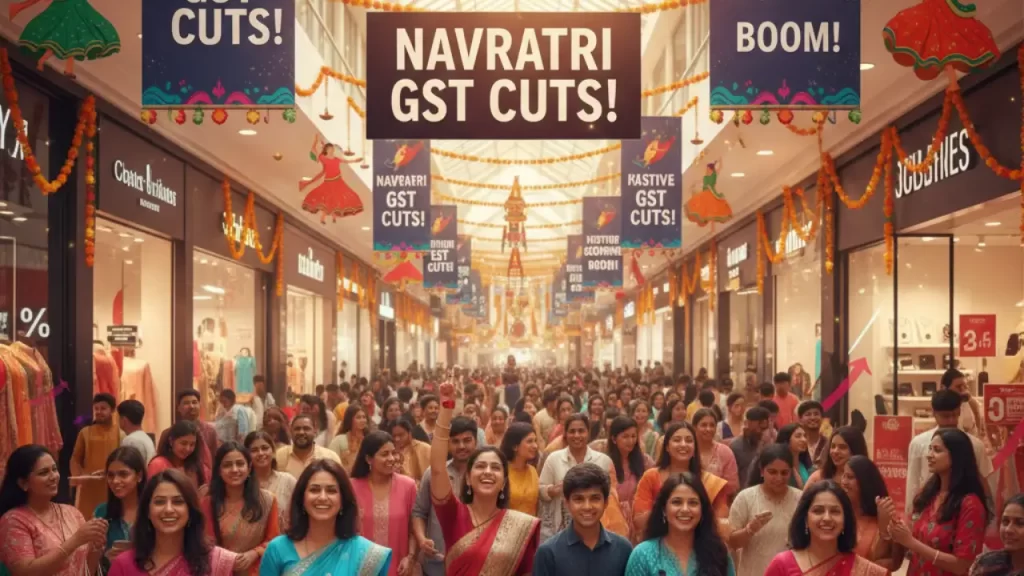
India witnessed its strongest Navratri sales in over a decade, as recent Goods and Services Tax (GST) cuts significantly boosted consumer spending across retail, automobile, and e-commerce sectors. The surge marks a sharp rebound for businesses that had faced sluggish demand during Onam and the initial GST transition period.
Industry reports suggest that the festive season, which typically contributes nearly 40–45% of India’s annual festive sales, registered double-digit growth this year. Consumer goods companies, automobile manufacturers, and online retailers all reported record-breaking figures, attributing the spike to price reductions following the GST overhaul.
The government’s sweeping reform in September simplified GST slabs to 5% and 18%, with luxury items placed at 40%. This restructuring lowered taxes on hundreds of items, including packaged foods, household essentials, and electronics. Mid-sized appliances such as televisions saw rates drop from 28% to 18%, translating into a 6–8% fall in retail prices. The tax relief triggered immediate consumer enthusiasm. FMCG companies reported their best Navratri in more than ten years, while retailers across categories witnessed 20–25% year-on-year growth. Haier India, for instance, reported an 85% jump in sales, particularly in large-screen TVs and home appliances.
The automobile industry also capitalized on festive demand. Tata Motors announced record September sales of 60,907 vehicles — its highest ever — crediting the GST cut and festival momentum. Mahindra & Mahindra reported a 10% rise in SUV sales to dealers, while Maruti Suzuki doubled deliveries during the nine-day Navratri period with aggressive discounting and tax benefits. Analysts noted that the combination of lower vehicle prices, festive financing offers, and rural demand revival gave the automobile sector a significant boost, making it one of the biggest winners of the GST reforms.
E-commerce platforms saw festive sales climb by nearly 23–25% compared to last year. Online retailers reported increased demand not only from metro cities but also from Tier-2 and Tier-3 towns, with electronics, fashion, and furniture topping consumer preferences. Digital transactions also hit unprecedented levels. On one day during Navratri, electronic payment volumes touched ₹11.31 lakh crore, a near tenfold increase compared with the previous day. Experts suggest this surge indicates both improved liquidity and a growing preference for cashless shopping.
Despite the optimism, some companies flagged transitional challenges. Hindustan Unilever cautioned about short-term sales disruptions as retailers cleared older inventory to adapt to new GST rates. Economists also stressed the need to monitor GST revenue collections. In September, collections rose 9% year-on-year to ₹1.89 trillion, reflecting resilience but leaving questions about long-term fiscal stability.
With Diwali approaching, industry leaders are optimistic that the momentum will continue. However, they remain cautious about whether the current demand surge will sustain once festive euphoria subsides. Analysts believe the GST cuts have provided a strong stimulus, but structural demand recovery will depend on income growth and rural spending trends in the coming quarters.
Navratri 2025 has set a new benchmark for India’s festive economy, demonstrating how tax reforms combined with seasonal sentiment can trigger a nationwide consumption boom.

