
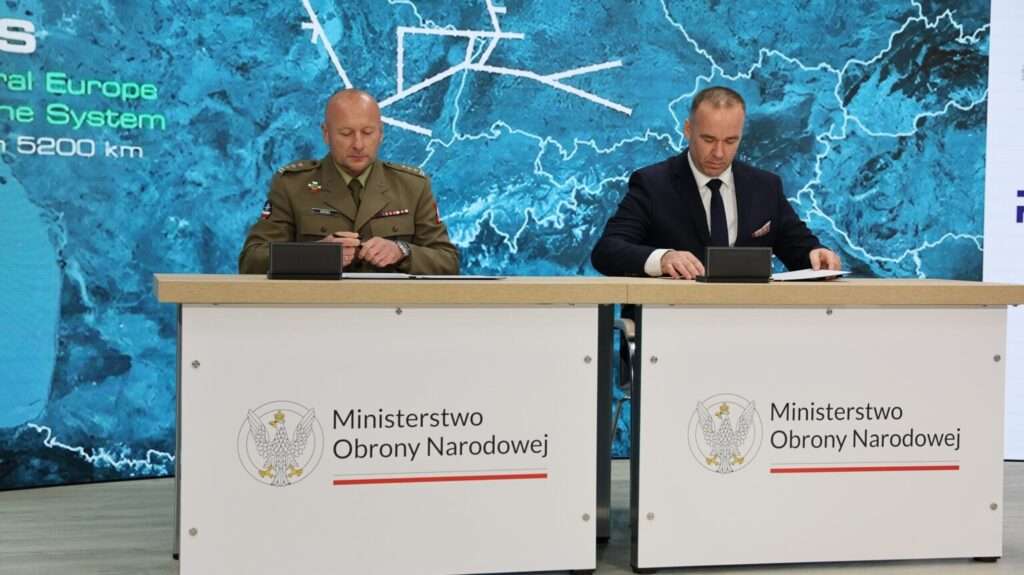
Warsaw, October 4, 2025 — Poland has officially announced a landmark €4.7 billion project to integrate its fuel infrastructure into NATO’s Central Europe Pipeline System (CEPS), a move expected to strengthen the alliance’s energy and military logistics in Eastern Europe. The project will involve constructing a 300-kilometer pipeline linking Polish military bases to the broader NATO fuel network, marking a strategic enhancement of Poland’s defence readiness.
Strategic Context
The Central Europe Pipeline System, a NATO-owned network spanning over 5,300 kilometers across Belgium, France, Germany, Luxembourg, and the Netherlands, was established during the Cold War to ensure rapid fuel supply to allied forces. Until now, CEPS has not extended to Eastern Europe, which has created logistical limitations for NATO’s eastern flank members.
Poland’s integration into CEPS comes amid heightened geopolitical tensions in the region following the 2022 Russian invasion of Ukraine. The move reflects Warsaw’s priority to fortify its defence infrastructure and improve operational readiness for NATO forces stationed along the alliance’s eastern border.
Project Scope and Details
The project will involve constructing a 300-kilometer fuel pipeline, connecting the Polish-German border to Bydgoszcz, along with the establishment of modern fuel storage facilities to support military operations. The pipeline will be capable of transporting jet fuel, gasoline, diesel, and naphtha, in line with NATO’s operational requirements.
The Polish Ministry of Defence has signed a preliminary agreement with the state-owned pipeline operator PERN to lead the project. Construction is expected to commence in early 2026, with completion targeted by late 2029.
Financial and Strategic Implications
The €4.7 billion investment will be funded primarily by the Polish government, with additional financial support from NATO, which has pledged approximately €13 million for the project’s initial stages. Defence analysts note that the integration into CEPS will significantly enhance Poland’s strategic mobility and energy resilience in the event of a crisis.
“This pipeline will not only strengthen NATO’s operational capacity but also reinforce Poland’s role as a key strategic partner within the alliance,” said Defence Minister Mariusz Błaszczak. “It is a significant step in enhancing our national security infrastructure.”
Regional Impact
Experts suggest that Poland’s move will have wider implications for NATO’s eastern defence posture. By linking to CEPS, NATO will gain faster and more reliable access to fuel for military operations in Eastern Europe, potentially improving response times during crises.
“This integration represents a strategic upgrade for NATO in the east,” said Dr. Tomasz Wróbel, a military logistics expert. “It improves supply chain efficiency and reduces reliance on potentially vulnerable road or rail transport.”
Poland’s €4.7 billion CEPS integration project marks one of the largest defence infrastructure investments in its recent history. As NATO continues to strengthen its eastern flank in response to evolving threats, Warsaw’s move underscores the alliance’s collective commitment to enhanced military readiness and energy security in the region.

