
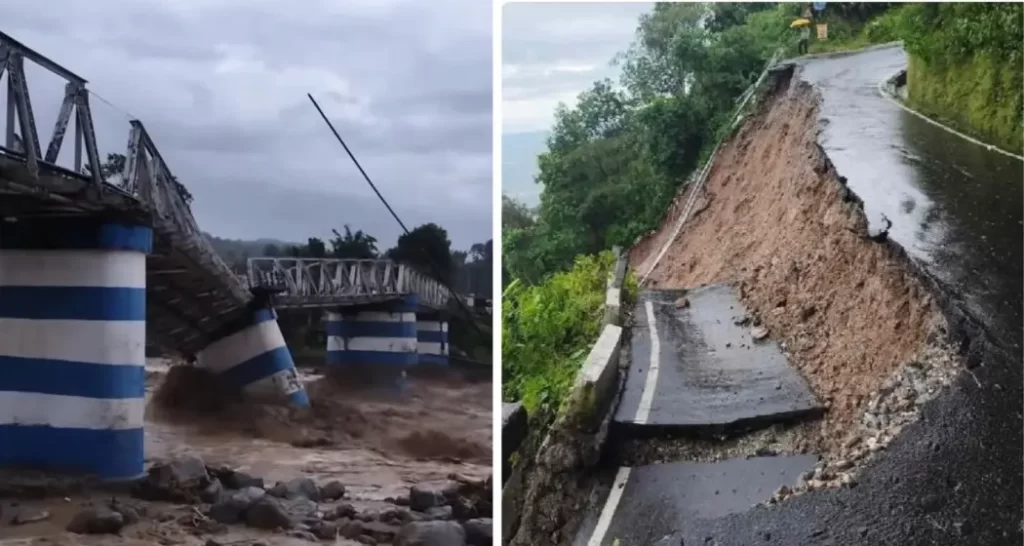
Severe rainfall in North Bengal has unleashed widespread destruction, claiming at least 38 lives and leaving dozens injured, while hundreds remain displaced. The worst-affected areas are Mirik and Darjeeling, where landslides and flooding have damaged infrastructure, disrupted transport, and triggered massive rescue operations. Authorities have also issued flash flood warnings for the Dooars region after a malfunction at Bhutan’s Tala Hydropower Dam caused a sudden release of water into downstream rivers, raising fears of further devastation.
Over the past week, North Bengal has been battered by relentless rainfall, with some districts recording over 370 mm of precipitation in a single day. Darjeeling and Kalimpong have faced the brunt of the storm, with landslides sweeping through hillside communities and destroying roads, bridges, and homes. Mirik has been particularly hard-hit, with the collapse of the Balason River bridge severing road connectivity. This has left the area isolated, complicating rescue and relief efforts. Reports indicate nearly 100 landslides across the region, with many areas rendered inaccessible.
Rescue teams, including the National Disaster Response Force, local police, and army units, are engaged in round-the-clock operations. In several areas, stranded residents and tourists have been evacuated under challenging conditions — in some cases with the help of elephants, highlighting the severity of access issues.
The crisis in North Bengal is compounded by a technical failure at Bhutan’s Tala Hydropower Dam. Officials reported that dam gates failed to open as planned, forcing a sudden release of excess water into the river system. Bhutanese authorities have issued flood alerts for downstream regions, including parts of the Dooars. Indian disaster management agencies have heightened vigilance in vulnerable districts, deploying additional teams and monitoring water levels closely. Toto Para and Hasimara are among the areas under strict surveillance as a precautionary measure.
The devastation in North Bengal reflects a wider pattern of extreme weather in the Himalayan foothills. Nepal has reported over 50 deaths due to landslides and floods in recent weeks. Experts attribute such intensifying events to changing climate patterns, which have altered monsoon dynamics, resulting in more intense and unpredictable rainfall. Climate scientists have also pointed to inadequate infrastructure and poor disaster preparedness as factors exacerbating the impact of these natural calamities. Authorities have urged states in flood-prone zones to improve early warning systems and bolster infrastructure resilience.
West Bengal Chief Minister Mamata Banerjee has announced immediate relief measures, including compensation for affected families and provision of food, medical aid, and temporary shelters. She is scheduled to visit the hardest-hit districts to oversee rescue efforts and coordinate relief distribution. The National Disaster Response Force has deployed multiple teams, and the army is assisting with evacuations and medical aid. Local administrations continue to work with volunteers to reach stranded residents, though continuous rainfall and unstable terrain pose significant challenges.
Officials have urged residents in vulnerable areas to remain alert and comply with evacuation orders. With weather forecasts predicting continued heavy rainfall, the situation remains precarious.

