
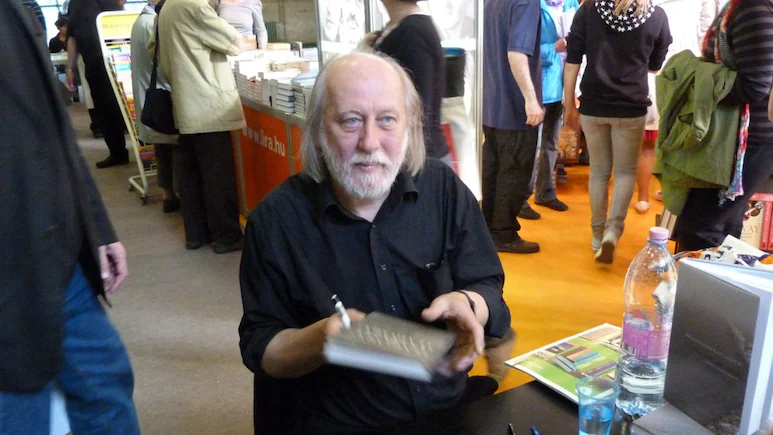
In a landmark announcement on 9 October 2025, the Swedish Academy awarded the 2025 Nobel Prize in Literature to Hungarian author László Krasznahorkai. The Academy cited his “compelling and visionary oeuvre that, in the midst of apocalyptic terror, reaffirms the power of art.” This recognition crowns Krasznahorkai’s literary career, elevating him into the pantheon of globally celebrated authors.
Background and Significance
The Nobel Prize in Literature, one of the world’s most prestigious honors, comes with a monetary reward of 11 million Swedish kronor (approximately US$1.2 million). Historically, the award has spotlighted writers whose work resonates across eras and cultures. Krasznahorkai joins figures such as Ernest Hemingway, Albert Camus, Toni Morrison, and Elias Canetti in the roster of laureates.
Born in Gyula, Hungary, in 1954, Krasznahorkai is known for his dense, philosophically charged prose and a literary style that often pushes conventional boundaries. Several of his works — notably Sátántangó (1985) and The Melancholy of Resistance (1989) — have attained international acclaim and have been adapted for cinema, often in collaboration with director Béla Tarr. His reputation in literary circles has long been that of a relentless explorer of existential tension and modern anxiety.
Why Krasznahorkai Stood Out
The Swedish Academy’s citation emphasizes Krasznahorkai’s capacity to navigate “apocalyptic terror” without sacrificing the enduring power of art. Critics have often described his narrative style as combining melancholy, absurdism, and profundity — traits that distinguish him in contemporary world literature.
In the lead-up to the announcement, Krasznahorkai had been regarded as a strong contender, tied in odds with Chinese avant-garde writer Can Xue as favorites. While literary prognostications often prove unpredictable, his victory reflects the Academy’s continued openness to challenging, non‑conventional voices.
Implications and Reactions
The award places new global attention on Hungarian and Central European literature. It may stimulate fresh translations and wider readership of Krasznahorkai’s existing oeuvre, especially in regions where his work has had less exposure. Literary institutions, publishers, and translation networks are likely to respond swiftly.
Some observers see this selection as a subtle shift toward acknowledging voices that explore darker, unsettling themes — especially in a world increasingly preoccupied by crisis, dislocation, and existential uncertainty. Krasznahorkai’s win could encourage more publishers to back challenging, avant-garde literature.
Conclusion
László Krasznahorkai’s recognition with the 2025 Nobel Prize in Literature underscores the Swedish Academy’s willingness to honor visionary, uncompromising writers. As the world turns its gaze toward his work, the award may catalyze a resurgence of interest in philosophical, boundary-pushing literature. Krasznahorkai’s ascent to the Nobel stage is not just a personal triumph — it is a moment for global literature to reengage with the power of art amid turbulence.

