
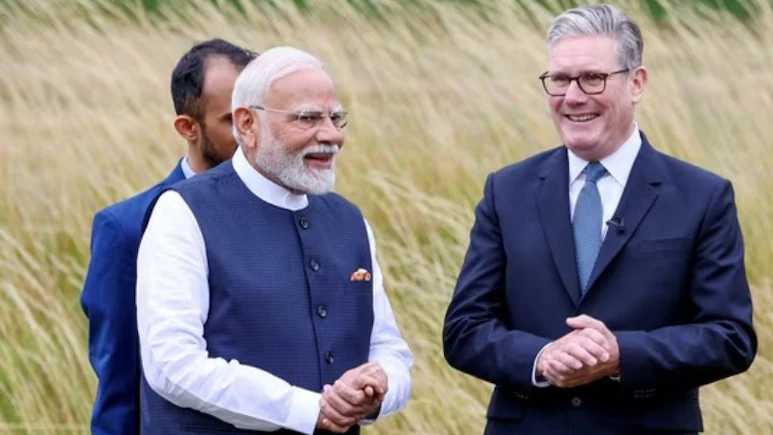
In a major diplomatic statement, UK Prime Minister Keir Starmer has expressed strong support for India securing a permanent seat on the United Nations Security Council (UNSC), emphasizing that India deserves its “rightful place.” Speaking at the 79th United Nations General Assembly (UNGA), Starmer urged for comprehensive reforms to make the Security Council more inclusive, representative, and reflective of today’s geopolitical realities.
Body
Since its establishment in 1945, the UNSC’s framework has largely remained unchanged. The five permanent members—the United States, United Kingdom, France, Russia, and China—continue to hold veto power, while ten non-permanent members serve two-year terms. Critics across the world argue that this outdated model no longer represents the global balance of power, especially as emerging economies and regional powers play increasingly vital roles in international affairs.
Prime Minister Starmer’s remarks come amid growing international consensus that the UNSC needs restructuring. He specifically mentioned that countries such as India, Brazil, Japan, Germany, and representatives from Africa should be included as permanent members. According to Starmer, a modern Security Council must be “more representative and more responsive,” ensuring that decision-making reflects the diversity and priorities of the global community rather than remaining confined to post-World War II power dynamics.
India’s long-standing claim to a permanent UNSC seat rests on its demographic, economic, and geopolitical stature. As the world’s most populous nation, the fifth-largest economy, and one of the largest contributors to UN peacekeeping operations, India’s role in global governance has become increasingly central. Over the decades, India has built a reputation as a responsible democracy and a consistent advocate for multilateralism, making its inclusion a logical step toward balancing global representation.
The United Kingdom’s endorsement adds to a growing list of major powers backing India’s candidature. Both France and the United States have publicly supported India’s inclusion as a permanent member, recognizing its strategic importance in maintaining global stability and promoting international cooperation. Diplomats view this alignment among Western powers as a crucial step toward achieving long-overdue reforms in the UN system.
However, the path to reform remains complex. Any amendment to the UN Charter requires a two-thirds majority in the General Assembly and ratification by all five permanent members. This means that consensus among current powerholders—especially China, which has historically resisted expansion of permanent membership—will be essential. Despite these obstacles, India’s continued diplomatic engagement and broad international backing have kept the conversation alive at the highest levels.
Conclusion
Prime Minister Keir Starmer’s endorsement of India’s permanent membership in the UN Security Council represents a defining moment in the ongoing debate over global governance reform. As support for India builds across continents, the momentum for restructuring the UNSC is stronger than ever. If realized, this shift could mark a transformative step toward a more balanced and representative international order—one where emerging powers like India hold a rightful voice in shaping the future of global peace and security.

