
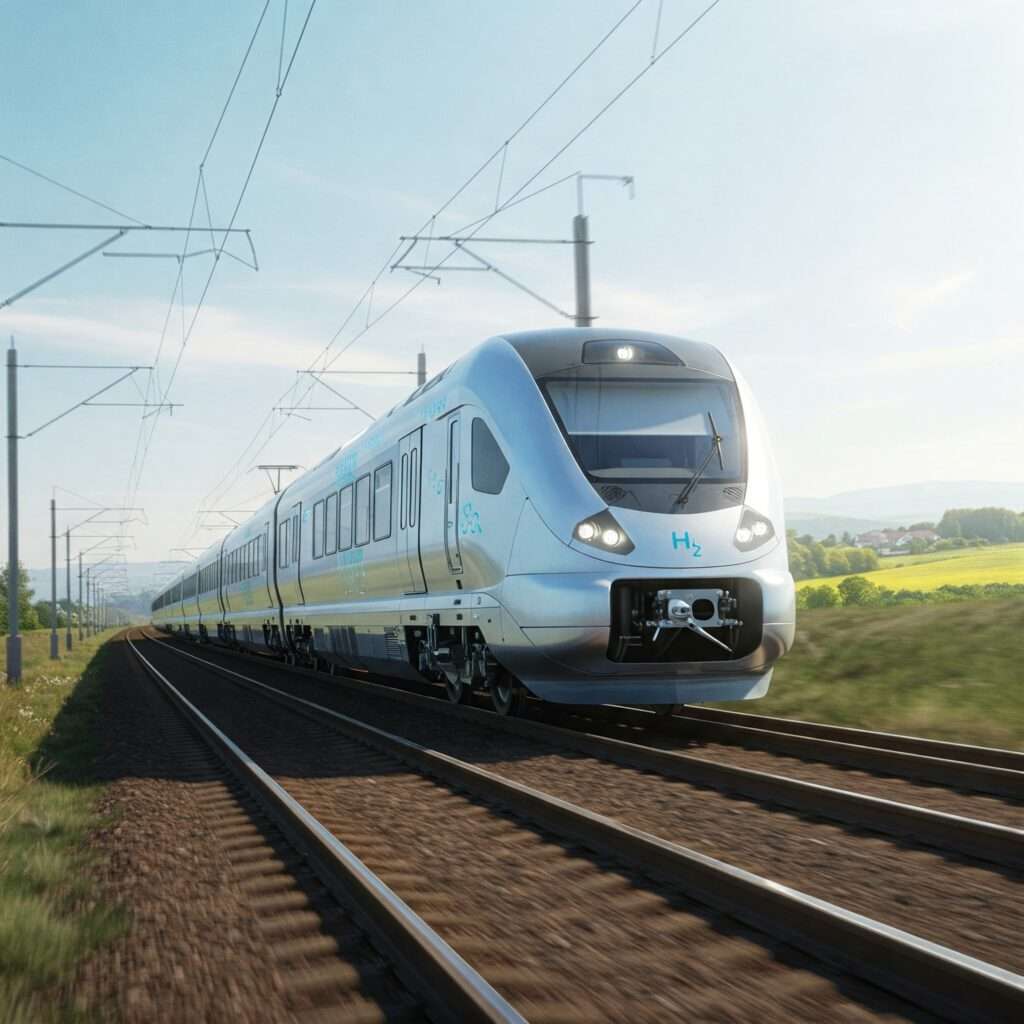
In a landmark move for sustainable mobility, Prime Minister Narendra Modi officially inaugurated India’s first hydrogen-powered train today under the “Hydrogen for Heritage” initiative in Varanasi. The launch marks a bold step in India’s journey toward decarbonising its rail network and strengthening its leadership in green technology.
The newly unveiled hydrogen-fuel-cell train is designed to operate on hydrogen fuel cells, emitting only water vapor instead of conventional pollutants. With this launch, India joins a select group of nations deploying hydrogen technology in public transport. The train is expected to operate along heritage-sensitive and tourist routes, aligning with the government’s vision of combining clean energy with cultural tourism.
Prime Minister Modi, in his address, emphasized that this development reaffirms India’s commitment to green mobility and net-zero carbon goals. He stated that the initiative demonstrates “India’s leadership in clean energy innovation.” Railway officials noted that the move also enhances the nation’s energy independence by reducing reliance on fossil fuels.
The hydrogen-powered train reportedly generates about 1,200 horsepower, making it one of the most powerful of its kind globally. Earlier trial runs of a hydrogen-based coach were conducted at the Integral Coach Factory (ICF) in Chennai. The Railways Ministry confirmed that the fuel cell systems are being developed indigenously, reflecting the “Make in India” mission. Under the “Hydrogen for Heritage” program, the initial rollout will focus on scenic and heritage routes such as Kalka–Shimla, Darjeeling, and Nilgiri, which pass through ecologically sensitive zones where zero-emission operations are particularly valuable.
The government has announced plans to deploy around 35 hydrogen-powered trains across the country, each estimated to cost about ₹80 crore. Additional investments are being made in refueling infrastructure, hydrogen production, and maintenance facilities. The initiative comes at a time when global adoption of hydrogen mobility is accelerating, with countries like Germany and France already operating hydrogen trains. India’s model is said to deliver higher power output than several international equivalents, highlighting the country’s technological advancement in this domain.
Despite its promise, experts have pointed out several challenges. Establishing a reliable hydrogen refueling network across various routes will require substantial investment. Additionally, maintaining cost efficiency compared to electrified or diesel systems may demand large-scale deployment and continued innovation. Analysts stress that the success of this initiative will depend on strong policy support, effective public–private collaboration, and advancements in green hydrogen production using renewable energy sources.
The launch of India’s first hydrogen-powered train represents a defining moment in the nation’s push for clean transportation. It is not merely a symbolic gesture but a practical response to the growing need for sustainable and low-carbon mobility solutions. As the “Hydrogen for Heritage” program expands, its impact could pave the way for wider adoption of hydrogen technology in mainstream rail networks.
This initiative positions India at the forefront of sustainable rail innovation and reinforces its global reputation as a leader in climate action. If implemented effectively, it could significantly reduce carbon emissions, boost domestic clean-energy manufacturing, and contribute meaningfully to the country’s long-term vision of achieving a net-zero future.

