
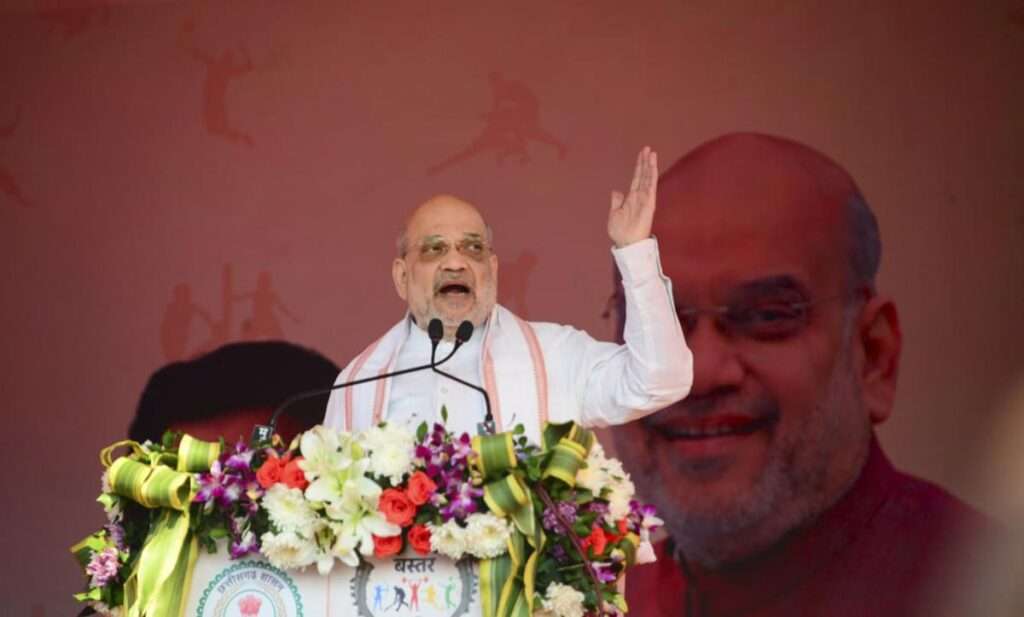
Union Home Minister Amit Shah has declared the Abujhmarh and North Bastar regions in Chhattisgarh officially free from Naxal influence. This announcement comes after a significant wave of Maoist surrenders, marking a major milestone in India’s long-standing efforts to curb left-wing extremism. Shah also stated that the remaining Naxal traces in South Bastar are expected to be eliminated soon.
Mass Surrenders Signal Turning Point
The announcement follows the surrender of a large number of Naxal operatives in the state. On October 16, 2025, 170 Maoists, including senior cadres, gave up arms under government rehabilitation programs. A day earlier, 27 Maoists, including 10 women and two senior cadres from the People’s Liberation Guerrilla Army (PLGA) Battalion-01, surrendered in Sukma district.
Security experts view these coordinated surrenders as a direct outcome of intensified counter-insurgency measures and effective outreach programs encouraging insurgents to reintegrate into society.
Government’s Strategic Push Against Naxalism
Since the BJP-led government assumed office in Chhattisgarh in January 2024, the state has witnessed significant progress in anti-Naxal operations. Official data indicates that over 2,100 Naxalites have surrendered, 1,785 have been arrested, and 477 eliminated in security operations.
Union Home Minister Amit Shah emphasized that these results reflect a comprehensive strategy combining law enforcement, intelligence-led operations, and socio-economic rehabilitation of former insurgents. “Our goal is to eliminate Naxalism entirely from the state by March 31, 2026,” Shah stated.
Focus on Rehabilitation and Development
Apart from security measures, the government has also prioritized the rehabilitation of surrendered Naxalites. Skill development, employment opportunities, and social reintegration programs have been key elements of the strategy. Officials claim that these measures have played a crucial role in encouraging insurgents to surrender voluntarily.
Local communities in Abujhmarh and North Bastar have welcomed the declaration, citing improved security and renewed focus on development projects in previously affected regions. Roads, schools, and healthcare facilities are now being expanded as part of the government’s post-conflict development agenda.
Way Forward
While Abujhmarh and North Bastar are now declared Naxal-free, the government continues its operations in South Bastar to eliminate remaining insurgent elements. Experts suggest that sustained vigilance, coupled with inclusive development and rehabilitation programs, will be critical to maintaining long-term peace in Chhattisgarh.
The mass surrenders and the official Naxal-free declaration are seen as a significant success for India’s counter-insurgency efforts, reflecting the combined impact of strategic security measures and socio-economic initiatives.

