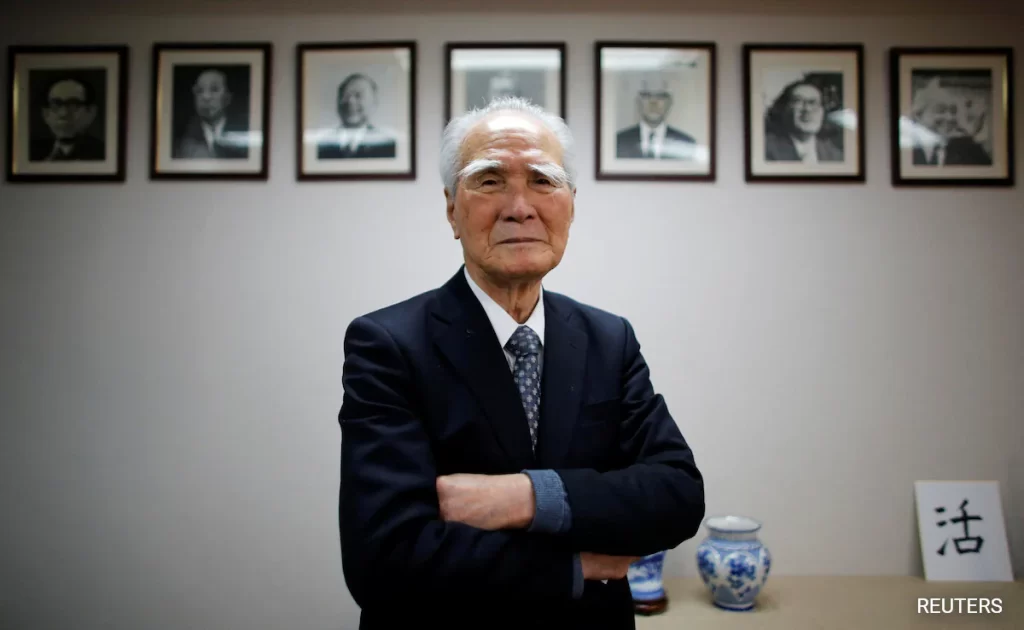
Former Japanese Prime Minister Tomiichi Murayama, renowned for his historic 1995 apology for Japan’s wartime aggression, passed away today at the age of 101. He died in a hospital in his hometown of Oita, southwestern Japan, according to Mizuho Fukushima, head of the Social Democratic Party.
Murayama, who served as Japan’s prime minister from 1994 to 1996, is best remembered for his statement of remorse delivered on the 50th anniversary of Japan’s surrender in World War II. In a nationally televised address, he acknowledged Japan’s wartime aggression and colonial rule, offering a heartfelt apology to the people of many countries, particularly those in Asia, who suffered due to Japan’s actions. This statement, widely known as the “Murayama Statement,” became a cornerstone of Japan’s postwar diplomacy and was welcomed by nations including China and South Korea, setting a precedent for future Japanese leaders.
During his tenure, Murayama led a coalition government comprising the Japan Socialist Party and the conservative Liberal Democratic Party. His administration faced several crises, including the 1995 Kobe earthquake and the deadly sarin gas attack on the Tokyo subway system by the Aum Shinrikyo cult. Despite these challenges, his leadership was marked by a commitment to peace and reconciliation.
After leaving office in 1996, Murayama remained active in promoting peace and historical reconciliation. He served as president of the Asian Women’s Fund, which provided compensation to women forced into sexual slavery during World War II. He was also outspoken against nationalist movements that sought to downplay Japan’s wartime actions, emphasizing the importance of acknowledging history to foster lasting regional peace.
Born in 1924 in Oita Prefecture, Murayama began his political career as an activist in his local fisherman’s union before joining the Japan Socialist Party and eventually rising to its leadership. Known for his distinctive bushy eyebrows and humble demeanor, he was a steadfast advocate for social justice and peace throughout his life. He is survived by his wife, Yoshie, two children, three grandchildren, and five great-grandchildren.
Tomiichi Murayama’s passing marks the end of an era in Japanese politics. His legacy as a leader who prioritized peace, reconciliation, and historical accountability continues to resonate in Japan and across Asia.