
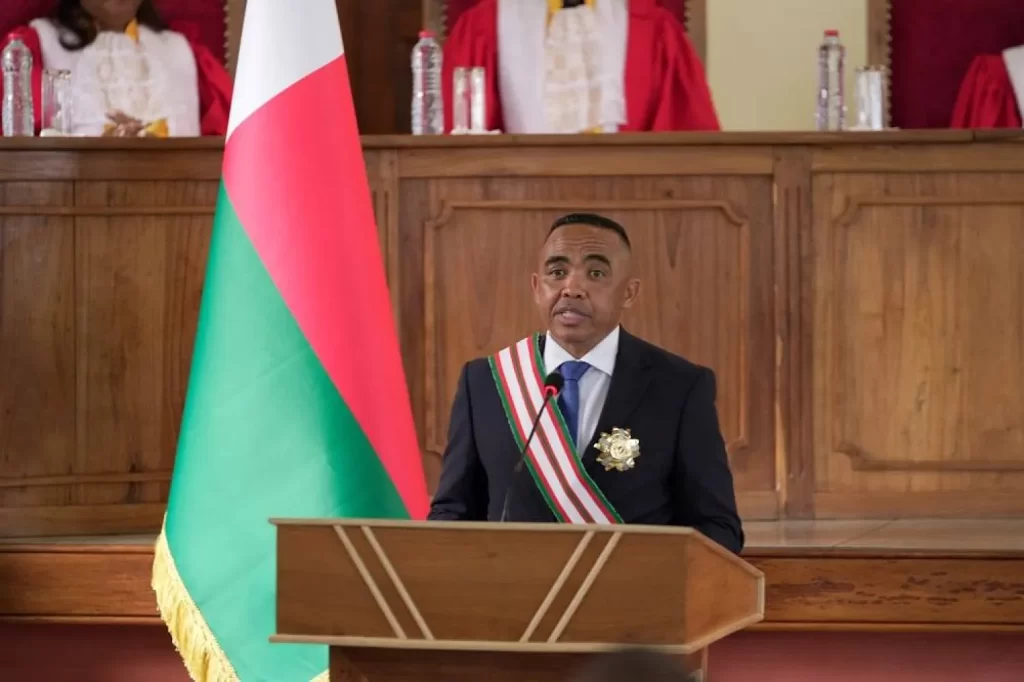
Colonel Michael Randrianirina was officially sworn in as the President of Madagascar today, following a swift military coup that ousted former President Andry Rajoelina. The ceremony took place at the High Constitutional Court in the capital, Antananarivo, marking a significant shift in the nation’s political landscape.
The coup was precipitated by weeks of widespread protests led by young citizens, collectively known as “Gen Z Madagascar,” who voiced their frustrations over chronic power and water shortages, rampant corruption, and pervasive poverty. These demonstrations escalated into violent clashes, resulting in over 20 fatalities and more than 100 injuries, according to United Nations reports.
Amid the unrest, President Rajoelina fled the country, reportedly seeking refuge in Dubai. Subsequently, the Malagasy parliament impeached him for dereliction of duty, paving the way for the military’s intervention.
Colonel Randrianirina, commander of the elite CAPSAT unit, emerged as the central figure in the military’s takeover. Prior to the coup, he had distanced himself from Rajoelina, aligning with the protesters’ demands for change. Following the dissolution of key government institutions, Randrianirina assumed the role of interim president and pledged to lead the country through a transitional period. In his inaugural address, he declared, “Today marks a historic turning point for our country. With a people in full fervour, driven by the desire for change and a deep love for their homeland, we joyfully open a new chapter in the life of our nation.”
The international community has expressed concern over the developments in Madagascar. The United Nations Secretary-General António Guterres condemned the unconstitutional change of power, calling for a return to constitutional order. Similarly, the African Union suspended Madagascar, rejecting the military’s actions.
As Madagascar embarks on this new chapter, the path forward remains uncertain. While the military leadership has promised to uphold national unity and human rights, many citizens, particularly the youth, remain skeptical. The nation faces significant challenges, including economic instability, inadequate infrastructure, and the need for genuine democratic reforms. The coming months will be crucial in determining whether the military-led transition can pave the way for lasting peace and prosperity in Madagascar.

