In the rich tapestry of Hindu mythology, the tale of Narakasura stands out as a compelling narrative illustrating the eternal struggle between good and evil. The legend, deeply rooted in religious texts and cultural practices, recounts the story of the demon Narakasura and his ultimate defeat by Lord Krishna, highlighting themes of justice, morality, and cosmic order.
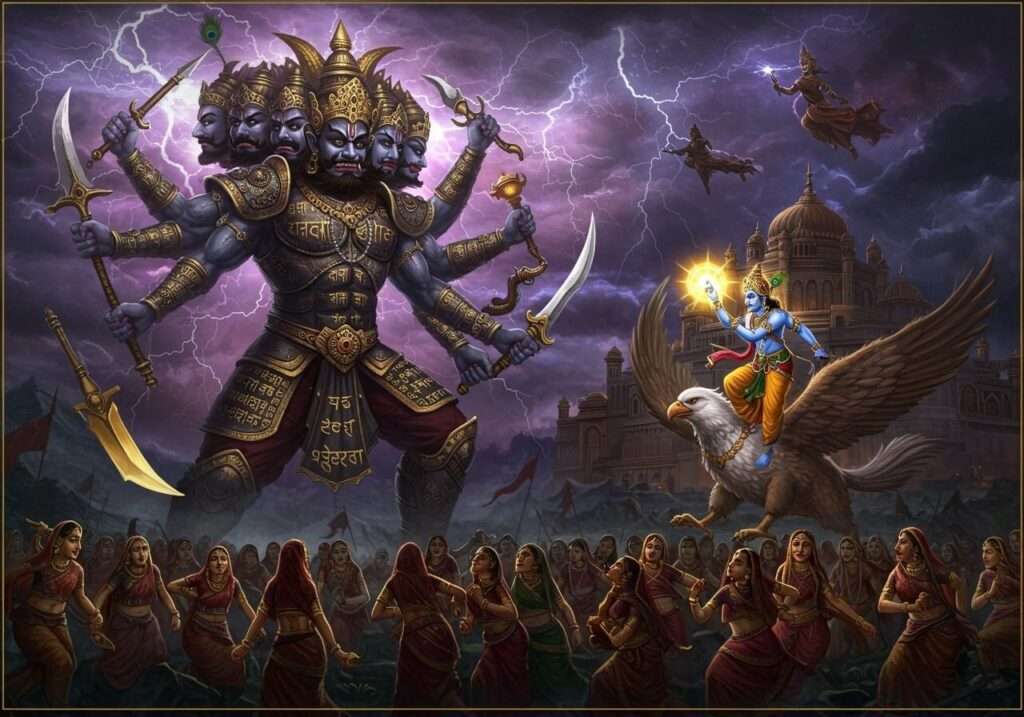
Narakasura, the son of the earth goddess Bhumi and the demon Hiranyaksha, is described as a powerful yet tyrannical ruler whose reign was marked by cruelty and oppression. According to scriptures, he amassed wealth through unethical means, abducted women, and terrorized kingdoms, spreading fear across the lands. His tyranny, however, did not go unchallenged. The gods, disturbed by his atrocities, sought divine intervention to restore peace and righteousness.
The narrative reaches its climax with the arrival of Lord Krishna, one of Hinduism’s most revered deities. Accompanied by his consort Satyabhama, Krishna confronts Narakasura in an epic battle. The fight symbolizes the triumph of dharma (righteousness) over adharma (evil). Krishna’s victory is celebrated not merely as a physical conquest but as a restoration of moral order. The defeat of Narakasura underscores the enduring principle that no force of darkness, however formidable, can withstand the power of truth and virtue.
Beyond its narrative appeal, the story of Narakasura carries rich symbolic meaning. The demon represents the vices and moral failings that afflict humanity, while Krishna embodies divine wisdom, courage, and justice. Their confrontation serves as a metaphorical reminder that confronting personal and societal evils requires strength, ethical discernment, and unwavering commitment to righteousness.
The tale is also closely linked with the Hindu festival of Diwali, particularly in regions like Maharashtra and South India. Celebrations often include rituals and reenactments of Krishna’s victory, emphasizing the joyous triumph of good over evil. Lighting lamps, performing prayers, and observing cultural traditions during this period reflect the enduring relevance of the Narakasura legend in contemporary society.
For historians and devotees alike, the story of Narakasura offers insights into Hindu philosophical thought and ethical teachings. Scholars note that myths like these not only entertain but also educate, providing moral frameworks that guide behavior and societal norms. The narrative reinforces the belief that justice, when supported by righteousness and courage, ultimately prevails.
In conclusion, the legend of Narakasura remains a timeless testament to the victory of good over evil. Through Lord Krishna’s decisive action against the demon, Hindu mythology communicates profound lessons about morality, justice, and the enduring struggle between virtue and vice. As Diwali celebrations continue to honor this ancient tale, the story of Narakasura continues to inspire reflection, devotion, and cultural pride, reminding humanity of the ever-relevant principle that righteousness conquers darkness.