
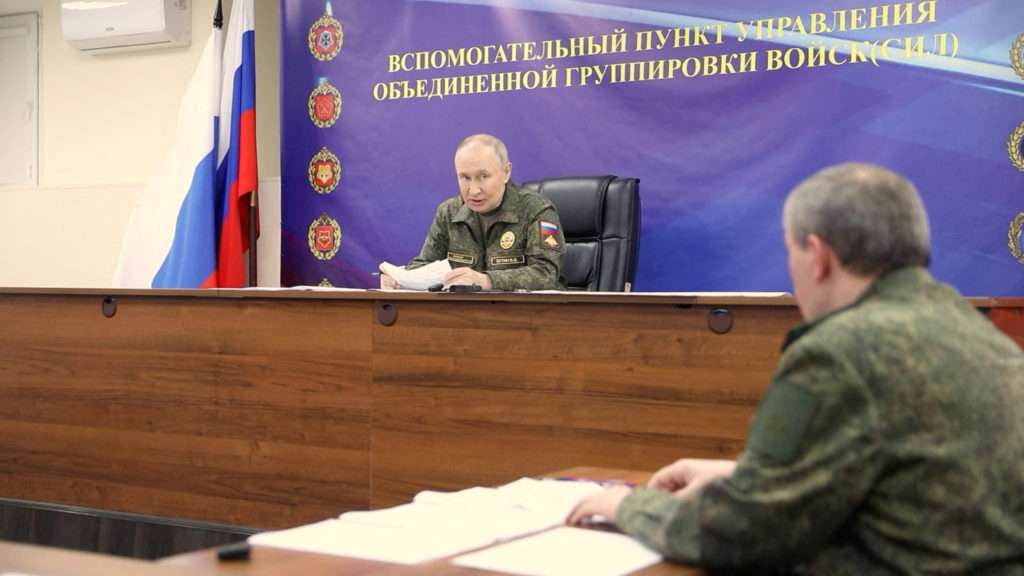
On October 21, 2025, Vladimir Putin announced that Burevestnik — a nuclear-powered, long-range cruise missile — was successfully flight-tested and that Russia is now moving toward deployment. The weapon, which Moscow touts as capable of evading any defence shield, signals a major escalation in strategic-arms messaging amid the ongoing war in Ukraine and growing tensions with Western powers.
Russia’s military leadership reported that the Burevestnik completed a flight of approximately 14,000 km over about 15 hours. President Putin described the system as “unique … one that no other country in the world possesses.” He directed that infrastructure be prepared for its integration into active service.
The missile, designated by NATO as SSC-X-9 Skyfall, has been under development since 2018 and is claimed by Moscow to have an almost unlimited range and the ability to defeat current and future missile-defence systems. According to Russian General Staff chief Valery Gerasimov, the test flight’s distance and duration indicate the system may now be operationally viable.
Despite these official claims, Western analysts remain sceptical, citing the missile’s poor prior testing record and the technical challenges of a nuclear-powered cruise missile. The missile’s development has also been linked to serious accidents: a 2019 explosion at a test site killed several scientists and raised environmental concerns about radioactive contamination.
International reaction was swift. U.S. President Donald Trump denounced the missile test as “not appropriate,” saying Russia should focus instead on ending the war in Ukraine rather than showcasing advanced weaponry. The announcement comes amid a broader pattern of Russian nuclear-capability messaging, including large-scale strategic drills.
For Russia, the deployment of Burevestnik serves multiple objectives: deterring NATO and U.S. missile-defence ambitions, reinforcing Moscow’s position in the Ukraine conflict, and projecting strategic strength ahead of diplomacy that remains stalled. At the same time, the weapon raises new risks in arms-control dynamics and heightens doubts about global security architecture.
The successful flight test and looming deployment of the Burevestnik missile mark a significant juncture in Russia’s strategic-arms development. By claiming an “invincible” nuclear-powered missile with unprecedented range, Moscow is sending a clear signal to the West and its adversaries. Nonetheless, scepticism remains over its operational reliability and the wider implications for arms proliferation, nuclear-deterrence stability and environmental safety. As the international community monitors Russia’s next steps, the Burevestnik saga underscores the fragile state of nuclear-arms control in the current era.

