
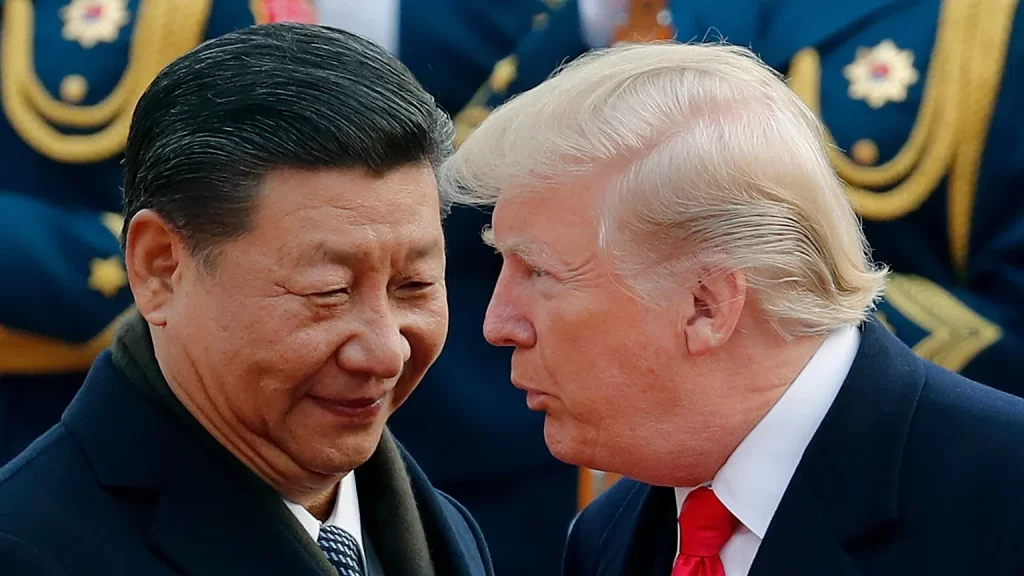
In a significant diplomatic development, the governments of the United States and the People’s Republic of China announced a framework agreement on trade, paving the way for a high-profile meeting between President Donald Trump and President Xi Jinping. The accord emerged during discussions on the sidelines of the 47th ASEAN Summit in Kuala Lumpur, Malaysia, and is seen as a de-escalation of weeks of mounting trade and tariff tensions between the two economic giants.
The draft trade framework addresses several flashpoints that had threatened to ignite a broader global trade war. Among the most notable is the U.S. decision to postpone the imposition of a threatened 100 percent tariff on Chinese imports from November 1. In parallel, China has agreed to delay planned export controls on critical minerals, notably rare earths, which are vital to global supply chains in electronics, aerospace, and defense.
The framework also outlines steps to rebalance trade flows: Beijing is expected to resume or increase significant purchases of U.S. agricultural products — particularly soybeans — which had been sharply curtailed in the latest tranche of trade retaliation. U.S. officials emphasized that this deal provides a “path forward” for restoring greater access to Chinese markets and easing export constraints that have weighed on U.S. exporters.
However, analysts caution that the agreement remains a framework, not a full-blown free trade deal. Key details — including enforcement mechanisms, country-of-origin rules, and how trans-shipment and semiconductors will be treated — remain unresolved. Moreover, the legal status and durability of the agreement hinge not only on executive diplomacy but also on domestic approval processes within both capitals.
In the short term, the framework has been welcomed in global markets and among supply-chain stakeholders, who were facing the prospect of abrupt tariff shocks or mineral-export disruptions. Still, questions remain regarding transparency of implementation timelines and how the deal will affect third-party economies and multilateral trade architecture.
The announcement of the U.S.–China trade framework marks a notable turning point in global economic diplomacy, offering a window of relief from escalating tariff threats while setting the stage for a direct summit between Trump and Xi. If successfully implemented, it could stabilize major supply chains, ease pressure on U.S. export sectors, and inject new momentum into Sino-U.S. trade relations. Nonetheless, the agreement’s ultimate success will depend on concrete actions, credible oversight mechanisms, and sustained engagement from both sides. As the world watches the forthcoming face-to-face meeting of the two presidents, the broader implications for global trade, market confidence, and geopolitical balance remain substantial.

