
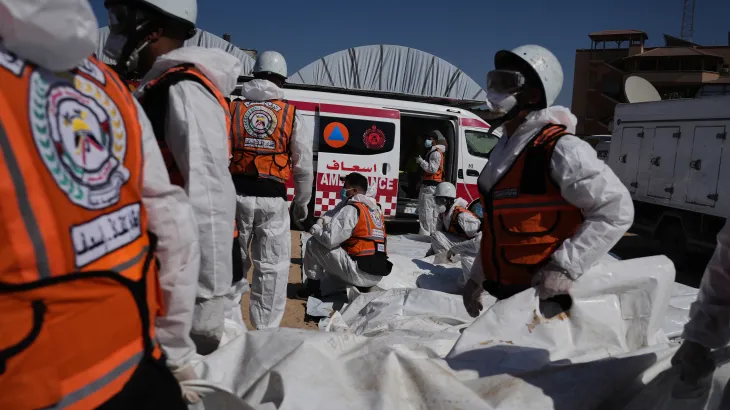
In October 2025, families in Gaza began burying bodies recently handed over by Israeli authorities, many of which were unrecognisable due to torture and mutilation. This tragic event has once again exposed the depth of human suffering in the Gaza Strip, already overwhelmed by destruction, displacement, and mental trauma. According to the World Health Organization (WHO), nearly one million people in Gaza now require mental-health care as the psychological toll of the conflict continues to deepen.
The bodies returned to Gaza were reportedly marked only with numbered tags, making identification difficult in an area where hospitals and morgues are already overburdened. Medical professionals in Khan Younis and Rafah described signs of extreme abuse, including blindfolds, bound wrists, and gunshot wounds to the head. Families, many of whom had been waiting for months to reclaim their relatives, were forced to perform burials without certainty of who lay in the graves. The emotional devastation of this process has compounded the collective trauma faced by a population living under siege and constant threat.
The WHO has warned that Gaza is now facing one of the world’s most severe mental-health crises. Director-General Tedros Adhanom Ghebreyesus noted that the destruction in Gaza is both physical and psychological, with the health system nearly collapsed. Only a fraction of hospitals remain functional, and most lack the staff, equipment, and medicine required to address the rising cases of post-traumatic stress, depression, and anxiety. The organization’s data indicate that around one million residents—nearly half the enclave’s population—are in need of mental-health support.
Humanitarian agencies have expressed concern that the limited cease-fire has not translated into adequate relief. Aid convoys remain restricted, and mental-health services are among the least prioritized in emergency responses. With infrastructure destroyed, families displaced, and medical access severely limited, Gaza’s civilians are left to navigate overwhelming grief with minimal psychological support. Children, in particular, have been identified as the most vulnerable, exhibiting signs of chronic fear, loss, and emotional detachment after prolonged exposure to violence.
International organizations have urged that humanitarian access be expanded to include not only food and medicine but also trauma care and counselling services. The long-term effects of unaddressed mental suffering, they warn, could shape Gaza’s future for generations. Without mental-health interventions, the population faces the risk of enduring emotional scars that may outlast the physical ruins of war.
The return of mutilated bodies to Gaza symbolizes the human cost of prolonged conflict and the fragility of life amid unending cycles of violence. For the bereaved families, closure remains elusive. Beyond the visible wounds, the deeper psychological impact has become an invisible epidemic, spreading across households and communities. As international attention shifts toward political negotiations, the humanitarian and mental-health crises demand equal urgency. Healing Gaza will require more than reconstruction; it will require restoring the dignity, identity, and emotional well-being of its people.

