
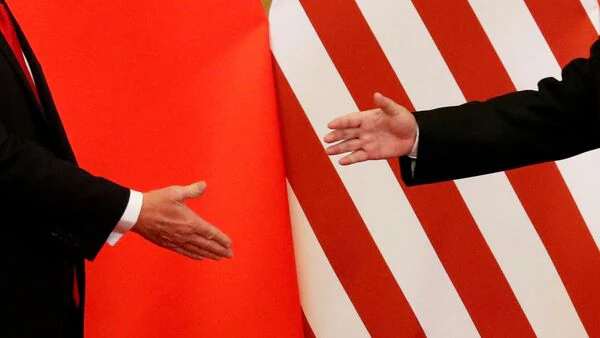
Senior officials announced that the United States and the People’s Republic of China have arrived at a preliminary consensus on a trade framework that could avert a looming escalation in their bilateral trade war. The breakthrough comes just days before the much-anticipated meeting between Donald Trump and Xi Jinping, signalling a possible thaw in the fraught economic relationship between the world’s two largest economies.
The negotiations, held on the sidelines of the 47th ASEAN Summit in Kuala Lumpur, involved senior delegates including U.S. Treasury Secretary Scott Bessent and China’s Vice-Premier He Lifeng. According to official reports, key issues addressed in the framework include the postponement of threatened 100 percent tariffs by the U.S., along with a deferral of China’s planned export controls on rare-earth minerals and magnets. China’s top trade negotiator, Li Chenggang, confirmed that both sides had reached a “preliminary consensus” and that the agreement would now proceed through domestic approval processes in each country.
Agricultural trade and supply-chain concerns featured prominently. The U.S. side anticipates renewed Chinese purchases of American soybeans—following a notable drop in September—while China gained assurances of better access to U.S. rare-earth imports. Negotiators also discussed sensitive subjects including export controls, shipping levies, and regulation of the social-media platform TikTok.
This development marks a de-escalation of tensions that threatened to spark a full-blown trade war. Earlier in 2025, the U.S. had threatened sweeping tariffs on Chinese goods, while China had responded with export curbs on materials crucial to the electronics, automotive and defence sectors. By reaching a mutual framework now, both sides aim to avoid the economic fallout associated with a tariff spiral and restore greater stability in global markets.
From a geopolitical standpoint, the framework sends a signal of willingness to negotiate even amid heightened strategic rivalry. Given that both the U.S. and China are major trading partners for many countries—including India—the global implications of a U.S.–China trade shift are significant. For U.S. farmers and manufacturers, the prospect of revived Chinese demand offers relief; for China, loosening of U.S. export curbs and shipping levies paves the way for smoother access to key commodities and technologies.
The preliminary trade framework agreed by the U.S. and China sets the stage for the forthcoming summit between Presidents Trump and Xi and could mark a turning point in their economic relations. While the details still require formal endorsement in each country, the fact that negotiators reached consensus on such sensitive issues is noteworthy. If fully realised, the deal may stabilise global trade tensions, open new market opportunities for exporters, and bolster confidence in supply-chain resilience. The coming days will be critical in seeing whether this framework migrates from agreement to action—and whether Beijing and Washington seize this window to reset their trade partnership.

